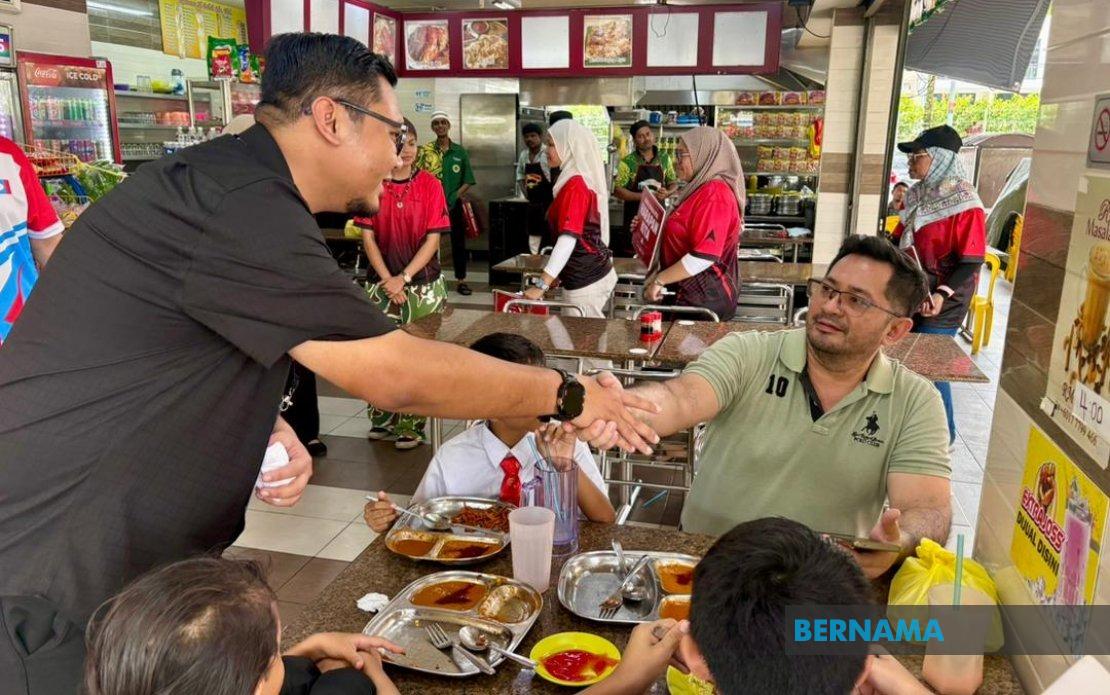
The Pakatan Harapan (PH) candidate contesting Kempas in this month's Johor state election is pinning his campaign on two interconnected pillars: creating viable career prospects for young people entering the workforce and strengthening the medical infrastructure serving his constituency. Muhammad Faezuddin Mohd Puad, 35, who also leads Johor Angkatan Muda Keadilan (AMK), revealed his platform during grassroots engagement in Taman Damansara Aliff ahead of the July 11 polling date.
The emphasis on Technical and Vocational Education and Training (TVET) reflects growing recognition across Malaysia that not all secondary school graduates proceed to university, yet many lack structured pathways toward skilled employment. Muhammad Faezuddin identified a particular cohort requiring intervention: SPM holders who do not achieve the highest grades and come from households with limited financial resources. This demographic faces the greatest difficulty transitioning from school completion to meaningful work, whether in employment or self-employment ventures.
His vision involves collaborating with institutions offering vocational qualifications to match interested graduates with training programmes aligned to labour market demands. Such schemes, when properly implemented, can substantially alter life trajectories by equipping individuals with internationally recognised credentials that enhance earning capacity and job mobility. The approach addresses a longstanding gap in Malaysia's education-to-employment continuum, where conventional academic pathways dominate policy discourse despite evidence that technical skills shortages persist across manufacturing, construction, and service sectors.
Beyond workforce development, Muhammad Faezuddin has prioritised healthcare accessibility, a concern particularly acute in constituencies with aging populations. The Kempas Health Clinic currently faces congestion that forces patients, especially elderly residents, to endure extended waiting times before receiving treatment. His proposal involves submitting formal recommendations for either expanding the existing facility or constructing a purpose-built replacement clinic should he secure the mandate.
Healthcare infrastructure in Malaysian state constituencies often reflects decades-old planning frameworks that failed to anticipate demographic shifts. Older residents, who tend to require more frequent medical consultations for chronic conditions, experience heightened frustration navigating overstretched primary care facilities. Improving these foundational services directly impacts public health outcomes and quality of life for vulnerable populations, making it a substantive rather than rhetorical campaign commitment.
Engagement with residents throughout the campaign has surfaced another recurring frustration: difficulty accessing elected representatives. Muhammad Faezuddin characterised constituent dissatisfaction with what they perceive as formal barriers and rigid protocols insulating politicians from their constituents. His commitment to approachable, protocol-free interactions represents a deliberate repositioning away from the hierarchical engagement model some voters associate with entrenched incumbents.
This accessibility pledge, while seemingly straightforward, carries political implications. Malaysian voters increasingly expect responsive representation where concerns can be raised and addressed directly rather than filtered through administrative channels. The emphasis on open-door constituent relations distinguishes candidates attempting to differentiate themselves through service orientation rather than solely relying on party machinery or established networks.
The Kempas contest will feature a three-way battle between Muhammad Faezuddin for PH, incumbent Datuk Ramlee Bohani representing Barisan Nasional, and Salamahafifi Mohd Yusnaieny contesting for Bersama. The division of opposition votes between PH and Bersama may prove strategically significant, particularly if the contest tightens in the final campaign stretch. Early voting occurs on July 7, with the main polling day on July 11.
The campaign priorities articulated by the PH candidate reflect broader policy conversations sweeping across Peninsular Malaysia regarding human capital development and equitable service delivery. TVET expansion has gained prominence as policymakers and educators acknowledge that Malaysia requires alternative qualification pathways beyond tertiary education to remain competitive. Similarly, healthcare accessibility in constituencies beyond major urban centres remains contentious, with voters holding elected representatives increasingly accountable for facility quality and waiting time reduction.
For Malaysian constituencies where manufacturing and mid-skill employment predominate, vocational education initiatives directly connect to economic opportunity. The Kempas voter profile likely includes families whose children will enter the workforce within the next five years, making the candidate's focus on credible training alternatives a tangible concern rather than abstract campaigning. The healthcare component similarly addresses immediate, visible service gaps that residents encounter regularly.
The framing of approachability alongside substantive policy commitments suggests a campaign strategy centred on contrasting constituent service models. Where opponents may emphasise development projects or broader national achievements, Muhammad Faezuddin is prioritising direct accessibility and targeted interventions addressing identified local needs. Whether such a platform resonates sufficiently in a three-cornered contest will become apparent on polling day.
The Johor state election represents a significant political moment for the PH coalition, which has maintained uncertain footing in the state following the 2022 federal election upheaval. Individual constituency contests, such as Kempas, provide opportunities for candidates to rebuild voter confidence through credible, locally-rooted platforms rather than relying solely on national political narrative. The extent to which Muhammad Faezuddin's emphasis on skills development and healthcare translates into electoral support will partly determine PH's performance across the state.

