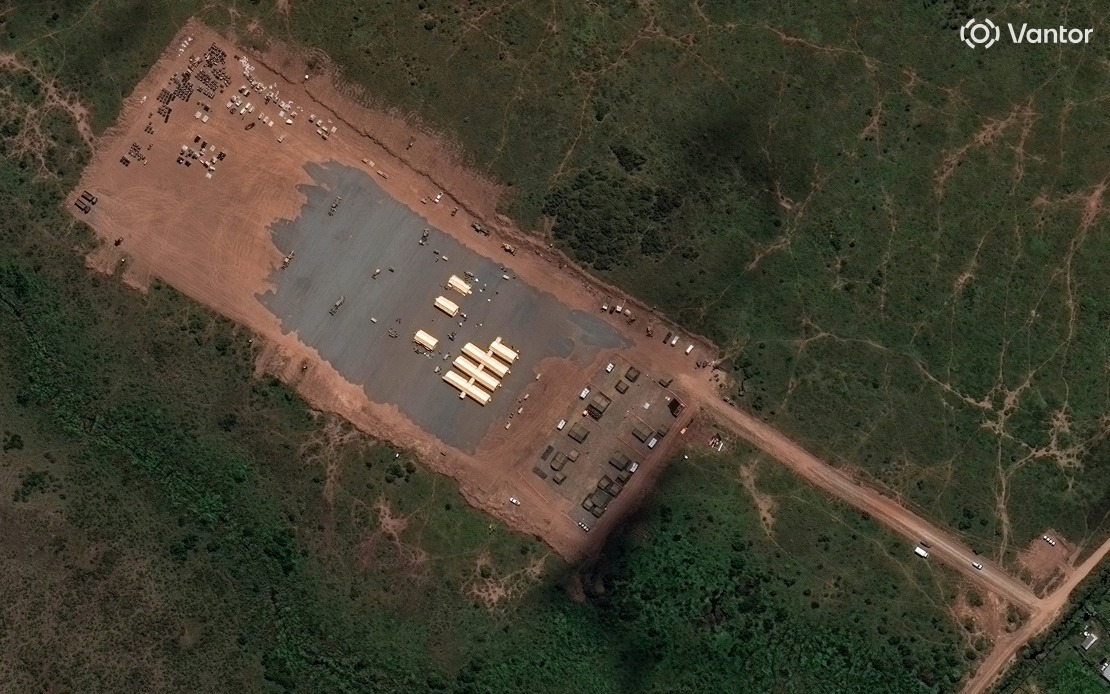
A Kenyan High Court judge has found Health Minister Aden Duale in contempt of court for continuing to oversee construction of a 50-bed quarantine facility at Laikipia Air Base in Nanyuki, despite explicit judicial orders halting the project. Judge Patricia Nyaundi's ruling on Monday marked a significant escalation in a dispute that has consumed Kenya's public health agenda for months, drawing international attention to tensions between executive authority and judicial independence in East Africa's largest economy.
The contested facility was designed to serve as an isolation centre for Americans potentially exposed to Ebola virus during outbreak response operations in the Democratic Republic of the Congo and neighbouring regions. Located approximately 200 kilometres north of Nairobi, the installation represents a strategic shift in how the United States intends to manage biosecurity risks across the continent, positioning Kenya as a regional hub for disease containment and emergency response.
Nyaundi issued her contempt finding after establishing that Duale had commissioned ongoing construction activities at the base despite court orders issued on May 28 and reaffirmed on June 2. The judge directed the minister to appear in person before the bench on the following day to present mitigating circumstances and receive sentencing, signalling that the court intended to impose meaningful consequences for the apparent defiance. The ruling represents a decisive intervention by Kenya's judiciary into a matter where political calculations and public health considerations have become inextricably entangled.
The facility's origins lie in a diplomatic arrangement between President William Ruto and United States President Donald Trump. Ruto publicly confirmed that he had approved the project following a direct request from Washington, framing the quarantine installation as an extension of longstanding health collaboration between the two nations. This disclosure, intended perhaps to lend legitimacy to the initiative, instead intensified scrutiny and accusations that Kenya had surrendered decision-making authority over its own territory and public health infrastructure to external pressure.
Opposition to the project has been multifaceted and sustained. The Katiba Institute, a constitutional rights organisation, mounted the legal challenge that triggered the court's initial suspension, arguing that the facility raised fundamental questions about constitutional governance, transparency, and the right of affected communities to participate meaningfully in decisions affecting their safety and wellbeing. The petition resonated broadly across civil society, with local leaders, opposition politicians, and human rights advocates questioning both the wisdom and the legality of the arrangement.
Kenyan government officials have defended the facility as a rational component of the country's preparedness architecture for pandemic threats. They contend that Kenya's role as a transportation, diplomatic, and commercial crossroads for East Africa creates elevated risk exposure to infectious disease outbreaks originating elsewhere on the continent. From this perspective, establishing enhanced isolation capacity represents prudent public health planning rather than capitulation to foreign interests. The United States Embassy in Nairobi has similarly maintained that the facility poses negligible risk to surrounding populations and contributes to broader regional capacity-building in disease surveillance and emergency response.
For Malaysian policymakers and regional observers, Kenya's experience offers instructive lessons about the complexities of negotiating bilateral health partnerships with major powers. The controversy illustrates how security arrangements framed as technical public health measures can trigger constitutional questions, inflame local opposition, and create friction between executive and judicial branches. Southeast Asian nations pursuing similar biosecurity collaborations with global partners would be wise to consider Kenya's experience—particularly the importance of transparent domestic deliberation, legislative oversight, and genuine community consultation before committing national territory to sensitive installations.
Protest activity in Laikipia County has been substantial and, according to authorities and rights monitors, has turned deadly. At least three individuals have been killed during demonstrations opposing the facility, reflecting the intensity of feeling among residents who fear both the health risks associated with a high-containment Ebola installation and what they perceive as the violation of their autonomy in determining the use of local land. The death toll underscores how public health initiatives can become flashpoints for broader grievances about centralised decision-making, foreign influence, and the marginalisation of peripheral communities in national policy formation.
The contempt finding creates an immediate political and legal crisis for the Kenyan government. A sitting minister facing potential jail time for defying court orders represents an unprecedented challenge to executive prerogative and raises questions about how the government will respond if sanctions are imposed. The situation may force a reckoning between President Ruto's commitment to his US counterpart and his capacity to govern within the constraints of Kenya's constitutional framework—a tension that will reverberate across East Africa and signal to other governments in the region how courts in Kenya arbitrate conflicts between international commitments and domestic legal obligations.
The broader implications extend beyond Kenya itself. The incident reflects growing friction between national courts and executive authority in African democracies over questions of international agreement-making, territorial sovereignty, and the proper scope of executive discretion in biosecurity matters. As pandemic preparedness becomes increasingly central to national security planning globally, more governments will face pressure to establish similar facilities or agreements. How Kenya's courts ultimately resolve this dispute may influence whether other African nations proceed with comparable arrangements or demand more rigorous legislative and public engagement beforehand.
Looking forward, the question of whether Minister Duale will comply with the court's summons, whether he will receive a custodial sentence, and how the government will respond to judicial sanctions will test the durability of Kenya's constitutional order. The facility itself remains suspended, though the political question of whether the government will ultimately abandon the project or find alternative ways to proceed remains unresolved. For the region, Kenya's handling of this intersection between biosecurity, sovereignty, and rule of law will carry weight as other governments calibrate their own approaches to pandemic preparedness and international health cooperation.

