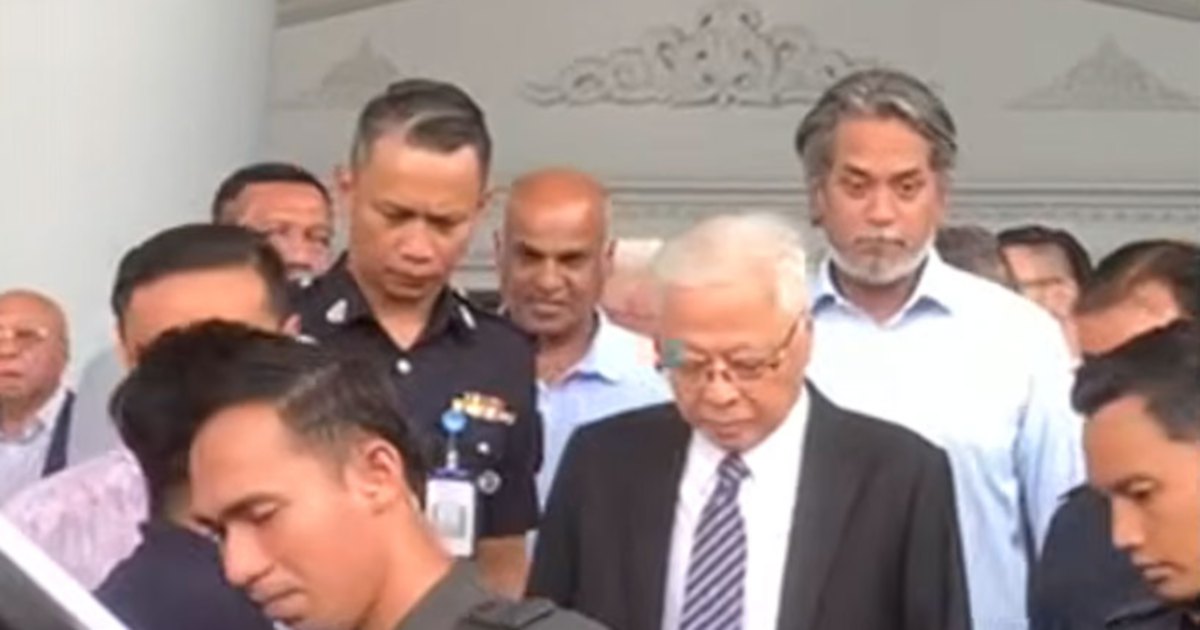
Former Umno Youth chief Khairy Jamaluddin's unexpected appearance at the Kuala Lumpur Court Complex during charge proceedings involving former prime minister Datuk Seri Ismail Sabri Yaakob has become a notable gesture, underscoring the complex relationship dynamics within Malaysia's ruling party at a particularly fraught moment in the country's political landscape.
The presence of Khairy, who holds considerable sway within Umno's younger demographic and represents a more technocratic faction within the party, carried symbolic weight beyond the courtroom. His decision to appear publicly alongside Ismail Sabri at the proceedings signals a measure of unity within the fractious party establishment, where internal divisions have frequently surfaced over the past several years. The move also reflects broader considerations about how senior party figures navigate the intersection of personal loyalty, factional interests, and party reputation management during legal proceedings involving prominent members.
Ismail Sabri's legal challenges have placed Umno in an uncomfortable position, forcing the party to balance its public statements about the rule of law with the realities of maintaining cohesion among its leadership cadre. That senior party figures like Khairy would attend such proceedings suggests a determination to project unity and normalcy despite the gravity of the situation. This approach contrasts with the approach taken by some other party members, whose conspicuous absence or limited commentary on the matter reflects the political delicacy surrounding the case.
The former prime minister served in office from August 2021 to August 2022, a tumultuous period marked by political instability, governance challenges, and escalating factional tensions within Umno. His tenure followed the collapse of the Perikatan Nasional government and represented an attempt to stabilize the political situation under the United Malays National Organisation's leadership. However, his relatively brief time in office and the circumstances surrounding his appointment and departure have remained subjects of significant political controversy and analysis.
Khairy's profile within the party has undergone considerable evolution over the years. Once positioned as a potential future party leader with strong backing from younger members and a reputation for engagement with digital-native constituencies, he has navigated numerous shifts in party fortunes and factional alignments. His presence at Ismail Sabri's court appearance can be interpreted as an expression of solidarity with a former party leader, but also as a broader statement about how Umno intends to manage internal crises while maintaining institutional cohesion.
The symbolism of such courtroom appearances extends beyond the immediate legal proceedings. In Malaysian politics, where party unity and the maintenance of hierarchical relationships carry significant weight, the decision of senior figures to attend or abstain from such events sends carefully calibrated messages to both party members and the general electorate. These signals matter particularly when a prominent party leader faces legal challenges that could have implications for the entire party's standing and future electoral prospects.
Umno has historically been sensitive to perceptions that it lacks internal discipline or that party members abandon one another during times of difficulty. The party's brand identity, built substantially on concepts of Malay-Muslim solidarity and collective strength, makes public displays of division particularly costly. Against this backdrop, Khairy's attendance at Ismail Sabri's proceedings represents a deliberate choice to reinforce narratives of party loyalty and institutional continuity, even as the underlying political pressures and factional tensions remain unresolved.
The court complex gathering also reflects the intense public interest in high-profile legal cases involving former senior government officials. Malaysian politics has witnessed an unprecedented number of such cases in recent years, establishing new precedents for how former leaders are held accountable while simultaneously creating complex questions about the intersection of politics, the judiciary, and public perception of institutional independence.
For observers seeking to understand contemporary Umno politics, such moments provide important clues about intra-party relationships, leadership hierarchies, and the party's capacity to maintain solidarity during challenging periods. The fact that Khairy's appearance drew noticeable attention from observers at the court complex indicates the continued importance of these symbolic political gestures in Malaysia's media environment and public discourse.
Looking forward, how Umno manages these legal proceedings involving its former leaders will likely shape public perceptions of the party's institutional health and its commitment to upholding the rule of law. The presence of figures like Khairy at such proceedings suggests the party intends to project an image of normalcy and continuity, even as deeper questions about party governance, accountability, and democratic values remain contested within Malaysian political circles.

