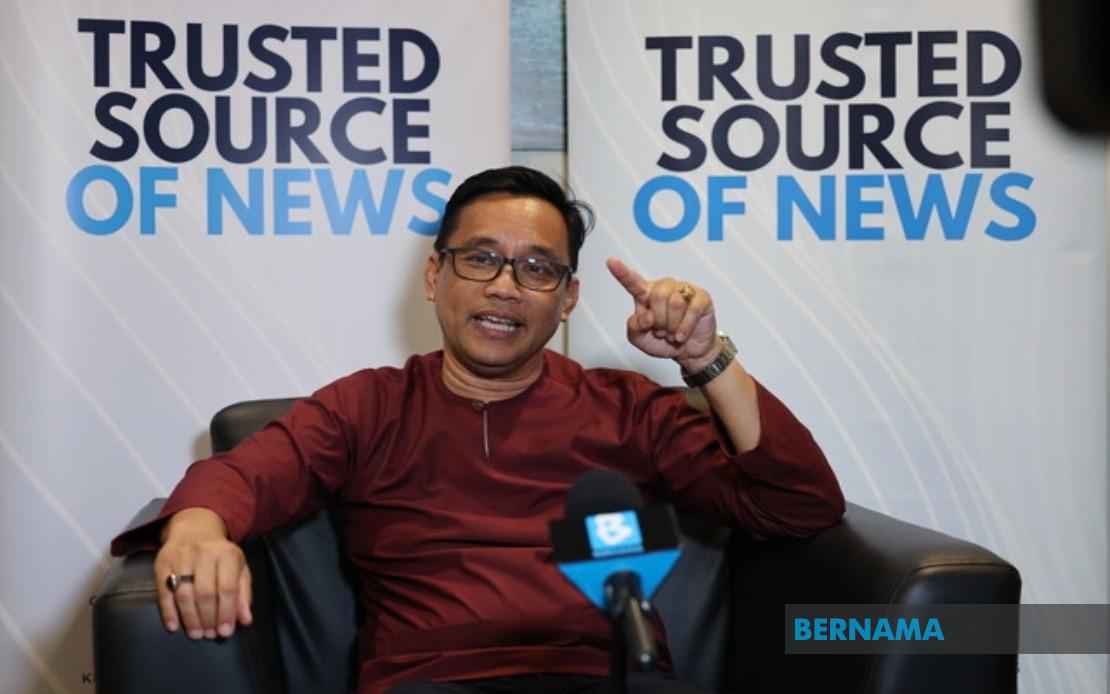
Mohd Khuzzan Abu Bakar, the Pakatan Harapan candidate for Semerah, is attempting to reclaim a seat he previously held before his defeat in the last state election. His return for the 16th Johor state election reflects a determined effort to resurrect stalled development initiatives rather than simply seek political redemption, positioning his candidacy as unfinished business for the constituency rather than a personal vendetta against his opponents.
The former Johor Youth, Sports, Culture and Heritage Committee chairman frames his comeback within the context of administrative transition. When Pakatan Harapan governed Johor from 2018 to 2020, several projects were left incomplete due to the change in government that year. Khuzzan's campaign message centres on the notion that returning PH to power in Semerah would enable the completion of these initiatives, suggesting voters have been waiting nearly four years for promised infrastructure to materialise.
Among his priority commitments is the restoration of the Taman Sri Sulong Youth Mini Complex, a facility that appears emblematic of the broader development agenda interrupted by the 2020 transition. Beyond this specific project, Khuzzan has identified persistent water supply deficiencies in Semerah and recurring flash flood problems affecting neighbouring areas including Batu Pahat and Tanjung Laboh as critical issues requiring immediate attention. These infrastructure concerns touch on basic service delivery that directly impacts daily life for thousands of residents.
Khuzzan's personal connection to the area strengthens his appeal as a repeat candidate. Born in Jalan Mesjid, Batu Pahat, and married to someone from Semerah, he positions his candidacy as rooted in community belonging rather than calculated political calculation. This biographical detail attempts to counter the perception that politicians simply parachute into constituencies and leaves them once elected, a common criticism in Malaysian electoral politics.
Economic development constitutes another pillar of his platform. Khuzzan emphasises youth employment opportunities as central to addressing Johor's evolving economy, which increasingly relies on investment and technology sectors rather than traditional manufacturing. His experience as a former banking officer informs his approach to small and medium enterprise support, suggesting that SME financing programmes like TEKUN Nasional and Amanah Ikhtiar Malaysia require complementary financial management guidance to succeed. This reflects a sophisticated understanding that access to credit alone insufficient without business capacity building.
The campaign itself reveals how Malaysian electoral politics has evolved technologically. Khuzzan notes that social media platforms including TikTok, Instagram and Threads now dominate voter engagement strategies, replacing traditional door-to-door canvassing as the primary interface between candidate and voter. Remarkably, he has observed significant adoption among older demographics, challenging assumptions that digital platforms remain youth-exclusive. This generational broadening of social media usage has profound implications for how political messages circulate and how campaigns must adapt their content strategies.
Ground-level campaign activities reflect attempts to engage voters through culturally resonant activities and forward-looking skill development. Youth-focused programmes incorporating e-sports, sepak takraw and carrom tournaments sit alongside exposure to artificial intelligence and digital technology workshops. This dual approach combines entertainment with practical preparation for economic transitions, acknowledging that young voters require both immediate engagement opportunities and meaningful exposure to skills that will determine their future employability.
The Semerah constituency presents a specific demographic challenge and opportunity for Pakatan Harapan. With 47,431 registered voters, roughly 37.4 per cent fall within the 18 to 39 age bracket, representing a significant youth cohort that could determine electoral outcomes if mobilised effectively. This demographic concentration differs substantially from constituencies with older, more traditionally conservative electorates, potentially favouring PH's messaging around technology adoption and economic modernisation.
Khuzzan expresses confidence that the 2024 election will generate markedly different political dynamics compared to the 2022 Johor polls, which occurred during the country's post-pandemic economic recovery period. He anticipates stronger voter participation, particularly from Johoreans working across the border in Singapore who may return to vote. Such cross-border commuters represent a politically engaged segment less tethered to purely local concerns and potentially more responsive to national-level political narratives.
The broader electoral context sees 172 candidates contesting 56 seats across Johor in polling scheduled for July 11, with early voting beginning July 7. Against this competitive landscape, Khuzzan's previous loss to Barisan Nasional's Mohd Fared Mohd Khalid by a majority of 4,041 votes in 2022 demonstrates the seat's competitive nature and the narrow margins by which outcomes are determined. Recapturing this seat requires either mobilising new voters or persuading previous BN supporters to switch allegiance, neither task guaranteed despite Khuzzan's ground presence and development focus.
Feedback from B40 households and e-Kasih programme recipients has bolstered PH's campaign confidence in Semerah, suggesting economic vulnerability drives receptiveness to opposition messaging. However, whether such sentiment translates into actual vote switches remains uncertain, particularly in constituencies where BN maintains strong institutional advantages through incumbent advantage and traditional support networks that extend beyond economic grievance.

