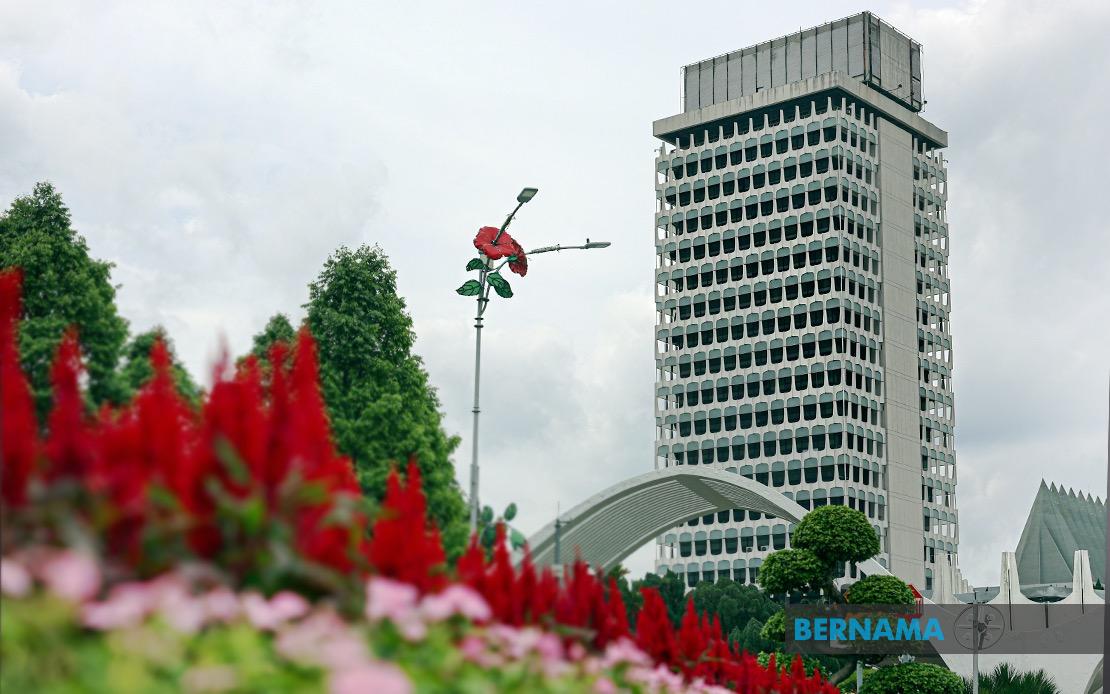
His Majesty Sultan Ibrahim, King of Malaysia, has formally approved eight pieces of legislation following their passage through parliament in the opening months of the year. The bills, which received royal assent, represent significant developments across several policy domains critical to the nation's governance and international obligations. Dewan Rakyat Speaker Tan Sri Johari Abdul made the announcement before question time in the lower house on June 22, officially concluding the legislative process for measures debated during the First Meeting of the Fifth Session of the 15th Parliament, held between January 19 and March 3.
Among the most economically consequential pieces of legislation is the Government Procurement Act 2025, a comprehensive overhaul of how public sector institutions acquire goods and services. This act modernizes procurement regulations across federal agencies and statutory bodies, addressing transparency, efficiency, and value-for-money principles that have become increasingly important as Malaysia seeks to strengthen public financial management. The legislative framework will standardize bidding processes and competitive practices throughout government, potentially reducing opportunities for inefficiency and ensuring taxpayer resources are deployed more strategically across the civil service and public enterprises.
Immigration policy has also received significant legislative attention through two complementary measures. The Immigration (Amendment) Act 2025 and Passports (Amendment) Act 2025 work in tandem to modernize Malaysia's entry and documentation systems. These amendments likely address practical challenges in border administration, identity verification procedures, and travel documentation that have accumulated as international mobility patterns and security requirements have evolved. For Malaysian businesses reliant on cross-border movement of personnel and for ordinary citizens seeking efficient travel procedures, these amendments carry immediate practical implications.
The International Settlement Agreements Resulting from Mediation Act 2025 establishes a legal framework governing how Malaysia treats international dispute resolution outcomes achieved through mediation rather than litigation. This legislation aligns domestic law with contemporary international commercial practices and dispute resolution mechanisms, positioning Malaysia as a jurisdiction receptive to alternative dispute resolution methods. Such frameworks are increasingly valued in international commerce, where mediation offers cost efficiency and confidentiality compared to adversarial proceedings, potentially making Malaysia a more attractive venue for resolving cross-border commercial disagreements.
The Johor Bahru-Singapore Rapid Transit System (RTS) Link Act 2026 represents a landmark in regional infrastructure cooperation. This landmark transit project connecting Malaysia's southern gateway directly to Singapore's transport network carries profound implications for the Iskandar region's economic development trajectory. By facilitating seamless passenger movement across the causeway, the RTS Link promises to intensify economic integration between the two neighbouring economies, streamline commuter flows, and unlock new commercial opportunities for businesses serving both markets. The legislation provides the legal foundation for a project that exemplifies deepening ASEAN intra-regional connectivity.
Educational funding receives attention through the Capitation Grant Act 2026, which establishes or amends the statutory framework governing per-capita government funding distributed to educational institutions. Capitation grants represent a fundamental mechanism through which the federal government finances school operations and educational services across the country. Clarifications or reforms to this system carry direct consequences for the financial sustainability of public schools and the quality of educational provision in every state, making this seemingly technical measure significant for students, educators, and parents nationwide.
Environmental protection advances through the Environmental Quality (Amendment) Act 2026, which strengthens or clarifies existing environmental legislation. In an era of heightened awareness regarding climate change, pollution control, and sustainability, amendments to the foundational environmental law signal government commitment to enhancing regulatory capacity and enforcement mechanisms. The Environmental Quality Act has long served as Malaysia's primary instrument for controlling air and water pollution and managing industrial environmental impacts, making amendments to it consequential for industrial operations, urban development planning, and public health outcomes across the country.
The Supplementary Supply (2025) Act 2026 provides additional appropriations beyond the original annual budget allocations for fiscal year 2025. This supplementary supply legislation typically addresses unforeseen expenditure requirements, emergency responses, or policy initiatives that emerged after the main budget was approved. Such supplementary allocations often reflect changing government priorities or necessary responses to unexpected fiscal pressures, making this legislation an indicator of where additional government resources were directed during the year.
Parliament has also progressed the Employment Insurance System (Amendment) Bill 2025 through the upper house, the Dewan Negara, with amendments made to specific clauses. The employment insurance framework provides critical social protection for workers facing job loss, making amendments to this system significant for worker security and the broader social safety net. The amendments introduced by the Dewan Negara suggest deliberative refinement of employment protection provisions, with modifications to Clause 11 indicating detailed parliamentary scrutiny of specific operational or eligibility provisions that affect worker entitlements and insurance administration.

