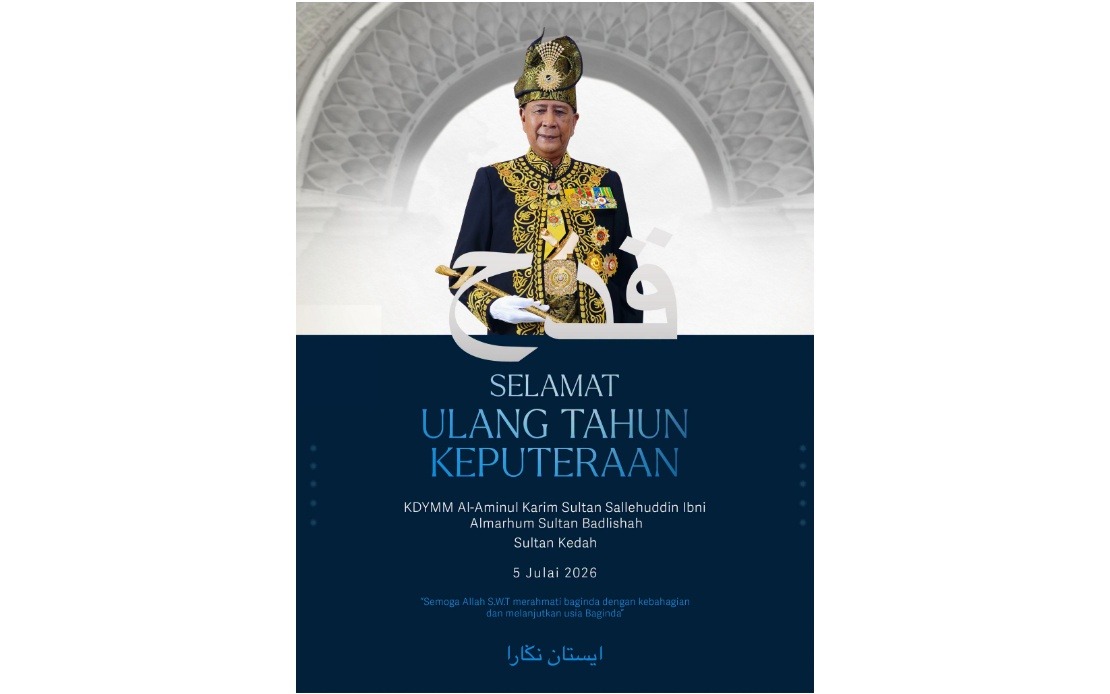
His Majesty Sultan Ibrahim, King of Malaysia, has extended warm birthday wishes to Al-Aminul Karim Sultan Sallehuddin Sultan Badlishah, Sultan of Kedah, as the royal dignitary marks his 84th birthday. The gesture reflects the close ties within Malaysia's constitutional monarchy system, where rulers across the country maintain customary exchanges during significant occasions. The birthday acknowledgement, shared through the official Facebook page of Sultan Ibrahim Sultan Iskandar, carries symbolic importance in reinforcing the bonds between the nation's highest office and the various state sultanates that form the foundation of Malaysia's federal structure.
In his message, the King invoked divine blessings for Sultan Sallehuddin's continued wellbeing and longevity. The phrasing used—"May Allah SWT bless His Royal Highness with happiness and grant him a long life"—reflects the formal traditions observed within Malaysia's royal circles, where religious sentiment and courtly etiquette intertwine. Such public gestures, though ceremonial in nature, carry weight in Malaysian political culture, as they underscore the protocol and respect observed among the country's ruling elites. For Sultan Sallehuddin, whose tenure as Sultan of Kedah has spanned decades, such acknowledgements from the nation's paramount ruler represent continued recognition of his role in Malaysia's constitutional framework.
Prime Minister Datuk Seri Anwar Ibrahim similarly conveyed his birthday greetings to Sultan Sallehuddin through a public Facebook post, demonstrating the convention whereby the nation's chief executive maintains formal courtesies with all state rulers. The Prime Minister's message extended wishes not only to Sultan Sallehuddin himself but also to Sultanah Maliha Tengku Ariff and the broader Kedah royal family, reflecting the inclusive nature of such state occasions. This approach acknowledges the interconnected nature of Malaysia's royal institutions and the collective role played by royal families in their respective states' affairs.
The Prime Minister's invocation of traditional Malay blessings—"Daulat Tuanku. Dirgahayu Tuanku"—underscores the cultural continuity maintained within Malaysia's political establishment. These phrases, deeply rooted in Malay-Islamic tradition, carry ceremonial significance and represent the linguistic and cultural anchors that define Malaysia's constitutional monarchy. By employing such language, the Prime Minister reinforces both his respect for the institution of the sultanate and his connection to Malaysian cultural values, which remain central to national identity and governance.
Sultan Sallehuddin's 84 years represent a substantial span of life in Malaysia's modern era, encompassing the country's post-independence transformation and its evolution into a regional economic power. As Sultan of Kedah, a state with rich historical significance dating back centuries, Sultan Sallehuddin occupies a position of considerable ceremonial and constitutional importance. The northern state's role in Malaysia's economic and social fabric—particularly through its contributions to agriculture and trade—makes its ruler a figure of significance within the federation's broader governance structure.
The birthday greetings exemplify the protocol-driven nature of Malaysia's constitutional monarchy, where formal acknowledgements serve purposes beyond mere pleasantries. Such exchanges reinforce the hierarchical yet interconnected structure of Malaysia's federal system, in which the Yang di-Pertuan Agong (the nation's elected King) stands as the paramount ruler while state sultans retain significant ceremonial and constitutional powers within their respective jurisdictions. These parallel structures have evolved over decades to create a unique governance model that balances centralized federal authority with state-level autonomy and royal prerogatives.
For Malaysia's political observers, such public gestures carry implications regarding the stability and continuity of institutional relationships at the highest levels of government. The fact that both the King and Prime Minister take time to publicly acknowledge such occasions demonstrates the enduring respect for traditional institutions within Malaysia's modern political system. In an era when questions occasionally arise about the roles and relevance of constitutional monarchies, these public endorsements of royal occasions serve as tangible reminders of the sultanate's ongoing significance in Malaysian public life and governance.
Kedah's position as one of Malaysia's most historically significant states adds context to the birthday greetings. The state's heritage, which includes its role as a major trading port and its connections to Islamic scholarship and civilization, positions its Sultan as a custodian of important aspects of Malaysian and Southeast Asian history. Sultan Sallehuddin's tenure has coincided with the state's modern development, and his continued health and leadership represent continuity for Kedah's administrative and symbolic functions within the federation.
The simultaneous greetings from both the King and Prime Minister illustrate how Malaysia's constitutional monarchy operates in conjunction with its parliamentary democratic system. While these are separate institutions with distinct powers and responsibilities, they share a common interest in the welfare and institutional stability of the nation's state sultanates. The coordination and consistency in their public messages suggest a harmonious relationship between constitutional monarchy and executive government, a relationship that has generally characterized Malaysia's political stability since independence.

