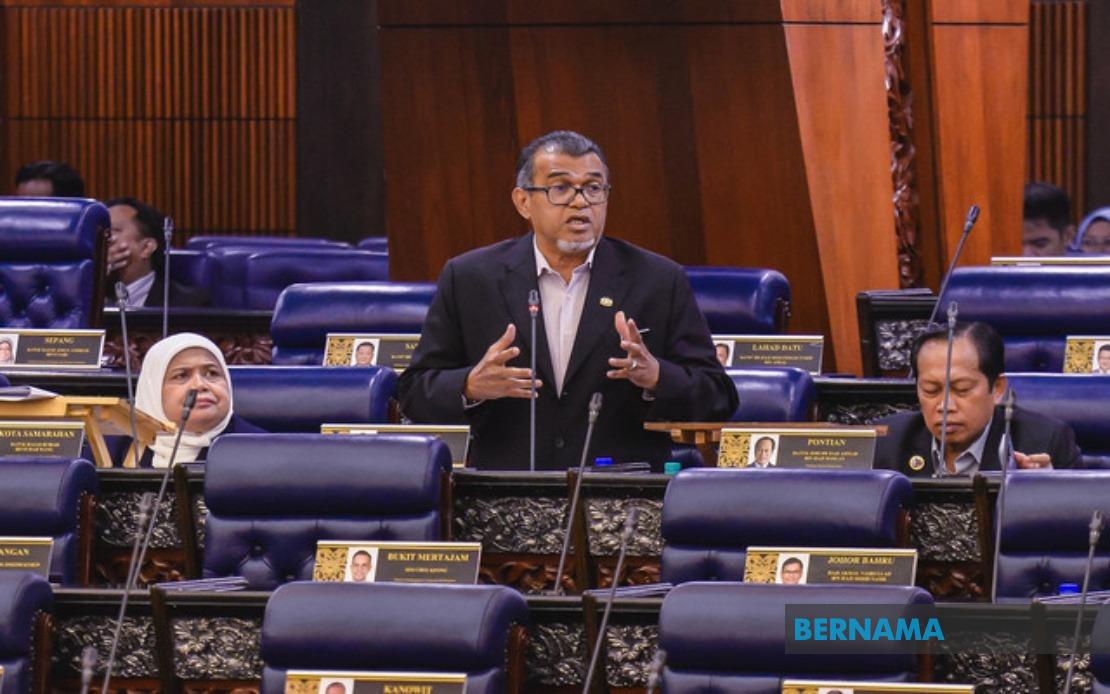
The anticipated RM500 million expansion of Kota Kinabalu International Airport hinges on clearing outstanding land and site matters with the Sabah state government, Deputy Transport Minister Datuk Hasbi Habibollah revealed during parliamentary proceedings. While the federal administration has already obtained approval for the project's financial component, critical administrative hurdles involving runway-adjacent areas and the precise location of the expansion site must be finalised before construction can commence. Hasbi's statement underscores the complex interplay between federal aviation ambitions and state-level land administration that often characterises infrastructure development across Malaysian regions with devolved authority.
The runway expansion initiative forms part of a broader national airport modernisation agenda, with Kota Kinabalu sharing the spotlight alongside developments at Tawau, Penang, and Miri. Prime Minister Datuk Seri Anwar Ibrahim earmarked RM2.3 billion across these four gateways during October's Budget 2026 presentation, with completion targeted for 2028. This temporal framework suggests the federal government views airport capacity expansion as crucial to supporting regional economic activity and tourism competitiveness in the coming years. The sequencing of announcements and funding, however, reveals a staggered implementation approach where some projects advance while others remain in preparatory stages.
Tawau Airport's expansion demonstrates more tangible progress, with works already underway at that location. This disparity highlights how ground-level complications, particularly title deeds and land surveys in Sabah's context, can create variable development timelines even within a unified national programme. The contrast between Tawau's active construction phase and Kota Kinabalu's administrative limbo suggests that bureaucratic resolution in one state location proved less contentious than anticipated challenges at another. For Malaysian and Southeast Asian investors monitoring infrastructure development signals, such delays carry implications for transport planning and business logistics calculations.
The Kota Kinabalu airport project's stalling point centres on unresolved technical and administrative queries regarding the expansion footprint. Hasbi indicated that multiple dimensions require Sabah government clearance: the land category classification, ownership verification, proximity considerations affecting existing runway operations, and potentially environmental assessments for adjacent zones. These represent routine prerequisites for most major airport undertakings, yet their persistence suggests either bureaucratic procedural gaps or substantive disagreements about optimal site configuration between federal and state authorities. Malaysian infrastructure observers recognise such standoffs as common friction points in federal-state project execution.
The funding approval mechanism already being in place distinguishes this project from many regional infrastructure initiatives that languish awaiting financial allocation. The Transport Ministry's readiness to proceed, coupled with Malaysia Airports Holdings Bhd's operational involvement, indicates institutional capacity exists for rapid project commencement once administrative barriers dissolve. This positioning allows rapid acceleration once Sabah provides the necessary clearances, potentially compressing the 2028 completion target if momentum builds following resolution. The message implicitly conveys that delays stem from governmental coordination rather than fiscal constraints or technical feasibility questions.
Parallel questioning during the same parliamentary session revealed distinct aviation policy challenges affecting smaller regional airfields. Pangkor Airport, alongside Redang and Tioman island facilities, has operated without scheduled commercial services following the discontinuation of charter operations in May 2022. Hasbi clarified these venues have not been abandoned, noting continued deployment for private aircraft, military operations, emergency landings, and medical evacuation flights. The government's framing emphasises functional utility even absent commercial viability, though this position masks broader questions about whether such assets justify maintenance expenditure when passenger demand remains limited.
The Pangkor situation reveals transport ministry pragmatism regarding commercial aviation services. Rather than mandating resumption of scheduled flights, authorities signal openness to airline proposals while acknowledging that operational viability ultimately reflects market forces. Airlines must satisfy themselves regarding passenger loads, route economics, and competitive positioning before deploying aircraft. This hands-off stance contrasts with active state intervention in major hub expansion, illustrating how Malaysian aviation policy reserves intensive government support for strategic infrastructure while leaving smaller regional connectivity to market determination. The distinction carries implications for island tourism development dependent on air access.
Sea transport's continued primacy in serving island destinations reflects both geographical reality and established transport patterns for Pangkor. Hasbi's recognition of maritime travel as the preferred modality for residents and tourists acknowledges economic realities: existing ferry services and boat operations provide adequate capacity for current demand levels, while aviation would require critical mass sufficient to justify operating costs. This acceptance represents pragmatic infrastructure planning that avoids papering over unviable projects with subsidies, though it potentially constrains future tourism growth if air connectivity becomes a prerequisite for international visitor attraction.
The broader context for these airport developments involves Malaysia's positioning within Southeast Asian aviation networks amid rising regional connectivity demand. The RM2.3 billion allocation for four provincial airports reflects strategic recognition that Kuala Lumpur International Airport cannot absorb all growth, necessitating capacity distribution across secondary hubs. Kota Kinabalu's expansion assumes particular importance given Sabah's tourism potential and positioning relative to Asian market corridors. Delays in execution therefore carry consequences extending beyond single-airport economics, potentially affecting national capacity utilisation patterns and competitive standing against other regional aviation hubs.
The Deputy Minister's parliamentary responses underscore the technical complexity underlying infrastructure delivery across Malaysia's federal structure. Land administration, environmental clearances, and inter-governmental coordination constitute prerequisites that appear straightforward politically but prove operationally intricate. Hasbi's emphasis on Sabah government decision-making transfers responsibility for further delays to the state level, signalling federal readiness while highlighting federalism's inherent coordination challenges. Observers monitoring Malaysian infrastructure development recognise such explanations as codes indicating unresolved inter-governmental disputes requiring high-level political intervention.
Looking forward, the RM500 million Kota Kinabalu expansion remains contingent on administrative resolution that could materialise rapidly or extend indefinitely depending on political will and bureaucratic efficiency. The 2028 completion target, though stated, may prove optimistic if land matters consume additional months. However, the committed funding and operational readiness of relevant agencies suggest genuine intention to proceed once clearances materialise. For regional stakeholders assessing Sabah's investment climate and infrastructure competitiveness, the airport project's trajectory offers indicators of government's capacity to execute complex developments despite federal-state coordination complexities inherent in Malaysia's constitutional framework.

