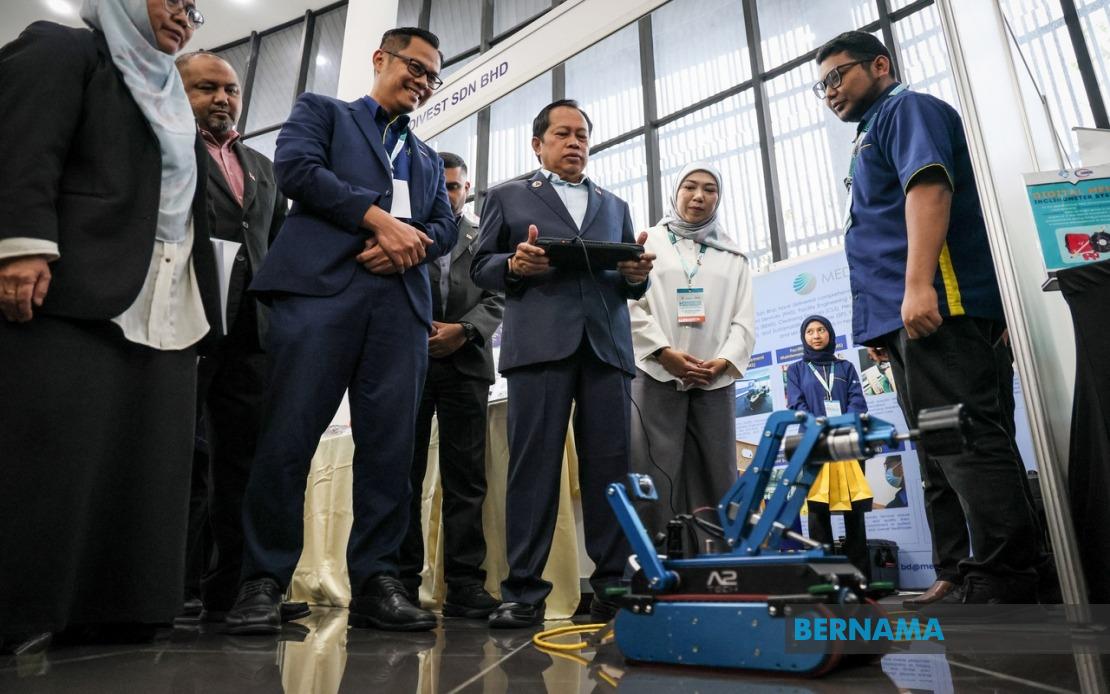
The Malaysian construction industry faces a significant untapped opportunity in facility management and maintenance, according to the Works Ministry, which is actively recruiting contractors into a market valued at RM39.59 billion across the three-year period from 2023 to 2025. Deputy Works Minister Datuk Seri Dr Ahmad Maslan made the call while launching the Contractors Convention 2026: NexGen Builders in Butterworth, highlighting the stark imbalance between available project demand and the contractor capacity to deliver FM services across the country.
Data compiled by the Construction Industry Development Board reveals the scope of the opportunity: between 2023 and 2025, Malaysia declared 1,541 facility management and maintenance projects. Yet despite this volume of work, only 468 contractors currently hold registration under the F01 and F02 FM specialisation categories. This substantial gap—more than 70 percent fewer registered contractors than the number of projects—underscores why the ministry is prioritizing FM sector development as a strategic growth area for the construction industry.
The ministry's emphasis on facility management reflects a fundamental shift in how Malaysia approaches infrastructure and asset stewardship. For decades, government and industry priorities centred on the construction phase of major projects, with maintenance often relegated to secondary importance once buildings, roads and bridges were completed. This approach, while delivering impressive structures, frequently resulted in accelerated asset deterioration and costly emergency repairs. Ahmad stressed that roads, buildings, bridges and other public infrastructure require continuous, systematic upkeep to preserve their functionality and extend their operational lifespan, a reality that demands dedicated professional contractors specializing in this work.
The economic rationale for contractors to pivot toward FM is compelling. The sector represents a diversified revenue stream beyond traditional construction work, offering stable, recurring contracts rather than project-based income that fluctuates with market cycles. Moreover, FM work typically involves longer-term relationships with asset owners—government agencies, local authorities, universities, hospitals and private corporations—creating predictable business environments. For contractors seeking to build resilient operations capable of weathering industry downturns, FM diversification presents a strategic pathway to financial sustainability.
To facilitate this transition and establish professional standards, the Construction Industry Development Board has developed CIS 33:2026, a Facility Management Good Practice Guide launched at the same convention. This framework provides a systematic, sustainable and standardised approach to FM operations, serving as a common reference point for asset owners, facilities managers, contractors and other industry stakeholders. By establishing uniform best practices, the guide aims to elevate FM service quality across Malaysia while enabling contractors to implement consistent methodologies that enhance operational efficiency and reduce costs.
The implications of this FM push extend beyond individual contractor profitability. Strategic investment in facility management infrastructure directly affects public asset quality and citizen welfare. Well-maintained roads reduce accident rates and transportation costs; properly serviced buildings enhance worker productivity and safety; and regularly maintained bridges and public infrastructure minimize service disruptions. The shift toward treating FM as a core subsector rather than a support function represents recognition that asset maintenance is equally critical to economic productivity as asset creation.
For Malaysian contractors considering entry into FM, the timing aligns with broader regional trends. Southeast Asian nations increasingly recognize that aging infrastructure requires professional maintenance capacity. As Malaysia continues urbanization and infrastructure expansion, the FM sector will expand correspondingly. Contractors who establish expertise and reputation now position themselves advantageously as competition for FM contracts intensifies in coming years.
The ministry's recruitment drive also addresses a capacity constraint that could limit Malaysia's infrastructure maintenance standards. With only 468 registered FM contractors managing a RM39.59 billion market, individual contractors face workload pressures that may compromise service quality. Expanding the contractor base distributes project demand more evenly, allowing specialists to focus on excellence rather than overextension. This market expansion thus serves both economic development and service quality objectives.
Implementing CIS 33:2026 standards provides an additional benefit: international alignment. As FM practices increasingly follow global standards, Malaysian contractors meeting these specifications become competitive in regional and international markets. This opens pathways for contract opportunities beyond Malaysia's borders, particularly as Singapore, Thailand and Indonesia simultaneously invest in FM capacity. The standard positions Malaysian FM contractors to participate in cross-border projects and establish regional credibility.
For prospective FM contractors, regulatory requirements for F01 and F02 specialisation represent minimal barriers compared to the market opportunity. The ministry is essentially issuing an invitation to relatively straightforward market entry into a sector where demand substantially exceeds supply. This positioning differs markedly from saturated construction segments where intense competition constrains margins. The FM sector currently offers favorable conditions for new entrants and established contractors alike.
The ministry's push also acknowledges that construction cannot indefinitely absorb all contractor capacity and growth aspirations. Malaysia's construction sector has matured significantly, with major infrastructure frameworks largely established. FM work provides natural progression for established contractors and expansion opportunities for growing firms. By promoting FM as a legitimate, profitable specialization—not merely post-construction housekeeping—the ministry creates career pathways and business models that strengthen overall industry resilience and professional standards.

