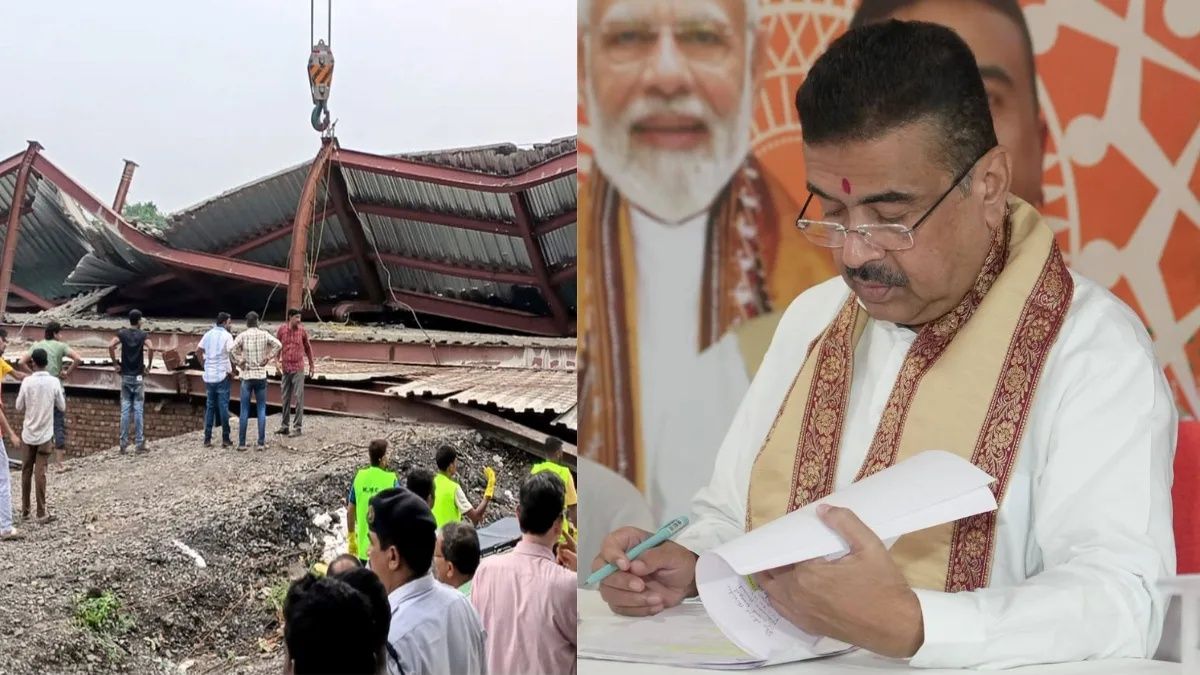
The death toll from the catastrophic warehouse collapse in Kolkata's Taratala area has climbed to 11 as rescue teams extended their search through the rubble into the second day of operations. Officials at SSKM Hospital's Trauma Care Centre confirmed that another body was recovered around 1.15pm on Thursday, June 25, though the victim's identity remained unknown at the time. The mounting casualties underscore the severity of the structural failure and raise urgent questions about building safety standards across India's eastern metropolis.
The rescue operation has demonstrated remarkable coordination between federal and state authorities, with personnel from the Indian Army, the National Disaster Response Force (NDRF), and multiple other agencies working in tandem at the collapse site. Even as recovery efforts continue, officials harbour serious concerns that additional workers remain trapped beneath tons of concrete and steel debris. The seamless interagency response reflects recognition that such disasters demand immediate, unified action—a lesson that extends far beyond this single incident to India's broader infrastructure management challenges.
West Bengal Chief Minister Suvendu Adhikari used a legislative address to launch a fierce assault on the previous Kolkata Municipal Corporation (KMC) administration, which had been controlled by the Trinamool Congress (TMC). He presented documentary evidence suggesting that the Taratala warehouse's construction plan had received official approval despite containing significant structural deficiencies. Adhikari specifically cited documents bearing the signature of former Mayor Firhad Hakim, asserting that the approvals process had been fundamentally compromised. His allegations point to a pattern of systematic failures in the city's building oversight mechanisms.
The Chief Minister's indictment extended beyond mere procedural lapses to accusations of systemic corruption. He contended that the erstwhile TMC-led KMC had become mired in what he termed "cut money"—informal payments extracted during the approval process—ultimately rendering Kolkata a "city of death" where public safety had been sacrificed for private gain. While such political recriminations are inevitable following disasters, they also reflect genuine concerns about how development approvals have historically functioned in major Indian cities, where informal mechanisms often operate parallel to official channels.
Law enforcement action has already commenced, with five individuals arrested in connection with the collapse. The detainees include the construction company's supervisor, the steel fabricator responsible for structural elements, the land lessee, a labour contractor linked to the project, and a broker allegedly involved in securing KMC approval. However, the primary accused, Azgar, remains at large, prompting a manhunt that may prove critical to understanding the full chain of responsibility. These arrests suggest investigators are examining accountability across multiple levels of the development and approval ecosystem.
In response to the disaster, Chief Minister Adhikari has declared a four-week suspension of all non-essential construction activity across the Kolkata Municipal area and eight surrounding municipalities including Rajarhat-New Town, Maheshtala, Budge Budge, Pujali, Bishnupur, Sonarpur, and Baruipur. This moratorium effectively halts development across a significant swathe of the metropolitan region and signals the severity with which the state government views the structural safety crisis. During this pause, all previously approved building plans in these jurisdictions will undergo comprehensive re-examination.
The audit process itself represents an unprecedented intervention in Kolkata's building governance structures. A high-level committee chaired by Additional Chief Secretary Rajesh Pandey has been constituted to oversee the review, bringing together diverse expertise from government departments and specialized agencies. The committee's composition—including representatives from IIT Kharagpur, Rail India Technical and Economic Service (RITES), Indian Railway Construction Limited (IRCON), the Fire Services Department, the Public Works Department, and the KMC itself—suggests a determination to apply rigorous technical and safety standards that may have been absent from prior approval processes.
Adhikari's statements regarding potential penalties indicate a determination to pursue accountability with unusual severity. He pledged that individuals found culpable would face imprisonment and, remarkably, that their properties could be seized to compensate victims. Such measures, if implemented, would represent a significant escalation in how India typically addresses building safety failures, where consequences have historically been relatively modest. The severity of the language suggests either genuine commitment to reform or political pressure to demonstrate decisive action—or likely both.
For Malaysian and Southeast Asian observers, the Kolkata incident offers sobering lessons about infrastructure governance in rapidly developing regions. Building collapse disasters typically reflect not isolated failures but systemic weaknesses in approval mechanisms, inspector training, and enforcement capacity. The involvement of informal payment systems alongside official bureaucratic processes mirrors patterns documented across developing Asia, where rapid urbanization has often outpaced institutional capacity to ensure safety compliance. The Taratala collapse serves as a stark reminder that without genuine reform of approval and inspection systems—not merely symbolic audits or high-profile arrests—similar tragedies remain inevitable in major cities throughout the region.
The incident also highlights the critical importance of independent technical review in building approvals, particularly for large structures in densely populated areas. The inclusion of technical institutes and specialized agencies in the audit committee represents a step toward such independence, though implementing rigorous standards across thousands of existing structures remains a formidable challenge. For policymakers across South Asia seeking to strengthen building safety frameworks, the Kolkata response—despite its political dimensions—offers a template for rapid institutional mobilization when disaster forces official attention to previously neglected problems.

