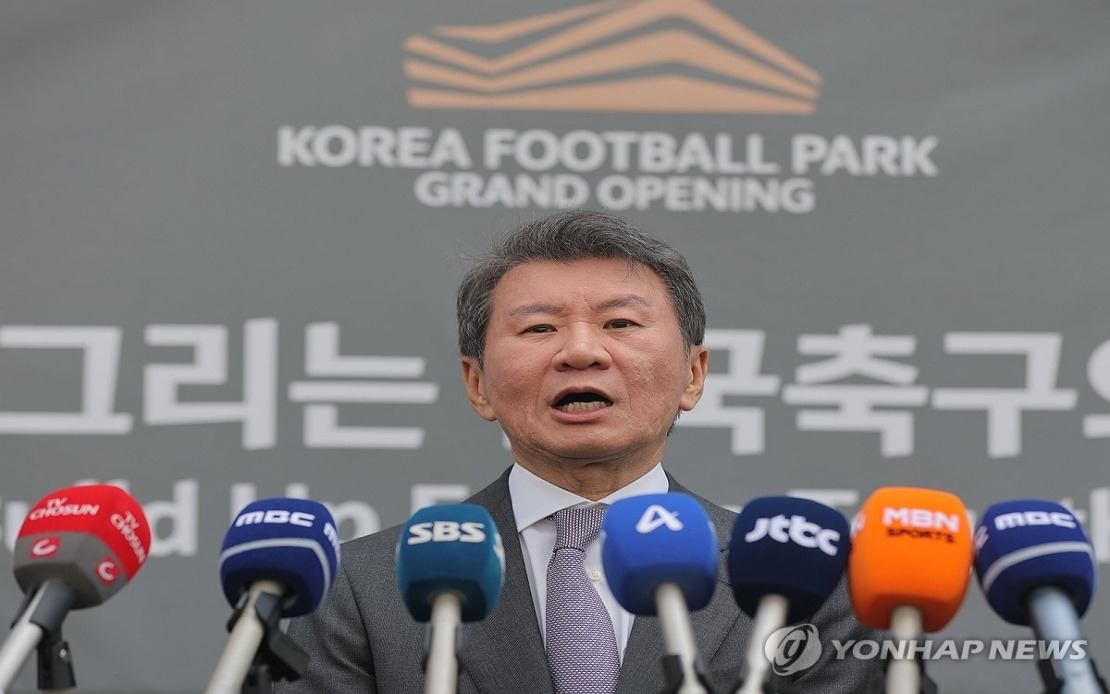
Korea Football Association president Chung Mong-Gyu has stepped down from his position, submitting his resignation letter on Monday after chairing what would be his final executive meeting at the KFA's headquarters in Cheonan, located approximately 90 kilometres south of Seoul. The departure marks a significant turning point for South Korean football administration, occurring amid considerable public pressure and institutional scrutiny following the national team's disappointing performance at the World Cup.
Chung had previously indicated in late May that he would leave office once the FIFA World Cup concluded on July 20, according to South Korean time. However, he accelerated his departure by roughly two weeks in response to the national team's early elimination from the tournament's group stage. South Korea's failure to progress beyond the opening round, finishing third in Group A with only three points accumulated through one victory and two defeats, proved insufficient to secure advancement as one of the eight best-placed third-place finishers. The team's coach, Hong Myung-Bo, resigned immediately following the mathematical confirmation of elimination.
The controversy surrounding Chung's tenure extends well beyond the team's recent sporting failures. His appointment of Hong Myung-Bo as national team manager in July 2024 became particularly contentious, with observers and commentators questioning the transparency and legitimacy of the selection process. This hiring decision drew substantial criticism for appearing opaque and potentially lacking proper oversight. Compounding these concerns, South Korea's Ministry of Culture, Sports and Tourism conducted a comprehensive investigation into KFA operations that year, subsequently concluding that Chung and numerous other senior KFA officials warranted disciplinary measures due to irregular procedures and governance breaches.
The relationship between the KFA and the ministry has deteriorated into formal legal disputes, with the government ministry already preparing to initiate another comprehensive audit of the football association in light of the World Cup outcome. This adversarial dynamic reflects deeper questions about institutional accountability and operational standards within Korean football's governing structures. The ministry's willingness to pursue multiple investigations and audits underscores the severity of governance concerns that extend beyond individual managerial decisions.
Under KFA regulations, the organization's four vice presidents will determine which among them assumes the interim leadership role pending the election of a successor. The succession process is constrained by specific procedural requirements. Ordinarily, if a departing president possessed more than one year of tenure remaining, their replacement must be elected within a 60-day window. Given that Chung maintained approximately three years remaining in what would have been his fourth consecutive term, this extended tenure requirement applies to his succession.
The electoral mechanism for selecting KFA presidents involves a collegiate voting system comprising representatives from regional football associations, CEOs of K League professional clubs, current and former players, active and retired coaches, and match officials. During last year's presidential election, 183 of the 192 eligible voters participated in the process, demonstrating substantial institutional engagement. However, this traditional approach faces potential reform pressure from the government. Culture, Sports and Tourism Minister Chae Hwi-Young has publicly expressed awareness of concerns regarding the current electoral procedures, pointedly suggesting that the KFA cannot maintain existing selection mechanisms if its leadership truly comprehends the public's profound disappointment over the World Cup performance.
Reform discussions are advancing through formal channels involving South Korea's primary sporting authority. The Korean Sport and Olympic Committee, which exercises regulatory authority over the KFA and other member associations, has scheduled a general meeting for July 16 specifically to address electoral procedures. KSOC officials have indicated the meeting will evaluate two significant modifications: potentially extending the 60-day election window that typically follows a president's resignation, and implementing a direct election system that would bypass the current collegiate voting arrangement. These potential reforms reflect broader pressure for democratizing leadership selection within sports governance structures.
In his resignation statement, Chung expressed gratitude toward football supporters and acknowledged periods when his leadership disappointed the constituency. He characterized his tenure as driven exclusively by aspirations for Korean football's development and international success, while candidly recognizing that his stewardship encompassed both achievement and failure. Reflecting on the responsibility inherent in his position, Chung attributed organizational successes to players and fans while personally accepting accountability for shortcomings. He concluded by expressing confidence that Korean football would successfully navigate contemporary challenges and ultimately reclaim former heights of sporting achievement, noting the sport's historical pattern of adversity and subsequent recovery.
The resignation carries implications extending beyond immediate governance transitions, signaling how World Cup performance directly influences institutional accountability in Southeast Asian football contexts. For Malaysia and neighboring countries, the episode illustrates how international sporting failure can catalyze broader examinations of organizational governance, transparency, and managerial competence. The pressure from South Korea's government ministry to reform electoral processes reflects a growing pattern whereby political authorities intervene in sports administration when public confidence erodes following disappointing international results. As Southeast Asian nations pursue World Cup qualification and continental success, similar governance vulnerabilities could expose administrators to comparable scrutiny and institutional restructuring.

