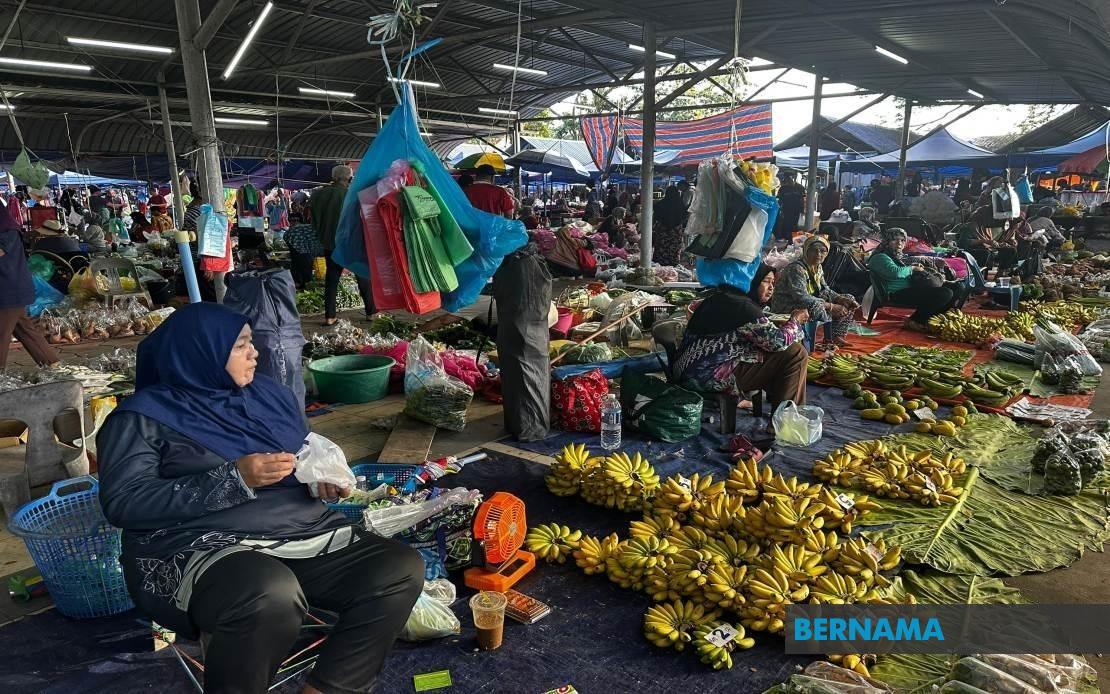
The quest to secure UNESCO World Heritage Site status for Kota Belud Tamu, the iconic traditional market in Sabah, will demand meticulous preparation and sustained effort before any formal nomination can advance, state legislators heard this week. Speaking in the Sabah State Legislative Assembly, Assistant Minister of Tourism, Culture and Environment Dr Andi Md. Shamsureezal outlined the substantial preparatory work required, signalling that the pathway to international recognition, though achievable, remains distant and demanding.
The nomination process itself represents one of UNESCO's most stringent assessment frameworks. According to Dr Andi, the organization's criteria demand far more than cultural significance or local importance. Applicants must furnish rigorous documentation spanning both the physical heritage embodied in structures and artefacts, as well as the intangible dimensions—the living practices, knowledge systems, and traditions—that animate a site's cultural meaning. For Kota Belud Tamu, this translates into mapping generations of commercial tradition, understanding indigenous trading protocols, and capturing the market's role as a custodian of indigenous knowledge and cultural exchange.
A critical hurdle in any UNESCO World Heritage nomination centres on demonstrating what the organization terms "Outstanding Universal Value" or OUV. This concept extends beyond regional or national relevance; it requires proving that a site possesses significance transcending boundaries and speaking to patterns of human cultural achievement recognized globally. For a traditional market, establishing OUV demands historical and scientific evidence demonstrating how Kota Belud Tamu embodies universal principles of cultural exchange, indigenous commerce, or heritage preservation that resonate with UNESCO's mission to protect humanity's shared inheritance.
The government has already begun building foundations for expanded recognition. Last May, Kota Belud achieved designation as part of the Kinabalu UNESCO Global Geopark, a designation that positions the district within an international network of geologically significant sites. This earlier recognition provides a platform and preliminary framework upon which heritage designation could theoretically be constructed, though a geopark designation addresses geological and geomorphological features rather than cultural heritage specifically.
Sabah Parks, the agency leading geopark management in the region, has initiated the "Tamu Geopark" programme to strengthen cultural preservation alongside geological conservation efforts. This initiative functions as both a preservation mechanism and an economic development strategy, promoting local gastronomy, traditional clothing, handicrafts, and indigenous art forms while simultaneously creating market opportunities for community producers. By integrating cultural programming with geopark activities, the state has created a framework demonstrating how heritage preservation can generate sustainable livelihoods—an increasingly important consideration in UNESCO evaluations.
The economic dimensions of heritage recognition carry particular weight for Sabah and indeed for Malaysia more broadly. Southeast Asia has witnessed growing competition among communities seeking UNESCO designation, recognizing that international heritage status attracts visitors, supports premium pricing for local products, and validates indigenous knowledge systems that modernization often threatens. For Kota Belud, whose Kadazandusun population represents one of Sabah's largest ethnic communities, heritage recognition would affirm the market's role as a living repository of indigenous practices and economic traditions.
Datuk Mohd Arsad Bistari, representing Tempasuk in the State Assembly, raised the nomination question, reflecting broader state interest in leveraging cultural assets for tourism and economic development. This legislative attention indicates that heritage recognition has moved beyond niche cultural concerns into mainstream political discourse—a shift reflecting understanding that cultural economy constitutes a legitimate development strategy for regions seeking alternatives to resource extraction or manufacturing-focused growth models.
The timeline for achieving UNESCO World Heritage designation remains uncertain. Dr Andi emphasized that comprehensive studies, detailed documentation of heritage assets, and assembly of supporting evidence will consume considerable time. International best practice suggests that serious nomination attempts typically require three to five years of preparatory work before submission, with assessment periods extending several additional years. This extended timeline reflects UNESCO's commitment to rigorous evaluation but also tests the patience of communities eager for recognition.
Malaysia has experienced mixed success with UNESCO World Heritage nominations. Several sites including Georgetown, Penang and Melaka's historic centres have achieved recognition, validating the nomination approach while demonstrating that sustained institutional commitment and international collaboration improve success prospects. Kota Belud Tamu would represent a distinctive nomination category—a living marketplace rather than architectural ensemble or natural landscape—potentially requiring innovative documentation strategies and comparative analysis with other traditional market sites worldwide.
The integration of geopark and cultural heritage initiatives represents a sophisticated approach to multi-layered recognition. Rather than pursuing isolated designations, Sabah is building an interconnected framework where geological significance, cultural preservation, and economic development reinforce one another. This holistic strategy aligns with contemporary UNESCO thinking, which increasingly emphasizes how heritage protection generates sustainable community benefits.
For Malaysian heritage advocates, the Kota Belud case illustrates broader challenges facing communities pursuing international recognition. Documentation standards, scientific rigor requirements, and assessment timelines impose demands requiring institutional capacity that not all communities possess. Dr Andi's remarks essentially acknowledge that aspiring to UNESCO status demands transformation of local knowledge into forms legible to international bureaucratic frameworks—a process that, while potentially valorizing heritage, also risks standardizing and formalizing what communities prefer to maintain as living, evolving practice.
Moving forward, Sabah's approach suggests a pragmatic sequencing: utilizing geopark status to build international visibility and establish research partnerships; systematically documenting Kota Belud's cultural dimensions through collaborative scholarship; and gradually assembling the comprehensive evidentiary base UNESCO demands. Success remains uncertain, but the preliminary recognition through geopark designation provides institutional legitimacy and international credibility upon which heritage nomination efforts can be constructed.

