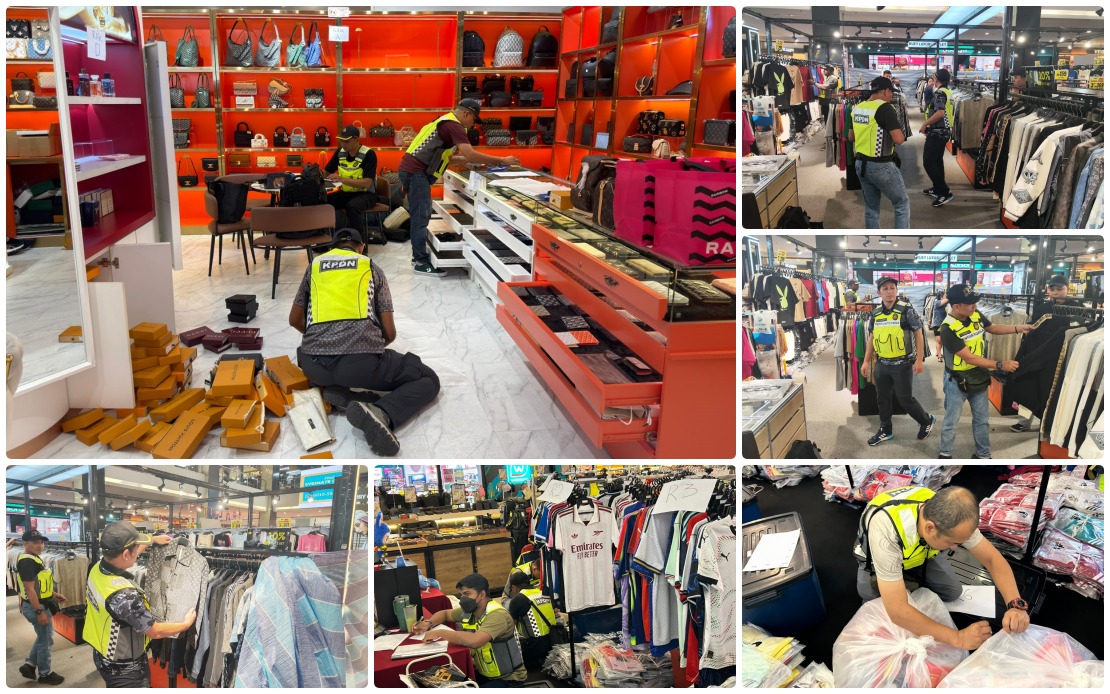
The Ministry of Domestic Trade and Cost of Living (KPDN) has executed a coordinated enforcement operation in Johor Bahru that resulted in the confiscation of RM600,000 in counterfeit merchandise, signalling an intensified crackdown against intellectual property violations in Malaysia's retail sector. Acting on intelligence gathered over several weeks, the Putrajaya Enforcement Division raided three separate commercial locations on June 15, uncovering what authorities describe as an organised distribution network for fake branded products spanning major supermarkets and smaller retailers.
According to Datuk Azman Adam, the enforcement director-general at KPDN, the investigation centred on traders suspected of being major distributors within a wider ecosystem of counterfeit sales. The month-long intelligence phase proved crucial in establishing patterns of suspicious activity and mapping the scope of the operation before authorities moved to intercept supplies. This methodical approach reflects KPDN's shift towards tackling counterfeiting at source rather than merely policing retail shelves, addressing the supply chains that enable widespread distribution of fake goods throughout the region.
The seized inventory encompassed a diverse range of high-value consumer products bearing fraudulent trademark applications, including designer clothing, luxury handbags, leather wallets, belts, and counterfeit fragrances—categories consistently targeted by counterfeiters due to their substantial profit margins and strong consumer demand. Associated business documentation and records were also recovered, providing investigators with potential leads into the broader operational structure and financial flows underpinning the scheme. The breadth of products seized underscores how counterfeit networks have become increasingly sophisticated, operating across multiple product categories simultaneously to diversify risk and revenue streams.
The enforcement action has resulted in the detention of four individuals, comprising the proprietor and caretaker of the raided premises alongside other persons believed instrumental in day-to-day business operations. These detentions are preliminary to formal investigations under Section 102(1)(c) of the Trademark Act 2019, which specifically addresses the unlawful possession, custody, or control of goods bearing falsely applied trademarks for commercial purposes. The involvement of multiple detained parties suggests this was not a solitary bad actor but rather a coordinated enterprise with defined roles and management structures.
The legal framework being applied carries substantial penalties reflecting the seriousness with which Malaysian authorities treat intellectual property crimes. Individual offenders face fines reaching RM10,000 per counterfeit item alongside potential imprisonment for up to three years on first conviction, with repeat offences triggering enhanced sentences of up to five years imprisonment combined with maximum fines of RM20,000 per item. Corporate entities confront even steeper financial exposure, with fines commencing at RM15,000 per item for initial offences and escalating to RM30,000 per item for subsequent violations, creating meaningful deterrents against institutional involvement in counterfeiting.
For Malaysian consumers and legitimate retailers, this operation carries practical implications extending beyond the immediate seizure figures. Counterfeiting operations inflate costs throughout legitimate supply chains as authentic producers invest heavily in brand protection, authentication technologies, and enforcement activities—costs ultimately reflected in consumer prices. By dismantling distribution networks, KPDN's enforcement actions reduce the competitive advantage counterfeiters gain through avoiding legitimate production, quality, and compliance costs, thereby levelling the commercial playing field for honest businesses operating within regulatory frameworks.
The preliminary verification conducted by representatives of the trademark holders—the legitimate brand owners—confirmed sufficient grounds to proceed with criminal investigation, indicating that sophisticated authentication procedures identified the goods as genuine counterfeits rather than grey-market or diverted products. This distinction matters considerably, as it establishes that trademark infringement rather than merely parallel importation or supply chain complications occurred. The involvement of brand representatives in the verification process demonstrates the collaborative model increasingly adopted between government enforcement agencies and private intellectual property holders, pooling expertise and resources for greater effectiveness.
From a regional perspective, this operation reflects patterns evident across Southeast Asia where counterfeiting networks often operate across borders, sourcing products from manufacturing hubs and distributing them through interconnected retail channels spanning multiple countries. Johor's strategic location adjacent to Singapore and its role as a major commercial and logistics hub makes it particularly vulnerable to such operations, as does its concentration of supermarkets and retail establishments serving both local and cross-border customers. Enforcement successes in Johor therefore carry implications for regional supply networks and transnational counterfeit distribution systems.
KPDN's enforcement director-general has signalled that this operation represents only one phase of broader systematic efforts targeting trademark infringement across Malaysia. The explicit commitment to intensified operations indicates that authorities recognise counterfeiting as a persistent and evolving threat requiring sustained attention. The intelligence-led approach evident in this case suggests KPDN has developed improved capacity for identifying and targeting major distribution nodes rather than focusing exclusively on retail point-of-sale enforcement, representing a strategic evolution in anti-counterfeiting methodology.
The RM600,000 valuation placed on seized goods reflects the substantial economic stakes embedded in counterfeiting operations, illustrating the financial incentives driving criminal networks and the economic losses registered trademark owners sustain through intellectual property infringement. These figures typically represent wholesale values; retail value of the same merchandise would have generated considerably greater consumer deception and economic harm had the operation continued uninterrupted. The scale of interception suggests this was a materially significant node within broader counterfeiting infrastructure rather than a minor illicit operation.
For businesses engaged in legitimate retail and distribution, the message from authorities appears unambiguous: compliance with trademark and intellectual property regulations remains non-negotiable, and enforcement will focus increasingly on upstream supply and distribution activities rather than exclusively on consumer-facing retail locations. This enforcement philosophy incentivises retailers and distributors to implement rigorous supplier verification procedures and maintain comprehensive documentation establishing the authenticity and legitimacy of their product sourcing, reducing counterfeiting risk throughout supply networks.

