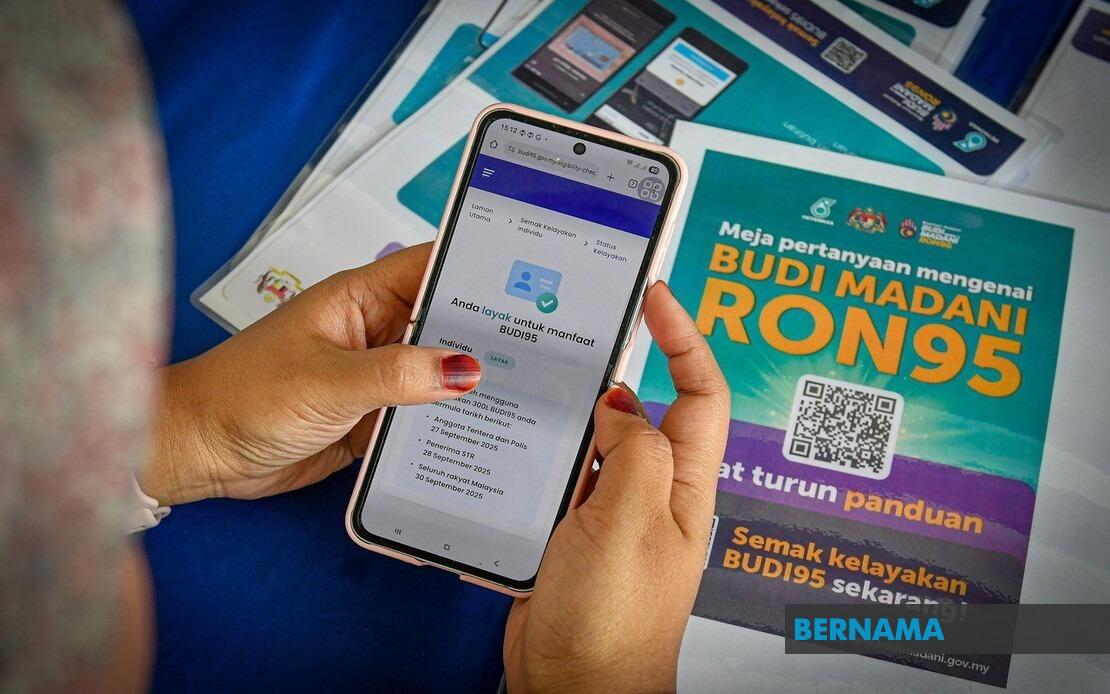
The Ministry of Domestic Trade and Cost of Living has signalled its intention to develop targeted assistance mechanisms for island communities across Peninsular Malaysia that depend on private boats for essential transport, particularly under the BUDI MADANI subsidy framework. Deputy Minister Datuk Dr Fuziah Salleh made the commitment during parliamentary proceedings on July 1, responding to concerns raised about the specific challenges faced by residents living on islands who lack convenient mainland access. The acknowledgement represents a significant step towards recognising a demographic whose daily realities have long been overlooked in national subsidy discussions, as island dwellers face disproportionate transport costs that mainland residents seldom encounter.
The impetus for this policy review came from Muhammad Islahuddin Abas, the Mersing parliamentary representative, who pressed for elevated BUDI95 fuel quotas tailored specifically to island inhabitants. Residents in areas such as Mersing, Johor, argue compellingly that their petrol consumption patterns differ fundamentally from the general population, driven by the necessity of regular boat journeys between islands and the mainland. This distinction matters considerably when subsidy allocations remain rigid and standardised across diverse geographic contexts. The parliamentary exchange highlighted a genuine gap in policy design where administrative convenience has prevailed over practical accommodation of regional variation.
Fuziah's response indicated ministerial willingness to move beyond conventional approaches and devise bespoke solutions. She explicitly stated that the ministry would investigate mechanisms capable of delivering targeted support to this specific community segment, suggesting officials recognise both the legitimacy of the complaint and the feasibility of administrative adjustment. Such flexibility within government bureaucracy often proves elusive, making the deputy minister's openness to exploration noteworthy. The exploration phase will likely involve consultations with local authorities, boat operators, and island community representatives to understand the precise contours of their needs and identify workable implementation pathways.
Beyond the boat communities issue, the ministry is simultaneously addressing another subsidy access problem affecting elderly care facilities. Fuziah revealed that old folks' homes registered as non-governmental organisations remain excluded from subsidised diesel fleet cards despite their substantial transportation requirements for welfare operations. These facilities, while formally registered with the Registrar of Societies rather than the Companies Commission, operate under regulatory frameworks that current subsidy mechanisms fail to accommodate. The exclusion appears to stem from administrative categorisation rather than deliberate policy, yet the consequence remains that organisations serving vulnerable populations find themselves unable to access subsidies that ostensibly target marginalised sectors.
The standard operating procedure review currently underway seeks to bridge this regulatory gap by developing additional verification pathways that recognise society-registered organisations alongside company-registered entities. This adjustment, though technical in appearance, carries substantial implications for the financial sustainability of elderly care operations. Transport costs constitute a meaningful proportion of operating budgets for homes requiring regular journeys for medical appointments, supply procurement, and client outreach. By expanding subsidy eligibility to include these organisations, the government would simultaneously reduce operational burdens on care providers and acknowledge the essential nature of services they provide to Malaysia's ageing population.
The BUDI MADANI scheme, which encompasses both the BUDI95 petrol subsidy and the broader Subsidised Diesel Control Scheme, reveals inherent tensions between universal programme design and contextual application. Universal schemes offer administrative simplicity and transparent distribution criteria, yet they often produce inequitable outcomes when applied across highly differentiated circumstances. Island communities and care facilities represent cases where standard mechanisms demonstrably fail to serve their intended redistributive purpose. The ministry's willingness to examine exceptions and accommodations suggests growing recognition that subsidy policy must evolve toward greater sophistication and responsiveness.
Regarding the broader Subsidised Diesel Control Scheme 2.0, Fuziah confirmed that tourism and construction sectors remain ineligible for subsidised diesel access under current parameters. The scheme prioritises essential sectors, with food production and distribution receiving primary consideration. While this prioritisation reflects reasonable judgement about which industries support basic survival needs, it excludes sectors whose importance to economic diversity and employment generation remains considerable. The construction industry, particularly, employs hundreds of thousands of Malaysians and contributes significantly to national infrastructure development, yet labour and equipment transport costs remain unsubsidised. Tourism, meanwhile, generates substantial government revenue and supports employment chains extending across hospitality, transportation, and retail sectors.
The exclusion of tourism from subsidised diesel access warrants particular scrutiny for Southeast Asian relevance. Tourism-dependent economies across the region have demonstrated acute vulnerability to fuel price volatility, which directly impacts transportation costs and operational viability of tourism enterprises. Malaysia's tourism sector, competing with destinations across Thailand, Indonesia, and Vietnam, faces cost pressures that potentially weaken competitiveness when fuel subsidies support production-oriented sectors but not hospitality and experience-based enterprises. The ministerial statement suggests that current policy categorisations may require recalibration to reflect contemporary economic structures where service sectors drive growth as meaningfully as traditional production industries.
Implementation of any expanded subsidy eligibility will necessitate careful design to ensure fiscal sustainability while genuinely addressing hardship. Malaysia's subsidy budget faces perpetual constraints, meaning accommodating additional beneficiary categories requires either reallocation from existing recipients or increased overall expenditure. The ministry's exploration of mechanisms rather than immediate implementation reflects appropriate caution about fiscal implications. However, the consultation process will prove critical in determining whether proposed adjustments represent genuine policy evolution or merely symbolic gestures that fail to translate into material benefit for island communities and care facilities.
The parliamentary exchange ultimately reflects broader questions about subsidy policy coherence in Malaysia. As the economy diversifies and social needs evolve, rigid subsidy frameworks designed for earlier economic circumstances increasingly produce unintended exclusions and inequities. Fuziah's commitment to review mechanisms for island boat communities and elderly care facilities signals ministerial recognition of this mismatch. The substantive outcomes will depend on whether review processes translate into meaningful administrative changes or remain confined to analytical exercises. For island residents dependent on boats and care homes serving vulnerable populations, the distinction between sympathetic acknowledgement and genuine policy adjustment carries enormous practical significance. The coming months will reveal whether the ministry's exploratory process generates concrete mechanisms or merely defers difficult prioritisation decisions.

