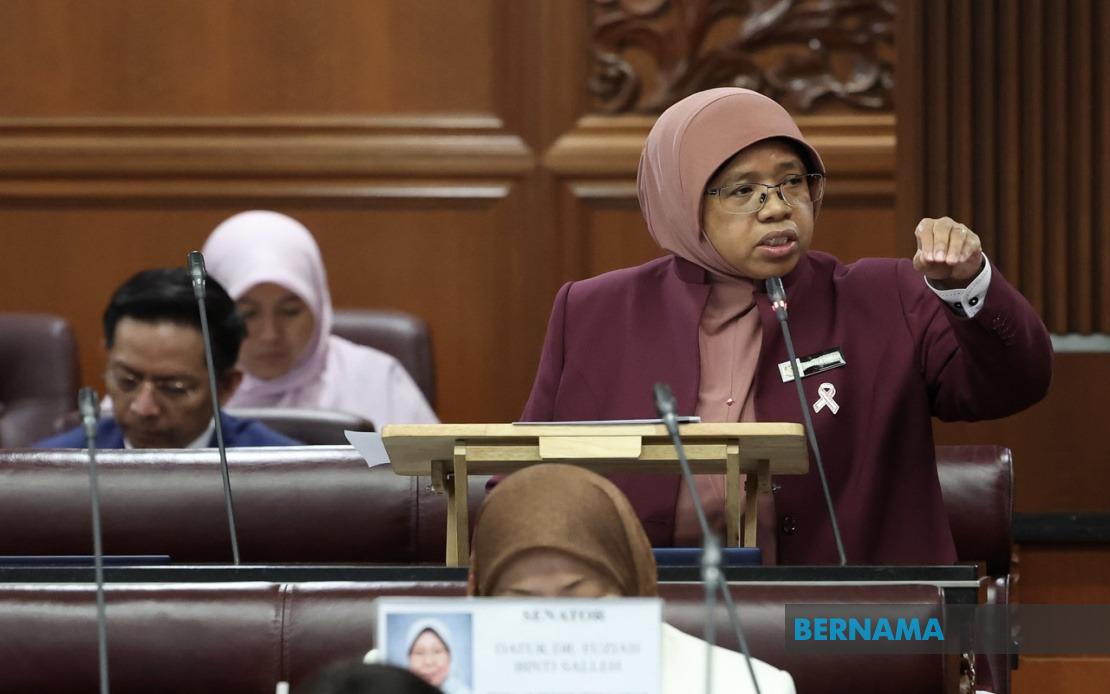
The Ministry of Housing and Local Government has unveiled a strategic approach to address the growing maintenance challenges facing Malaysia's aging public housing stock, directing resources toward People's Housing Programme developments that have reached or surpassed the ten-year mark. Deputy Minister Datuk Aiman Athirah Sabu articulated this position during parliamentary proceedings, signalling a deliberate shift toward problem-focused interventions rather than blanket maintenance programmes. The initiative reflects a pragmatic response to the reality that many PPR projects completed in the mid-2010s are now entering phases where structural and mechanical systems require substantive attention, yet budgetary constraints prevent simultaneous treatment of all identified deficiencies.
The maintenance framework concentrates on infrastructure systems deemed critical to resident safety and habitability. Lift mechanisms rank foremost among these priorities, a recognition that elevator failures in high-rise residential blocks create both immediate accessibility crises and potential safety hazards. Roof integrity and water tank conditions follow, reflecting awareness that water ingress remains among the most damaging and costly problems in tropical residential architecture. The ministry's focus encompasses reticulation systems—the network of pipes distributing water throughout buildings—and sanitary piping networks, areas where failure rapidly cascades into health and hygiene emergencies. Electrical wiring defects also command attention, given their direct connection to fire risk and electrocution hazards. General common property repairs, encompassing shared corridors, lobbies, and recreational facilities, round out the prioritised categories, addressing the collective deterioration that compounds resident dissatisfaction in multi-unit developments.
The budgetary reality underlying this strategic approach reveals the structural tension inherent in maintaining large-scale public housing portfolios. Under the 12th Malaysia Plan framework, KPKT deployed RM159.1 million across five rolling allocation cycles dedicated to high-rise strata PPR maintenance nationwide. However, demand dramatically outpaces available funds. In 2026 alone, the ministry received 226 separate maintenance applications spanning ten priority categories with a combined value of RM79.9 million—yet only RM44.6 million received approval, representing merely 56 per cent of requested expenditures. This funding gap means that roughly 44 per cent of identified maintenance needs remain unaddressed annually, a shortfall that will compound over time as infrastructure ages further and defects accumulate.
The application and approval architecture for PPR maintenance operates through a multi-stage bureaucratic process designed to ensure standardisation and comparative prioritisation across the portfolio. Joint Management Bodies and Management Corporations representing individual PPR developments must first lodge applications with either the Commissioner of Buildings or their relevant local authority, creating an initial filtering mechanism. These applications subsequently travel to the ministry for consideration within a strictly demarcated calendar. The submission window spans August through October, followed by a Project Selection Working Committee evaluation in November and a steering committee review in December. The Controlling Officer then deliberates on approvals during January, with local authorities notified in the same month. Letters of Acceptance are issued by April at the earliest, meaning a full eight-month cycle elapses between initial application and commencement clearance. This extended timeline reflects the centralised decision-making model but also introduces lengthy delays between identification of maintenance needs and actual remedial action.
For Malaysian residents occupying PPR units, this maintenance strategy carries immediate practical implications. Households in blocks constructed between 2005 and 2010 now qualify for prioritised attention, meaning that residents experiencing lift breakdowns, water supply irregularities, or electrical problems in these developments may see faster response than residents in newer or older PPR projects. Conversely, residents in PPR blocks that predate 2005 may face extended waiting periods despite potentially greater infrastructure deterioration, introducing an equity dimension to maintenance allocation. The emphasis on critical safety defects suggests that cosmetic degradation—cracked walls, faded paintwork, damaged common area fixtures—will receive deprioritised treatment, a reality that may frustrate residents even as fundamental safety systems receive attention.
The Southeast Asian context amplifies the urgency of this maintenance approach. Tropical climates in Malaysia accelerate material degradation through relentless humidity, temperature fluctuation, and salt spray in coastal areas. PPR developments often concentrate in urban centres experiencing rapid population growth and high occupancy density, intensifying wear patterns. Many residents occupy PPR units long-term, sometimes across generations, investing strong emotional and financial commitment in their homes. Deferring maintenance—even non-critical maintenance—risks eroding resident confidence in public sector stewardship and potentially driving migration toward private sector alternatives for those with improved economic circumstances, ultimately hollowing out PPR communities.
The admission that current allocations capture only 56 per cent of maintenance requests signals that systematic underfunding characterises the PPR maintenance framework. If this funding shortfall persists across multiple cycles, the cumulative impact could prove severe. Infrastructure systems typically follow degradation curves where small defects rapidly escalate into major failures if unaddressed. A leaking roof seal becomes interior water damage becomes structural rot becomes catastrophic failure. An underperforming electrical circuit becomes an overloaded circuit becomes a fire risk. This trajectory means that today's deferred maintenance work potentially transforms into tomorrow's emergency repairs, which typically cost considerably more than preventive maintenance and may generate additional resident hardship.
The ministry's targeted approach represents rational triage within severe resource constraints, but it also implicitly acknowledges that PPR maintenance financing operates at inadequate levels. Housing planners and budget officials face difficult choices about allocation priorities. Policymakers must weigh whether to expand PPR maintenance budgets, potentially reducing allocations elsewhere, or accept that some aging public housing will deteriorate below resident expectations. This tension sits at the heart of affordable housing policy across Southeast Asia, where rapid urbanisation created large PPR portfolios that now require substantial ongoing investment to remain functional and safe.
The April deadline for issuing Letters of Acceptance means that approved 2026 maintenance projects can commence from mid-year onward, suggesting visible remedial activity will become apparent in PPR developments over the subsequent months. Residents and community leaders should monitor whether promised maintenance materialises within stated timelines and whether addressed defects remain resolved or quickly reappear. This maintenance cycle will provide evidence of whether the ministry's targeted approach effectively preserves housing quality or whether underfunding ultimately undermines that objective, with potential implications for affordable housing policy across Southeast Asia and the extent to which governments can sustain large public housing stocks without adequate maintenance funding.

