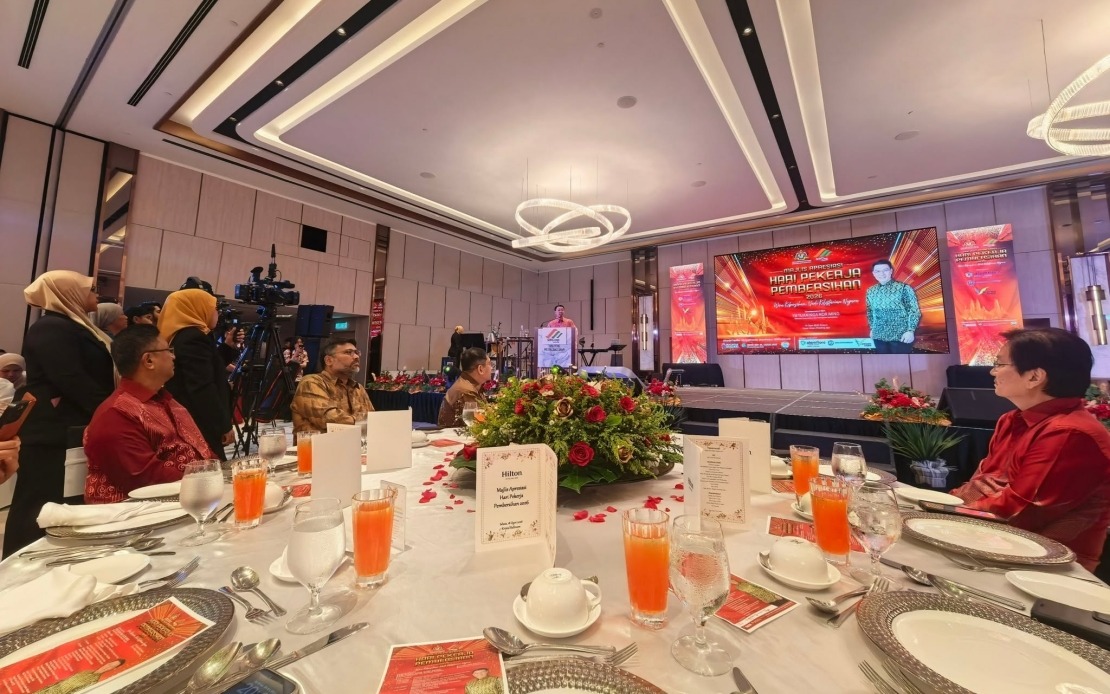
Housing and Local Government Minister Nga Kor Ming has announced plans to nominate recipients of the 2026 Cleaning Workers Award for state honours, marking a significant expansion of recognition programmes for Malaysia's sanitation workforce. The proposal, discussed between Nga and KPKT secretary-general Datuk Dr Wira M Noor Azman Taib, aims to ensure that award recipients receive formal acknowledgement from their respective state rulers in a gesture of national appreciation for their contributions to public health and environmental cleanliness.
Spoken at the 2026 Cleaning Workers Appreciation Day event in Petaling Jaya, Nga's announcement represents a deliberate policy shift to standardise the honouring of cleaning workers across Malaysia. Previously, such recognition has been sporadic, with Penang emerging as a pioneering state in implementing consistent honours for sanitation personnel over nearly a decade. By extending this practice nationwide, the ministry seeks to elevate the status and dignity of workers whose labour underpins the nation's public health infrastructure but whose contributions often remain invisible to the broader public.
The timing of this initiative coincides with growing recognition of the cleaning sector's critical role in Malaysian society, particularly in maintaining standards of hygiene and environmental quality that support economic activity and public wellbeing. Across the country, 26,889 workers employed by various concessionaires form the backbone of solid waste management and public cleaning operations. Among these, a substantial portion have committed decades to their profession, with some individuals having served for over thirty years in roles that frequently demand early morning hours, physically demanding labour, and exposure to challenging conditions.
Nga emphasised that cleaning workers deserve recognition not merely as service providers but as essential contributors to national development and quality of life. Their work maintains the cleanliness, safety and comfort of public spaces where Malaysians conduct daily activities, from markets and transport terminals to parks and residential neighbourhoods. Yet this sector has historically suffered from low social prestige and inadequate appreciation, despite its fundamental importance to public order and health.
The state honours nomination scheme addresses this recognition gap by creating formal pathways for cleaning workers to receive ceremonial acknowledgement alongside other state award recipients. Such public recognition carries symbolic weight in Malaysian culture, where awards from state rulers carry considerable prestige and social standing. By incorporating cleaning workers into these honour systems, the government signals that their labour merits the same level of societal respect extended to other professions.
Beyond ceremonial recognition, Nga articulated a broader vision of shared responsibility for cleanliness that extends beyond professional cleaners to encompass all Malaysians. He advocated for embedding anti-littering habits across all social strata as essential to realising the government's aspiration of "Malaysia Bersih, Rakyat Sejahtera" (Clean and Prosperous Malaysia). This framing repositions environmental cleanliness from a service delivered by workers to a collective social responsibility requiring behavioural change among the entire population.
To reinforce this message, Nga called for intensified enforcement of the Community Service Order (PKM), administered by SWCorp, to address littering and environmental violations. As of mid-August, authorities had issued 14,807 offence notices throughout the year, demonstrating the scale of public non-compliance with cleanliness standards. The enforcement programme has directed 548 individuals to undergo community service in participating states, of whom 419 had completed their obligations, while 129 remained in active service.
Crucially, Nga reframed the Community Service Order not as punitive but as educational, designed to instil discipline, personal responsibility and civic awareness regarding environmental stewardship. This pedagogical approach acknowledges that behaviour change requires more than sanctions—it demands that individuals internalise the social and personal benefits of maintaining clean public environments. By positioning enforcement through a developmental lens, the ministry attempts to transform transactional compliance into genuine attitudinal shift.
The event itself recognised seven workers who received the 2026 Cleaning Workers Award, comprising two representatives from Alam Flora Sdn Bhd and five from SWM Environment Sdn Bhd, along with welfare contributions distributed to three recipients. These individual recognitions provide concrete examples of excellence within the sector while offering material support acknowledging the economic pressures faced by workers whose wages remain modest relative to their essential contributions.
For Malaysia and Southeast Asia more broadly, this initiative reflects evolving attitudes toward informal and essential service sectors whose workers have historically occupied marginal positions within social hierarchies. The move to formalise recognition through state honours represents a broader regional trend acknowledging that sustainable development requires dignifying work across all sectors, regardless of social prestige. As Southeast Asian nations grapple with urbanisation, waste management challenges, and public health standards, the treatment of cleaning workers signals broader commitments to inclusive development and social respect.
The initiative also carries implications for workforce motivation and retention within Malaysia's sanitation sector. By elevating professional status through state-level recognition, the ministry attempts to enhance job attractiveness in roles that frequently experience high turnover and recruitment difficulties. For a sector employing nearly 27,000 workers managing the waste streams of a nation of 34 million people, stability and workforce dignity directly impact service quality and environmental outcomes.
Looking forward, the success of this recognition programme will depend on consistent implementation across all states and genuine integration of awarded workers into public narratives about national achievements. The shift from localised Penang practices to systematic federal nomination processes represents institutional momentum toward systemic recognition. However, translating ceremonial honours into sustained improvements in working conditions, compensation, and workplace safety remains essential to transforming recognition from symbolic gesture into meaningful social change.

