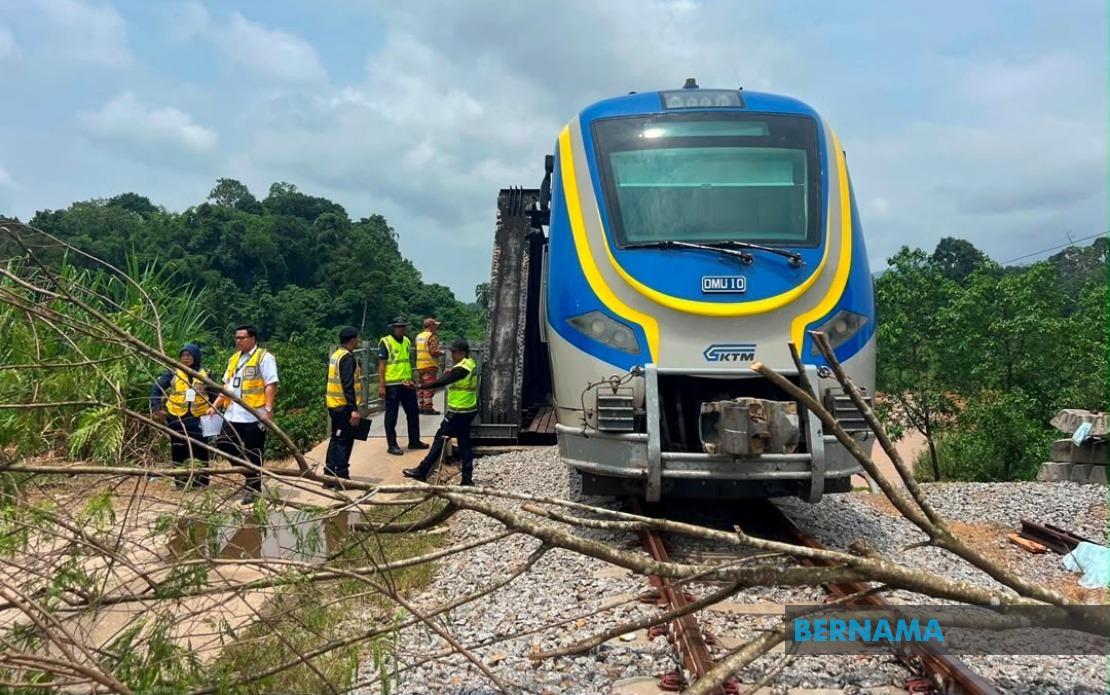
Keretapi Tanah Melayu Berhad (KTMB) conducted a comprehensive emergency response training programme on the EX-Kemubu route in Kuala Krai, with a strategic focus on evaluating three critical dimensions of disaster preparedness: accessibility to accident sites, the speed at which rescue personnel can mobilise, and the efficiency of information flows between rail operators and first responders. The exercise, which brought together approximately 350 participants from 11 agencies including the Royal Malaysia Police, Malaysian Fire and Rescue Department, Ministry of Health, Malaysian Civil Defense Force and Department of Social Welfare, represents KTMB's systematic approach to identifying operational vulnerabilities in railway emergency management across its regional network.
Khairul Naim Johdi, KTMB's Occupational Safety, Health and Environment general manager, emphasised that the remote nature of the EX-Kemubu corridor presents unique challenges that differ markedly from urban rail operations. The route's distance from main arterial roads, combined with its proximity to river systems and difficult terrain, creates a scenario where conventional rescue protocols may prove inadequate. This geographical reality means that even well-trained emergency responders face significant delays in reaching incident sites, a factor that can dramatically influence survival rates and the ability to contain secondary hazards. The selection of this particular railway segment was therefore deliberate, as it encompasses the most demanding conditions that KTMB's emergency teams are likely to encounter in their operational jurisdiction.
The training programme employed a rigorous post-exercise evaluation methodology to extract operational lessons from the live drill. Participating agencies will undergo structured debriefing sessions to examine response times, the sequencing and effectiveness of initial responder actions, the speed and routes by which emergency personnel accessed the accident site, and the clarity and timeliness with which KTMB's control centre transmitted critical information to coordinating authorities. This feedback mechanism is designed not merely to identify what went well, but to expose gaps in procedure, communication breakdowns, and resource allocation inefficiencies that might jeopardise passenger safety in an actual catastrophic event.
Access to remote railway corridors represents perhaps the most intractable challenge facing Malaysian rail emergency services. Unlike urban networks where multiple road routes converge near incident locations, the EX-Kemubu line serves areas where the rail corridor itself may be the only reliable transportation infrastructure. Khairul Naim acknowledged that in rural settings, the time required for rescue vehicles to navigate to accident sites can stretch from minutes in urban contexts to hours in remote territories. This structural problem necessitates innovations in pre-positioning equipment, developing alternative access routes, and establishing communication protocols that do not depend on conventional mobile networks that often have poor coverage in such areas.
Internal coordination and notification procedures emerged as a secondary but critical priority from the exercise planning. The operational sequence begins when KTMB personnel on or near an incident immediately contact the railway's operation controller, who serves as the central hub for information processing and agency notification. From this control centre, alerts are disseminated to police, fire and rescue, health, and civil defence authorities in a coordinated fashion designed to activate appropriate response assets simultaneously. Delays in any component of this chain—whether from communication failures, procedural confusion, or unclear incident reporting—can cascade into broader response failures. The training was therefore designed to stress-test this notification system under realistic conditions.
Khairul Naim stressed that passenger evacuation represents a foundational competency that KTMB staff must master through repeated practical training. In a derailment, collision, or other major incident on the Dabong and Kemubu route, train crew members become the first critical responders, responsible for assessing threats, making evacuation decisions, and guiding passengers to safety before professional rescue teams arrive. The difference between trained and untrained personnel in these moments can determine whether an accident remains contained or escalates into a mass casualty event. This underscores why KTMB conducts large-scale emergency exercises annually in rotation across its four operational regions, supplemented by smaller, more focused drills throughout the year to maintain competency among both permanent and seasonal staff.
The railway operator's commitment to systematic emergency preparedness extends beyond training drills to encompass the establishment of standardised procedures, the procurement and maintenance of specialised equipment, and the cultivation of a safety culture among personnel. These components function interdependently—procedure without training becomes meaningless, training without equipment becomes theoretical, and neither succeeds without genuine institutional commitment to prioritising safety over operational convenience. The annual rotation of large-scale exercises across KTMB's four regions reflects this holistic understanding, ensuring that personnel in each geographical area experience realistic scenario training adapted to their local topography, climate patterns, and likely hazard profiles.
For Malaysian passenger safety advocates and regional railway operators, the KTMB emergency training on the EX-Kemubu route offers instructive lessons about the distinctive vulnerabilities of railway networks in Southeast Asia's semi-rural and rural contexts. As regional countries continue expanding rail connectivity to less developed areas to support economic integration and tourism, the challenge of delivering timely emergency responses in remote corridors becomes increasingly salient. The coordination mechanisms, evaluation frameworks, and learning processes that KTMB is institutionalising here may provide valuable templates for other national railway operators throughout the region who face similar geographical and logistical constraints.
The Dabong and Kemubu route, which the EX-Kemubu exercise specifically targeted, represents a critical link in KTMB's regional network serving communities in Kelantan and Terengganu. Any extended service disruption due to a major incident would isolate the populations dependent on this corridor and impose substantial economic costs. This reality invests the emergency preparedness efforts with practical significance beyond compliance with regulatory standards. The exercise data gathered during the training will inform ongoing refinements to response protocols, resource positioning, and inter-agency communication arrangements designed to minimise response times and mitigate passenger harm should a genuine emergency occur on this vulnerable route.

