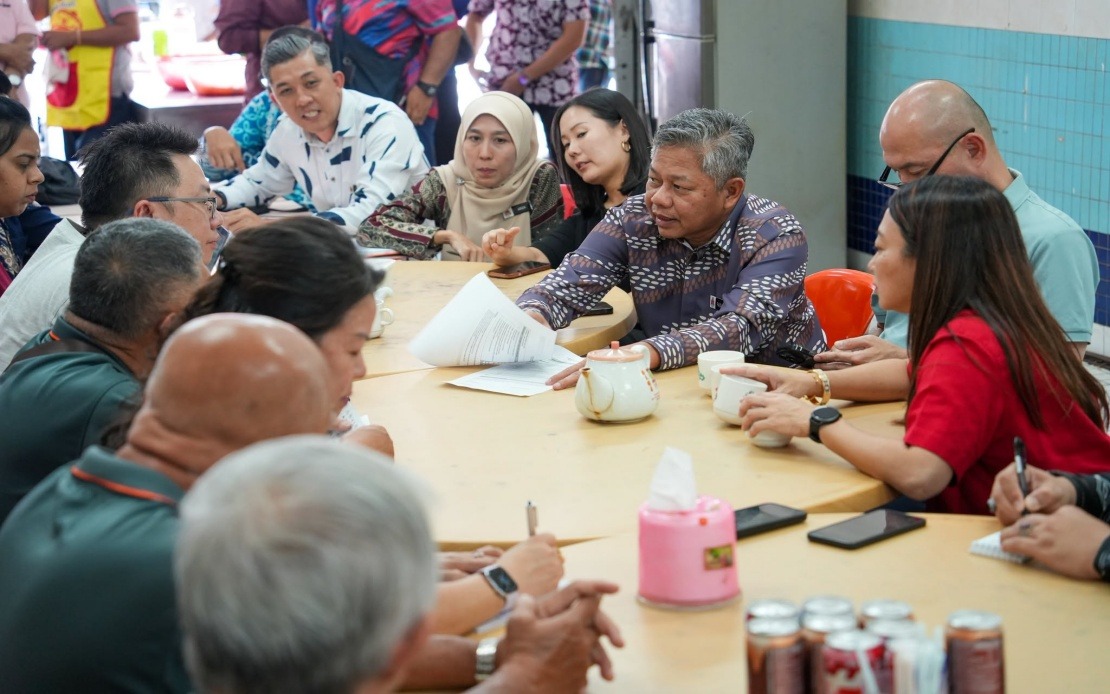
Kuala Lumpur City Hall has unveiled a fresh package of regulatory reforms aimed at cutting red tape and lowering operational costs for the capital's business community. The three-pronged initiative, announced today, sets standardised fees for outdoor dining arrangements, simplifies approval pathways for low-risk building modifications, and accelerates the reopening of food premises following hygiene-related shutdowns. Together, these moves represent an attempt to balance economic flexibility with public safety in Malaysia's most densely regulated commercial jurisdiction.
Under the first reform, traders seeking to place tables and chairs on five-foot ways will now pay a fixed monthly permit fee of RM30 per set, replacing what appears to have been a more complex or opaque pricing structure. Applications route through local DBKL branch offices organised along parliamentary constituency lines, with location suitability and walkway width determining eligibility. This standardisation is particularly significant for the hawking and informal food sectors, which have long complained about inconsistent treatment across different municipal zones. The fee structure applies universally regardless of business type or operator background, signalling an intention to remove potential bias in the licensing system.
Critically, approval for outdoor seating hinges on safeguarding pedestrian movement, wheelchair accessibility, and emergency service access. This stipulation acknowledges growing pressure on Kuala Lumpur's increasingly congested pavements and reflects international best practice in managing public spaces. The specification suggests DBKL recognises that short-term commercial gain cannot compromise accessibility for disabled users or compromise fire safety routes—a principle that extends beyond mere compliance language into genuine operational practice.
The second component addresses the minor works permit regime, which historically has trapped small businesses in bureaucratic delays despite the minimal structural risk posed by routine maintenance. Ceiling replacements, tile installations, and similar cosmetic improvements no longer require formal permits. Instead, traders simply complete a form and notify DBKL directly through their constituency branch office. This reform eliminates the inspection-before-approval model for low-risk works, replacing it with notification and post-fact verification. The distinction matters substantially: traders can begin work immediately whilst remaining accountable to safety standards, rather than waiting weeks for approvals.
By consolidating authority at branch level rather than routing applications through centralised desks, DBKL appears to be decentralising decision-making whilst maintaining oversight. This structure mimics successful administrative models in Singapore and Hong Kong, where local knowledge complements regulatory consistency. The measure could significantly benefit the restaurant and retail sectors, which constantly refresh premises to meet health codes and customer expectations. Food operators particularly stand to gain, as the accommodation of minor renovations without lengthy approvals could reduce closure periods and associated revenue losses.
The third reform addresses a persistent pain point for food businesses: the reopening timeline following hygiene violations. Premises ordered shut for food safety breaches may now apply for reinspection as soon as 24 hours after remedial cleaning. Previously, such timelines appeared indeterminate or extended, imposing severe financial strain on operators, particularly small family-run restaurants. However, DBKL has hedged the reform carefully: reopening remains discretionary rather than automatic, contingent upon physical inspection confirming compliance with hygiene and food safety standards. This balance permits rapid turnaround for operators who genuinely rectify problems whilst preventing premature reopening of persistently unsafe premises.
The engagement process behind these reforms reveals growing political attention to business-class grievances in the Federal Territory. Minister Hannah Yeoh, responsible for Federal Territories in the Prime Minister's Department, participated in consultations with the Selangor and Kuala Lumpur Chinese Coffee Shop and Tea Shops Owners' Association, signalling ministerial-level buy-in. A separate session with the Malaysian Muslim Restaurant Owners' Association (PRESMA) in April focused specifically on the reopening provisions, indicating that this particular reform emerged from sustained advocacy by organised restaurant networks. The dual approach—engaging both Chinese-dominated hawking associations and Malay-Muslim restaurant operators—suggests awareness of the politically sensitive nature of business regulation across Malaysia's ethnic and religious lines.
These changes must be understood within DBKL's stated commitment to standardising processes across all branch offices. Consistency in application has long plagued Malaysian municipal administration: the same business activity might encounter vastly different treatment depending on which constituency branch processes the application. By establishing clear criteria and fee schedules, DBKL aims to eliminate what officials describe as room for "differences in interpretation during implementation." This language, whilst bureaucratic, addresses a genuine and widespread complaint: regulatory unpredictability that effectively imposes a hidden tax on traders unfamiliar with local officer preferences.
For Malaysian business operators and policymakers, these reforms signal a subtle shift in municipal philosophy. Rather than viewing regulation primarily as enforcement apparatus, DBKL appears to be repositioning itself as a facilitator of legitimate commerce. The emphasis on safety without unnecessary delays, accessibility without obstruction, and standardised rules without arbitrary variation aligns with international competitiveness benchmarks that increasingly influence how Malaysian cities are evaluated. Kuala Lumpur's standing as Southeast Asia's financial centre depends partly on business sentiment regarding ease of operation.
The implementation phase will test whether these reforms deliver genuine relief or remain performative gestures. DBKL's capacity to train and align officers across all constituency branches, to process applications consistently, and to complete hygiene inspections promptly within 24 hours will determine credibility. Given that Malaysia's civil service faces persistent resource constraints and skill gaps in customer service orientation, the gap between announced policy and street-level practice often widens considerably. Traders and business associations will likely monitor early implementation closely, using anecdotal reports of slow processing or inconsistent decisions as evidence of bureaucratic resistance to reform.
The measures also warrant scrutiny regarding unintended consequences. The RM30 monthly fee for outdoor seating, whilst transparent, remains subject to inflation and periodic adjustments. If fees climb significantly, traders may revert to informal arrangements. Similarly, expedited reopening after hygiene closures could create perverse incentives for cursory cleaning if inspection intervals are predictable or inspectors face capacity pressures. These reforms work best when paired with complementary measures: adequate inspector training, sufficient staffing ratios, and transparent appeals mechanisms for traders disputing decisions.
Looking forward, DBKL's initiative may influence how other Malaysian municipal authorities approach business regulation. Penang, Selangor, and other states have observed increasing calls for similar reforms. If Kuala Lumpur's experience proves successful, it could establish a template for regulatory modernisation across Malaysia's urban centres, ultimately benefiting the broader SME ecosystem that underpins the country's economy. Conversely, if implementation falters, it risks reinforcing trader cynicism about government's capacity for genuine administrative reform.

