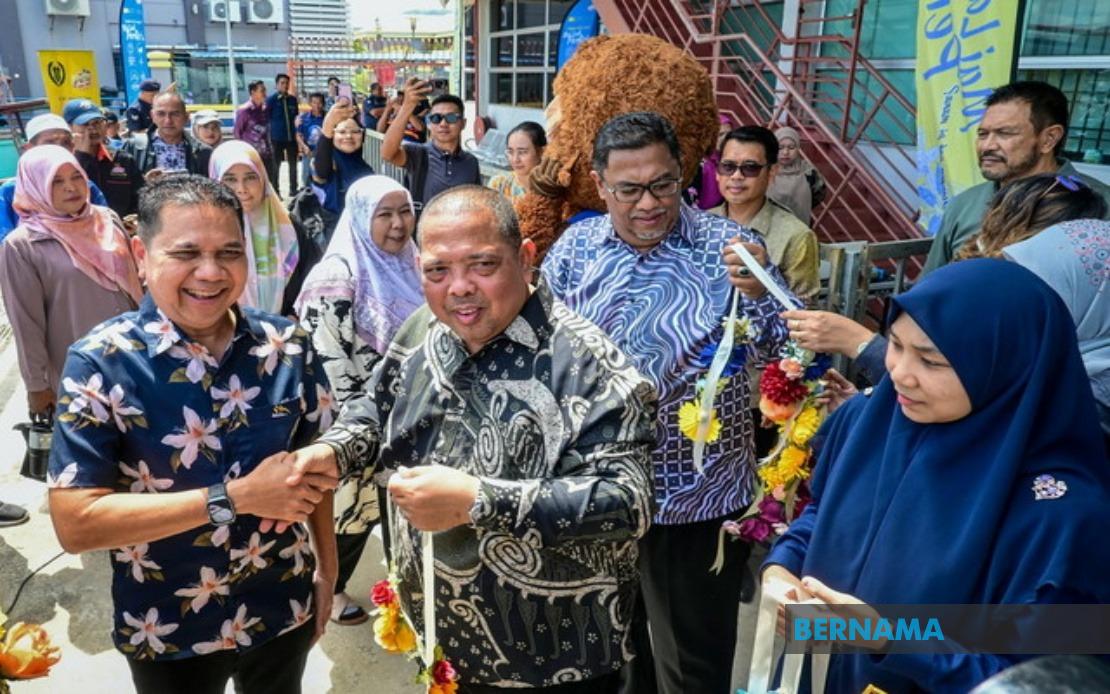
The state of Perlis is positioning itself to capture significant gains in cross-border tourism following the resumption of ferry operations between Kuala Perlis and Satun on July 9, with state leadership projecting visitor numbers of between 5.5 million and 6 million for the current year. The reopening of this maritime corridor, dormant since the onset of the COVID-19 pandemic, represents a strategic shift in how Perlis intends to diversify its tourism offerings and redistribute travel patterns away from traditionally congested land borders.
Menteri Besar Abu Bakar Hamzah articulated a vision in which the ferry service would catalyse economic activity throughout the state by facilitating smoother movement of tourists across the narrow strait separating the two jurisdictions. The anticipated benefits extend beyond simple visitor numbers; the state government envisions increased retail spending from Thai nationals seeking Malaysian goods, a dynamic that could meaningfully supplement state revenue streams while simultaneously strengthening the economic interdependence of neighbouring communities. The emphasis on bilateral economic cooperation reflects a broader regional strategy of leveraging maritime trade and tourism as vehicles for deeper Malaysia-Thailand relations at the subnational level.
The practical advantages of the sea route are not merely economic but logistical. The 40-minute crossing offers travellers a marked contrast to lengthy queues and procedural delays common at the Padang Besar border checkpoint, particularly during Malaysian public holidays when land crossings experience severe congestion. By providing a genuine alternative transport mode, the ferry service functions as a pressure-release valve for border infrastructure, potentially extending the operational lifespan of overland facilities and improving overall traveller satisfaction. This diversification of entry and exit points reflects contemporary thinking about border management in Southeast Asia, where multiple pathways reduce single-point vulnerabilities and enhance resilience.
Beyond its immediate logistical function, the ferry offers a distinctive travel experience that distinguishes Perlis's tourism proposition. The journey itself, featuring scenic coastal vistas and the sensory experience of maritime travel, transforms transit from a mere necessity into a tourism commodity. This experiential dimension has particular appeal for regional tourists who may already be familiar with conventional highway crossings and seek novelty within accessible distances. The commodification of the journey itself represents sophisticated tourism product development.
Yet infrastructure challenges persist, requiring ongoing investment and creative problem-solving. The Kuala Perlis Ferry Terminal has struggled with environmental constraints, specifically fluctuating tidal levels and shallow water depths that complicate berthing operations and limit operational windows. To address these impediments, the state government has committed to installing a floating pontoon system that will maintain accessibility regardless of tidal conditions, ensuring year-round operational reliability that conventional fixed infrastructure cannot guarantee.
Ambitions extend significantly beyond the existing ferry service. The state administration is actively exploring the reactivation of the Roll-on/Roll-off cargo service previously connecting Kuala Perlis and Satun, recognising the potential for goods transport across the strait. This revival would serve regional supply chains and business-to-business commerce, adding an economic dimension beyond passenger tourism. The Ro-Ro service is particularly significant for businesses operating in cross-border production networks, where Malaysia and Thailand firms increasingly coordinate manufacturing and distribution activities.
Most ambitiously, state officials have initiated discussions with potential investors regarding a substantial bridge project spanning approximately two kilometres across the strait, with an estimated development cost of RM500 million. Such infrastructure would represent a transformational investment in Perlis-Satun connectivity, fundamentally altering travel patterns and economic integration between the two jurisdictions. A permanent fixed crossing would eliminate weather-related operational disruptions affecting ferry services and facilitate significantly higher volumes of passenger and freight movement. The magnitude of this undertaking reflects official confidence in long-term demand growth and signals Perlis's determination to position itself as a major regional gateway.
The bridge proposal, however, remains prospective and contingent on investor interest and financial feasibility studies. The RM500 million price tag represents a substantial commitment that would require careful economic modelling to justify returns, particularly given that the ferry service alone aims to satisfy expected demand. Nevertheless, the fact that such discussions are occurring demonstrates that Perlis leadership views the strait crossing as a strategic priority worthy of major capital investment.
The resumption of ferry operations reflects broader patterns of post-pandemic normalisation in Southeast Asian border regions, where many cross-boundary transport connections were suspended or severely curtailed during lockdown periods. As travel restrictions have eased, regional jurisdictions have sought to reestablish and enhance connectivity, recognising that tourist flows and cross-border commerce are vital economic drivers. Perlis's initiative sits within this regional context of recovered mobility and renewed investment in cross-border infrastructure.
For Malaysia more broadly, Perlis's tourism revival holds significance as a counterweight to travel concentration in major urban centres like Kuala Lumpur and the Klang Valley. Regional distribution of tourism benefits remains a stated policy objective, and Perlis's strategic geographic position bordering Thailand provides natural advantages that creative infrastructure investment can amplify. The state's tourism projections, if realised, would represent substantial economic impact for a jurisdiction of Perlis's size and population base.
The ferry service also embodies a shift in how Southeast Asian governments approach border administration, moving beyond purely regulatory and security functions to viewing borders as economic development zones. The integration of tourism marketing, infrastructure investment, and cross-boundary commerce within a coherent state strategy reflects evolved thinking about how border regions can generate prosperity for their populations. This approach requires cooperation with neighbouring jurisdictions and private sector partners, fostering relationships that can yield benefits extending well beyond any single project.
For Malaysian businesses and workers in northern regions, the enhanced connectivity with Satun and broader Thailand opens market access and employment opportunities that were previously constrained by transportation friction. Small and medium enterprises in Perlis may find new customers among Thai tourists, while workers in tourism-related sectors anticipate expanded employment prospects. The multiplier effects of tourism spending ripple through local economies, supporting accommodation providers, restaurants, retail establishments, and transport operators.
As Perlis moves forward with immediate ferry operations and explores longer-term infrastructure projects, the state's experience will likely serve as a model for other Malaysian border regions seeking to maximise cross-boundary opportunities. The interplay between practical maritime transport, tourism development, and ambitious future projects illustrates how regional jurisdictions can strategically position themselves within the broader Southeast Asian economic landscape. The coming months will reveal whether the optimistic visitor projections materialise and whether investor interest in the proposed bridge project solidifies.

