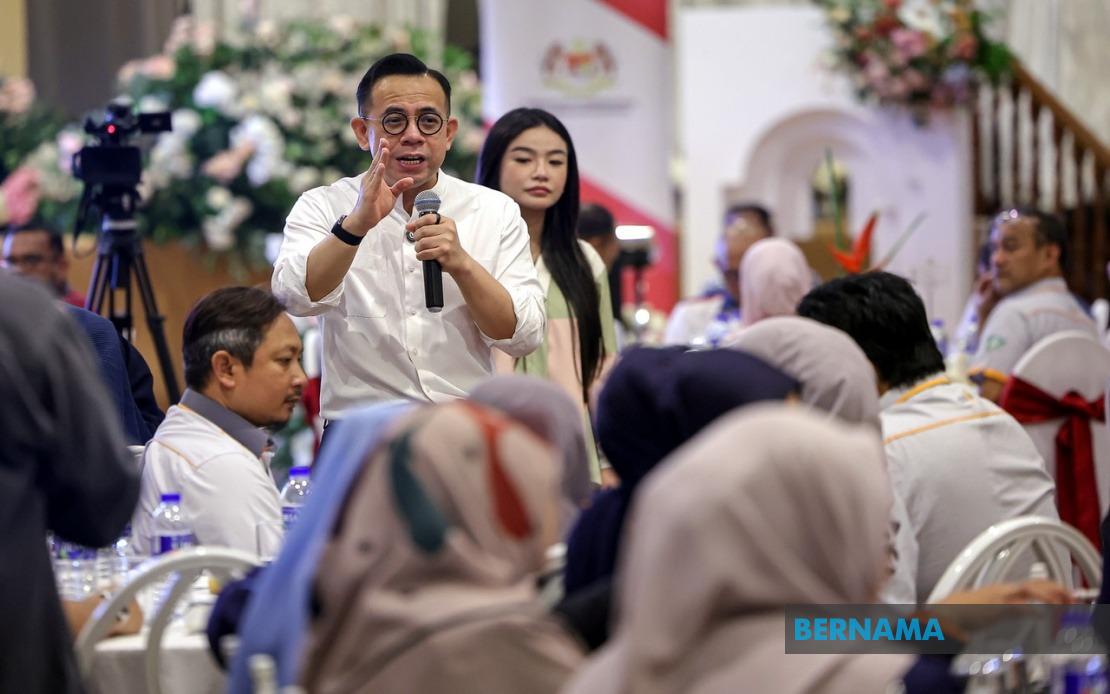
The Ministry of Entrepreneur Development and Cooperatives (KUSKOP) has made substantial progress in its mission to support Malaysia's entrepreneurial ecosystem, distributing nearly RM7 billion across more than 213,000 micro, small and medium-sized enterprises during the opening six months of 2026. Minister Steven Sim announced the achievement while attending the Negeri Sembilan assembly of KUSKOP staff and partner agencies, emphasizing that the disbursement represents a significant milestone in the government's broader commitment to strengthening the MSME sector amid ongoing global economic pressures.
The funding flow occurred through multiple financial support and facilitation schemes bundled under the Power Up 10K initiative, a comprehensive programme designed to inject capital and technical assistance into grassroots business operations. With a full-year target of RM15 billion in total disbursements, the halfway mark of nearly RM7 billion suggests KUSKOP is tracking ahead of schedule to meet its ambitious annual goal. This acceleration in fund deployment reflects heightened operational efficiency across the ministry's delivery mechanisms, a priority that Sim underscored during his address to regional stakeholders and officials.
Within Negeri Sembilan specifically, the Power Up programme has already channelled RM345 million to more than 6,600 local entrepreneurs, demonstrating that central government resources are penetrating down to state and community levels with measurable impact. The concentration of funding in a single state illustrates how the nationwide initiative operates through decentralized networks, with each region receiving allocations commensurate with its entrepreneurial base and economic needs. This geographical distribution also serves as a mechanism for reducing regional economic disparities, a longstanding policy objective across Malaysian governance structures.
Sim's remarks during the assembly revealed an important strategic reorientation within KUSKOP's operational philosophy. Rather than maintaining a passive stance where business owners must proactively seek government assistance, the ministry is transitioning toward a proactive, market-facing approach. He articulated this shift explicitly, instructing state agencies to initiate contact with potential beneficiaries through expanded roadshow programmes and intensified digital promotion rather than awaiting applications. This represents a cultural transformation within government service delivery, moving away from traditional bureaucratic models toward customer-centric engagement typical of competitive commercial environments.
The ministry has simultaneously committed to streamlining the non-financial dimensions of MSME support. While government cannot control external economic volatility such as fluctuating global energy prices, officials can meaningfully reduce the internal cost burdens imposed through regulatory compliance and local administrative requirements. Sim specifically highlighted this distinction, arguing that reducing unnecessary compliance friction constitutes a tangible form of business support equivalent to direct capital injection. For cash-strapped entrepreneurs operating on thin margins, the elimination of duplicative paperwork and licensing procedures can represent significant operational savings.
The Power Up 10K initiative addresses a critical vulnerability in Malaysia's economic resilience. MSMEs represent the backbone of the domestic economy, providing employment to millions and driving innovation at the grassroots level. However, these enterprises frequently lack access to affordable financing, struggle with technological adoption, and face capacity constraints in areas like financial management and export logistics. By channelling substantial government resources toward this segment, KUSKOP aims to enhance sectoral competitiveness and sustainability, particularly as global supply chains remain volatile and trade patterns continue shifting in the post-pandemic era.
The scale of distribution—nearly RM7 billion across 213,000 entities—indicates an average allocation per beneficiary of approximately RM32,800, though actual distributions likely vary significantly based on business size, sector, and financing needs. The relatively broad reach suggests KUSKOP has designed programmes accessible to very small operators, from hawkers and traders to micro-manufacturers, rather than restricting support to larger SME categories. This inclusive approach aligns with Malaysian development policy objectives prioritizing inclusive growth and broadening entrepreneurial participation across demographic and socioeconomic groups.
Sim's emphasis on efficiency and service delivery improvement reflects broader governance trends within the current administration. Beyond simply increasing budget allocations, the ministry is investing in organizational capability, inter-agency coordination, and outcome measurement. The assembly gathering itself exemplifies this commitment, bringing together KUSKOP staff and partner agencies to align strategy and troubleshoot implementation bottlenecks. Such coordination mechanisms help eliminate duplication and ensure entrepreneurs receive integrated support across financing, technical advice, market access, and digital transformation services.
The initiatives also carry significant implications for Malaysia's positioning within regional economic competition. Southeast Asian nations increasingly compete to attract and retain entrepreneurial talent and investment. By demonstrating tangible government support for business creation and growth, Malaysia signals investor confidence and facilitates business formation. Entrepreneurs considering location decisions compare government support ecosystems across jurisdictions; strong MSME financing and facilitation programmes can tip decisions toward Malaysia rather than Thailand, Vietnam, or Indonesia.
Looking forward, KUSKOP faces the operational challenge of maintaining momentum through the second half of 2026 while ensuring fund quality and avoiding subsidy leakage. Rapid disbursement timelines can sometimes compromise due diligence or inadvertently benefit ineligible recipients. The ministry's push toward proactive outreach and heightened promotional activity must be balanced against rigorous needs assessment and impact monitoring. Successfully navigating this tension between speed and quality will determine whether the Power Up 10K initiative generates sustained entrepreneurial growth or devolves into an efficiency-focused transfer programme with limited lasting impact on business competitiveness and resilience.

