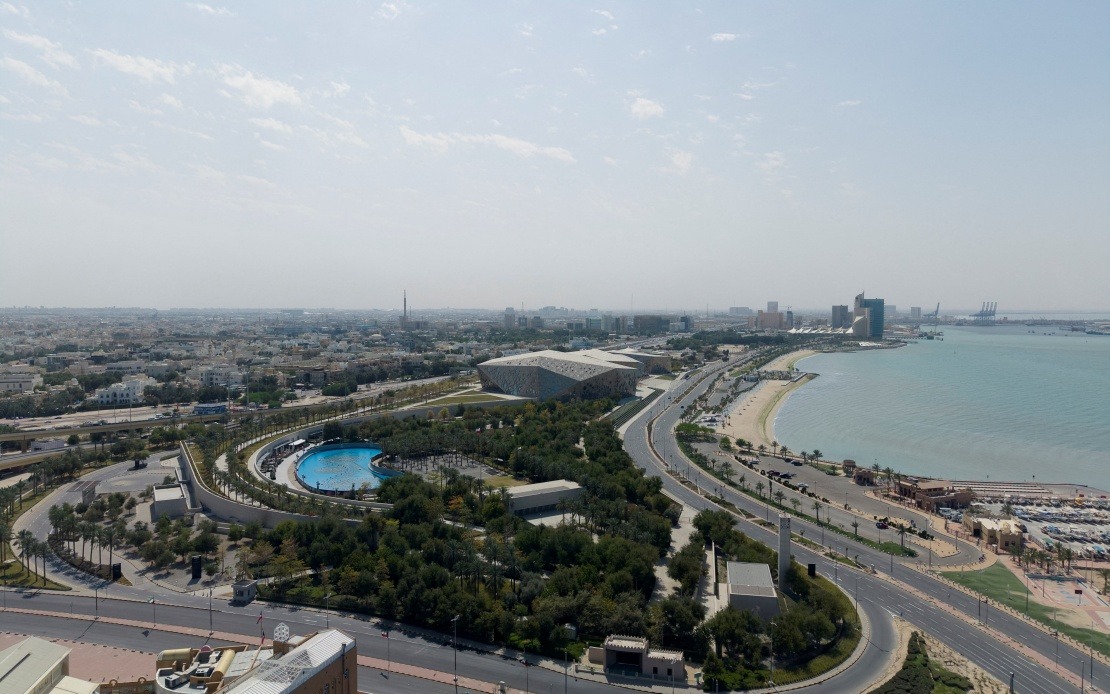
Kuwait's military moved to defend against airborne threats in the early hours of Wednesday as the nation's air defence network engaged what the army characterised as hostile unmanned aircraft, a development underscoring the fragility of security in the strategically vital Persian Gulf region. The Kuwaiti armed forces confirmed that its layered air defence systems were actively intercepting incoming drones, with military officials cautioning residents that audible detonations heard across populated areas would emanate from defensive operations rather than direct strikes on Kuwaiti territory.
The timing and nature of the attack suggest deliberate targeting of the Arab state, though official authorities remained circumspect about specific locations and infrastructure involved. When firefighting crews responded to a blaze at an unspecified installation that had been struck, initial reports indicated the situation was brought under control without loss of life, a fortunate outcome given the potential consequences of successful penetration of Kuwaiti air space. The decision by defence officials to withhold details about the targeted site reflects heightened security protocols and the sensitivity surrounding civilian-military infrastructure in the region.
Kuwait's experience mirrored concurrent developments unfolding across the broader Gulf geography. The neighbouring kingdom of Bahrain simultaneously activated its air raid warning systems, with the Interior Ministry disseminating urgent public guidance directing all citizens and foreign residents to seek shelter in designated safe zones. This coordinated activation across multiple states within hours indicates either a simultaneous, multi-target assault or the rapid transmission of threat intelligence among Gulf Cooperation Council members alerting each other to imminent danger.
The incident builds upon an established pattern of hostile action reported across the Arabian Peninsula just the previous day. Bahrain's Defence Force had announced the successful interception and destruction of what it characterised as brazen Iranian aerial sorties aimed at Bahraini territory. These sequential defensive operations across adjacent Gulf nations suggest either a sustained Iranian campaign or a substantial single action with geographically dispersed targeting, fundamentally challenging the security architecture that Gulf states have invested heavily in developing.
Underlying these tactical developments lies a broader strategic confrontation between the United States and Iran that has progressively destabilised the Gulf region. The Strait of Hormuz, through which roughly one-third of globally traded seaborne oil transits annually, has become a focal point of tension as American military forces have conducted strikes against Iranian positions and installations. Tehran, unwilling to absorb such attacks passively, has responded with coordinated assaults on American military infrastructure distributed across multiple regional locations, establishing a cycle of escalatory action and counteraction.
Despite diplomatic efforts undertaken by Pakistani intermediaries aimed at negotiating a comprehensive memorandum of understanding between Washington and Tehran, such negotiating tracks have achieved only limited traction. The Pakistani-mediated dialogue was explicitly designed to interrupt the spiral of tit-for-tat military operations and establish conditions for sustained peace, yet the persistence of attacks suggests fundamental incompatibilities between American and Iranian strategic objectives remain unresolved. This diplomatic failure has left regional allied states like Kuwait and Bahrain positioned uncomfortably between two antagonistic powers, forced to maintain heightened defensive readiness at substantial economic and social cost.
For Malaysia and other Southeast Asian trading nations, the implications of sustained Gulf instability warrant close attention. The region's energy supplies underpin Asian economic activity, and interruptions to crude oil flows through the Strait of Hormuz would reverberate across regional markets within days. Malaysian ports, refineries, and shipping operations all depend on reliable access to Gulf petroleum resources, making regional security developments a legitimate concern for Southeast Asian policymakers monitoring inflation pressures and energy security.
The escalating pattern of attacks and defensive responses also illuminates the vulnerability of critical infrastructure when located within conflict zones. Neither Kuwait nor Bahrain are direct protagonists in the US-Iran dispute, yet both have experienced direct military strikes and threats as a consequence of their geographic proximity to contested waters and the presence of American military installations on their territory. This geography-as-liability dynamic constrains policy options available to smaller Gulf states attempting to maintain profitable relationships with multiple external powers.
The apparent sophistication and coordination of the drone attacks, executed across multiple targets within compressed timeframes, suggests Iranian acquisition of increasingly capable unmanned aircraft systems. Whether acquired domestically or through supply relationships with other regional or international actors remains unclear, though the successful penetration of defended airspace indicates capabilities that have advanced considerably beyond earlier iterations of Iranian drone technology. This technological progression carries implications for air defence planners across the Gulf and potentially throughout Southeast Asia, where similar systems are now proliferating.
Governments across Southeast Asia have monitored the Gulf security situation with particular interest given the historical tendency of regional conflicts to attract external powers seeking to advance geopolitical interests in distant theatres. Malaysia, Singapore, and other regional actors maintain careful diplomatic balances, avoiding alignment with either American or Iranian camps while preserving economic relationships and security partnerships. The current escalation underscores the necessity of maintaining such equilibrium, as deeper involvement in outside conflicts could compromise vital regional interests.
The human cost of sustained military operations, though temporarily limited in the Kuwait and Bahrain incidents, accumulates over time as defensive operations become routine and the risk of miscalculation or accident increases. Military forces operating under constant threat of attack experience degraded readiness and morale challenges, while civilian populations endure the psychological burden of regular alarms and the obligation to maintain proximity to shelter facilities. These secondary effects of conflict shape long-term societal resilience and economic productivity in ways that extend beyond immediate casualty figures.
Moving forward, the trajectory of Gulf tensions will substantially influence regional economic stability, energy market pricing, and the strategic calculations of nations throughout Asia attempting to navigate relationships with both American and Iranian spheres of influence. The failure of Pakistan-mediated negotiations to produce durable de-escalation mechanisms suggests that diplomatic solutions will require more substantial concessions from one or both parties than currently appears politically feasible. Until such breakthroughs materialise, Kuwait, Bahrain, and other Gulf neighbours will remain positioned as involuntary participants in a conflict whose origins and resolution lie beyond their direct control.

