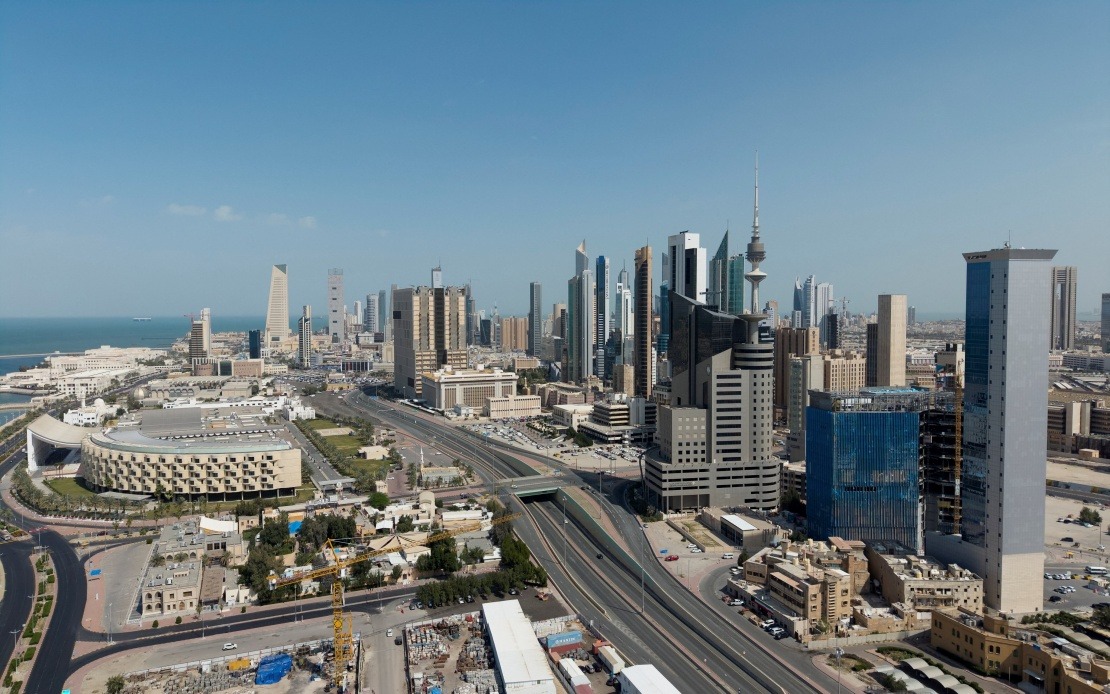
Kuwait's government has unveiled an ambitious financial mechanism to address the physical and economic fallout from escalating regional military confrontations, announcing a $100 million emergency response fund designed to systematically rebuild critical infrastructure. The initiative, unveiled on Sunday in Kuwait City, represents a significant institutional response to damage inflicted during recent months of heightened military activity in the Persian Gulf region, where Kuwait sits at the crossroads of competing regional powers.
The Kuwait Emergency Response Fund, administered through the Kuwait Fund for Arab Economic Development (KFAED), establishes a formal framework for mobilising capital toward reconstruction efforts while simultaneously strengthening the country's broader crisis management capabilities. Foreign Minister Sheikh Jarrah Jaber Al-Ahmad Al-Sabah presented the fund as part of a comprehensive strategy to enhance national resilience in the face of what Kuwaiti officials characterise as external security threats. The announcement underscores growing concerns among Gulf states about vulnerability to regional power projection, particularly as military escalation has become increasingly frequent across the broader Middle East.
According to Waleed Al-Bahar, Acting Director General of KFAED, the fund's establishment implements a cabinet-level decision and creates a structured assessment process for evaluating financing requests from affected sectors. The mechanism will prioritise projects based on urgency and national importance, ensuring that limited resources address the most critical reconstruction needs first. This methodical approach contrasts with emergency responses in other conflict-affected regions and reflects Kuwait's institutional capacity to coordinate large-scale recovery operations.
The fund's architecture deliberately extends beyond government agencies, with KFAED actively encouraging both public institutions and private sector entities to contribute additional capital. This approach mirrors global best practices in post-conflict reconstruction, where mixed public-private funding mechanisms accelerate recovery timelines while distributing financial burden across society. For Kuwait, a nation heavily dependent on oil revenues and foreign investment, the fund signals confidence in the country's economic fundamentals despite security challenges.
Kuwait's vulnerability to regional instability stems from its geographic position between major powers and its status as a critical global energy producer. The country hosts significant international military presence and serves as a vital node in global trade routes, making it a potential flashpoint during broader Middle Eastern tensions. The emergence of this dedicated reconstruction mechanism suggests that policymakers in Kuwait City anticipate ongoing security challenges in coming months and are preparing institutional responses accordingly.
The immediate catalyst for the fund emerges from escalating military confrontations that intensified significantly in late February, when the United States and Israel conducted coordinated strikes against Iranian targets. This operation triggered a substantial retaliatory response from Tehran, which unleashed waves of missiles and drones targeting both Israeli territory and American military installations across the region. Kuwait, hosting numerous American military facilities, faces genuine exposure to spillover effects from these repeated cycles of attack and counter-attack.
For Southeast Asian observers and regional investors, Kuwait's proactive fund establishment carries broader implications about Middle Eastern stability and the potential for supply chain disruptions. Any sustained escalation in the Persian Gulf directly threatens global oil markets and maritime commerce routes critical to Asian economies. The mobilisation of reconstruction capital suggests that Kuwaiti leadership anticipates infrastructure damage as an ongoing reality rather than a temporary aberration, reflecting pessimistic assessments about near-term de-escalation prospects.
The fund's establishment also addresses economic dimensions of regional conflict beyond immediate physical damage. Infrastructure damage impairs productivity across multiple sectors, deters foreign investment, and increases government expenditure precisely when revenues may face pressure from global market dynamics. By pre-positioning capital for reconstruction, Kuwait attempts to minimise economic scarring and maintain investor confidence in the country's long-term viability as a stable commercial hub.
Regional analysts note that Kuwait's approach contrasts with reactive postures adopted by some neighbouring states, instead positioning the country as proactively managing consequences of a volatile geopolitical environment. The fund's structure also demonstrates sophisticated understanding of how sustained conflict requires institutional rather than purely military responses. Such mechanisms address grievances arising from infrastructure damage, which can generate domestic political pressure if left unaddressed, while simultaneously signalling to international partners that Kuwait maintains functional governance capacity despite external challenges.
The $100 million initial capitalisation represents a substantial commitment reflecting the scale of accumulated infrastructure damage, though whether this proves sufficient depends on the intensity and duration of ongoing regional hostilities. Kuwait Fund officials will face increasing pressure to demonstrate both transparency in allocation decisions and effectiveness in rebuilding efforts, with successful reconstruction serving as a crucial metric for government credibility among domestic constituencies increasingly affected by regional tensions.
Looking forward, the fund's performance will offer important indicators about whether regional powers can move toward sustainable deescalation or whether conflict dynamics will become entrenched. For Malaysia and other Southeast Asian nations maintaining substantial Gulf investments and relying on energy imports from the region, Kuwait's reconstruction capabilities carry direct relevance to regional economic stability and global supply chain resilience.

