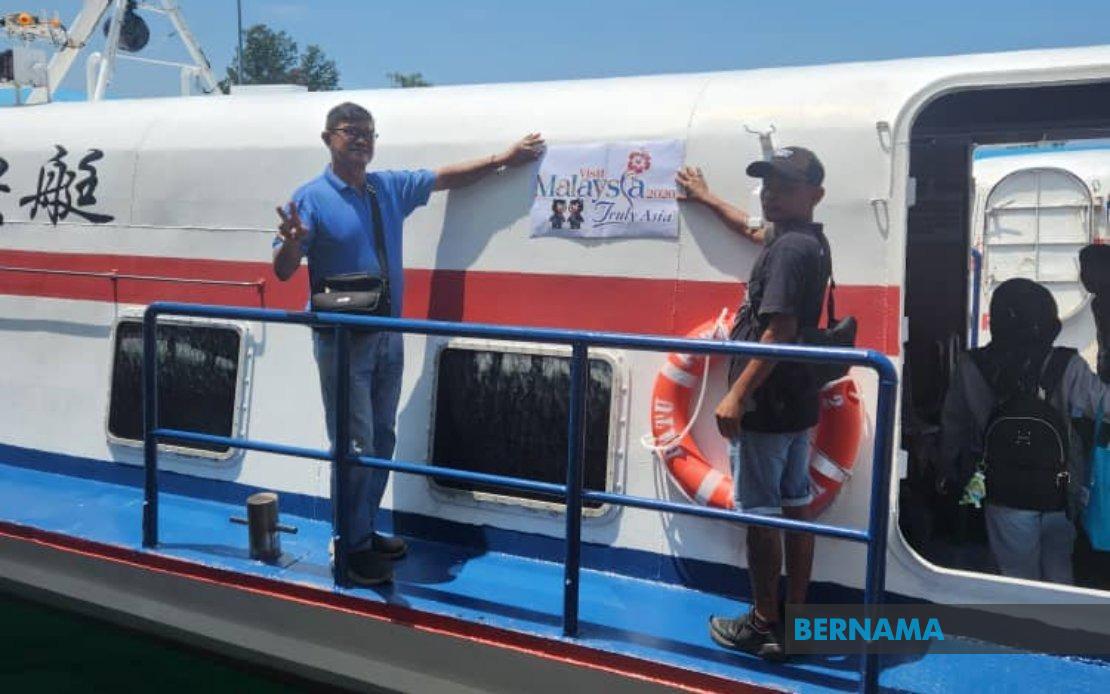
The passenger ferry connecting Labuan and Lawas in Sarawak has entered uncharted territory after more than thirty years of continuous operation. Beginning July 14, the vessel service has been halted for an initial three-month period, marking the first complete shutdown in the route's history. This suspension represents a significant disruption to regional connectivity and carries particular consequences for the thousands of individuals who depend on this affordable maritime service for essential travel.
RPL Shipyard Co, the entity responsible for operating the boats under contract, formally notified LDA Holdings Sdn Bhd of the temporary halt. The company confirmed that services would remain suspended through October 14, pending resolution of underlying operational challenges. The decision to suspend rather than continue operations signals the severity of the financial pressures bearing down on the operator, a move that would only be taken after exhausting other alternatives.
The core issue precipitating the shutdown centres on an unresolved diesel supply problem that has compromised the operator's ability to maintain consistent schedules. Compounding this logistical difficulty are the ascending costs of conducting maritime transport operations. Manpower expenses and vessel maintenance charges have climbed substantially in recent years, eroding the thin margins that the operator worked within. Simultaneously, the passenger fares—which have remained relatively static to keep the service affordable for ordinary users—no longer generate sufficient revenue to absorb these mounting expenditures.
The economic model supporting the ferry has become progressively unsustainable. The operator has been caught in a squeeze: maintaining low fares to serve the public interest while confronting relentlessly rising input costs. Without either a substantial fare increase or external financial support, continuing to operate at a loss threatened the long-term viability of the entire enterprise. The suspension represents management's judgment that a temporary halt offers the best path toward financial stabilisation and operational restructuring.
The ferry service has historically served as a critical transport artery for students from Sarawak attending educational institutions in Labuan, particularly Universiti Malaysia Sabah and Labuan Matriculation College. For these young scholars, the affordable maritime connection has been instrumental in making higher education accessible. The suspension will force students to seek alternative travel arrangements, potentially at considerably greater expense, or pursue educational options closer to their home communities. This disruption arrives at a particularly awkward moment in the academic calendar.
Beyond student mobility, the ferry has anchored healthcare access for residents across the Lawas district and adjacent communities. Labuan Hospital serves as a regional medical centre offering specialised services unavailable locally. Residents requiring treatment have historically relied on the boat service to reach the hospital in a timely and economical manner. The suspension threatens to compromise medical access for vulnerable populations, potentially pushing treatment-seeking residents toward more expensive private transportation options or forcing them to forgo needed care.
Noor Halim Zaini, chief executive officer of LDA Holdings Sdn Bhd—the management entity overseeing Labuan International Ferry Terminal—confirmed receipt of the formal suspension notification. He indicated that immediate consultations with the operator would commence to understand the full scope of challenges and identify viable solutions for restoring the service. These discussions will need to address not merely the immediate diesel supply crisis but the underlying structural economic problems that have rendered the current operational framework unworkable.
The suspension underscores broader challenges confronting small-scale maritime operators throughout Southeast Asia. Fuel price volatility, labour cost inflation, and the difficulty of maintaining competitive fares while covering rising expenses have created a precarious operating environment. Many ferry operators struggle silently, absorbing losses or operating at minimal profitability. When operators finally reach the breaking point, entire communities suddenly discover that their transport networks have become fragile and dependent on the sustained financial sacrifice of private operators.
For Malaysian policymakers, this incident highlights the tension between social welfare objectives and market economics. If ferry services connecting important population centres are deemed essential public infrastructure, then relying entirely on commercial operators to sustain them may be insufficient. Some form of government subsidy, operational support, or regulatory framework ensuring fair cost recovery might be necessary to maintain vital connectivity. The current arrangement has proven vulnerable to precisely the kind of cost shock the sector has experienced.
The three-month suspension period provides a window during which stakeholders might develop more sustainable solutions. The operator hopes that during this interval, diesel supply chains will stabilise and operational costs will moderate, allowing resumption under improved conditions. However, without addressing the fundamental economic imbalance, a simple return to previous operations may merely postpone an inevitable crisis.
For Labuan and Lawas residents, the immediate challenge involves managing daily life without the ferry. Students must arrange alternative transport or defer studies. Patients requiring hospital care must navigate complicated logistics. Traders and business people who relied on the route face disrupted supply chains. The suspension, though temporary in theory, may prompt some affected individuals to make permanent adjustments to their plans, such as relocating or pursuing local alternatives. These individual adaptations, multiplied across the affected population, could reshape the long-term demand profile for the route.
The coming months will test whether the temporary suspension achieves its stated goal of financial stabilisation. Should operations resume in October, passengers and users should not assume the service has returned to stability. Structural issues require structural solutions. Without intervention addressing the fundamental economics of operating small-scale maritime services, the Labuan-Lawas route may face additional disruptions. This episode serves as a cautionary reminder that even services functioning for decades can become vulnerable when cost structures shift and revenue cannot adjust accordingly.

