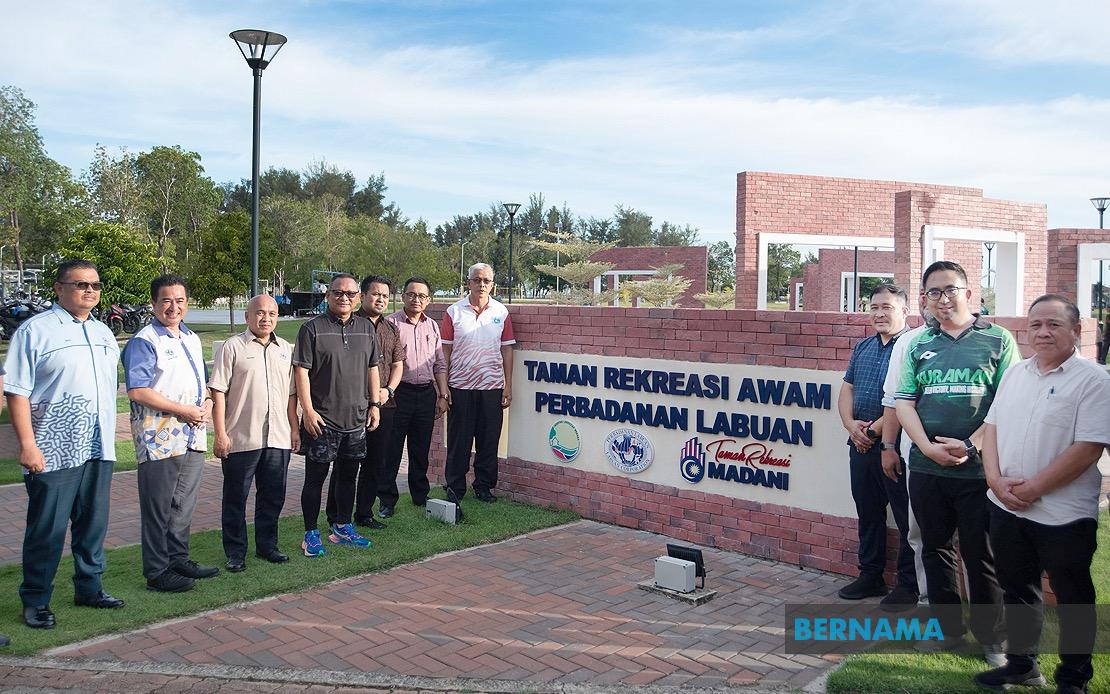
Labuan has taken a significant step towards fostering a healthier and more active community with the official opening of its upgraded Public Recreation Park at Tanjung Purun, a central location in the federal territory. The transformation, completed after a RM495,382 investment through the Madani Recreation Park initiative, signals the local authorities' determination to create accessible public spaces that encourage residents to embrace wellness and outdoor activities.
Rithuan Ismail, chief executive officer of Labuan Corporation, emphasised during the opening ceremony that the park represents more than just infrastructure development. Rather, it embodies a deliberate strategy to cultivate inclusive recreational spaces where community members across all age groups can gather, exercise, and strengthen social bonds. The facility is intended to serve multiple purposes—accommodating serious fitness enthusiasts, providing families with safe outdoor environments, and welcoming casual visitors seeking respite from daily routines, particularly during evening hours when usage is expected to peak.
The project's origins trace to the National Landscape Department under the Ministry of Housing and Local Government, which allocated resources in 2024 to transform the dormant LDA Field into a vibrant community asset. The selection of this site was strategic and deliberate, as local planners identified its downtown positioning, excellent accessibility, appropriate land dimensions, and the absence of complicated land tenure disputes as compelling advantages. These factors collectively made the location ideal for a public amenity that required minimal bureaucratic obstacles to implementation.
Prior to the upgrade, the area faced multiple challenges that deterred public usage. Insufficient illumination made evening visits inadvisable, recreational infrastructure was sparse and outdated, and ageing casuarina trees presented genuine safety hazards to visitors. Collectively, these deficiencies transformed what should have been a prime recreational destination into an underutilised and somewhat neglected parcel of land despite its convenient downtown setting. The renovation has systematically addressed each of these issues, fundamentally changing the area's character and appeal.
The modernised park now incorporates several amenities designed to accommodate diverse recreational preferences. An attractive entrance garden creates an inviting threshold, whilst an 800-metre jogging track serves running and walking enthusiasts seeking structured cardiovascular exercise. Concrete seating provisions scattered throughout allow residents to rest and socialise, and outdoor fitness gym equipment provides residents with cost-free access to strength and conditioning facilities—a particularly valuable resource in a federal territory context where gymnasium fees can become prohibitive for lower-income households.
The facility's evening appeal should not be underestimated, as improved lighting transforms what was previously an unsafe location into a vibrant social space during cooler hours. This addresses a genuine gap in Labuan's recreational infrastructure, as outdoor exercise during late afternoon and evening hours is popular amongst working residents and families managing daytime commitments. The park essentially extends opportunities for physical activity beyond daylight constraints.
Plans for further expansion are already advancing, with Labuan Corporation committed to enhancing the park with three additional courts designed for pickleball and sepak takraw—traditional Malaysian sports that enjoy growing popularity, particularly among younger demographics and sports clubs. These facilities are anticipated to be completed by year's end, suggesting a phased approach to development that allows the corporation to assess initial usage patterns and community preferences before committing additional resources.
The sepak takraw courts deserve particular attention, as this traditional Southeast Asian sport represents cultural continuity and carries significant symbolic weight in Malaysian communities. By incorporating dedicated facilities for sepak takraw, Labuan Corporation demonstrates commitment to preserving regional sporting heritage whilst promoting active lifestyles. This approach contrasts with purely international sports provision and signals understanding that recreational development should reflect local identity and preferences.
Maintenance and community stewardship emerged as critical themes in Rithuan's remarks. He explicitly appealed to residents to treat the facilities respectfully and responsibly, recognising that public amenities' longevity depends fundamentally on user discipline and collective responsibility. This message acknowledges a practical reality: even well-designed infrastructure deteriorates rapidly without community engagement in its preservation. By framing maintenance as a shared responsibility rather than solely the corporation's burden, local leadership attempts to cultivate a sense of collective ownership amongst Labuan residents.
For the broader Malaysian context, Labuan's initiative exemplifies how federal territories can leverage targeted investment to address quality-of-life deficiencies and create competitive advantages in attracting and retaining residents. As Malaysia's smallest federal territory, Labuan faces perpetual competition from other regions for skilled workers and permanent residents. Enhanced recreational infrastructure—particularly cost-free facilities—provides tangible benefits that influence residential decisions and contribute to overall community satisfaction.
The timing is particularly significant given Malaysia's ongoing emphasis on health and wellness initiatives at federal and state levels. The Madani framework, which funded this project, represents the federal government's commitment to integrating recreational development into broader urban planning philosophy. By extending this framework to Labuan, the authorities demonstrate that even smaller federal territories deserve investment in infrastructure supporting active, healthy communities.
The park's impact will likely extend beyond Labuan residents. As a central, accessible facility with modern amenities, it may attract visitors from surrounding areas and potentially become a regional benchmark for public recreation development. Success here could encourage similar investments in other Malaysian communities lacking adequate public recreational spaces—a significant consideration given rapid urbanisation and competing land pressures throughout the region.

