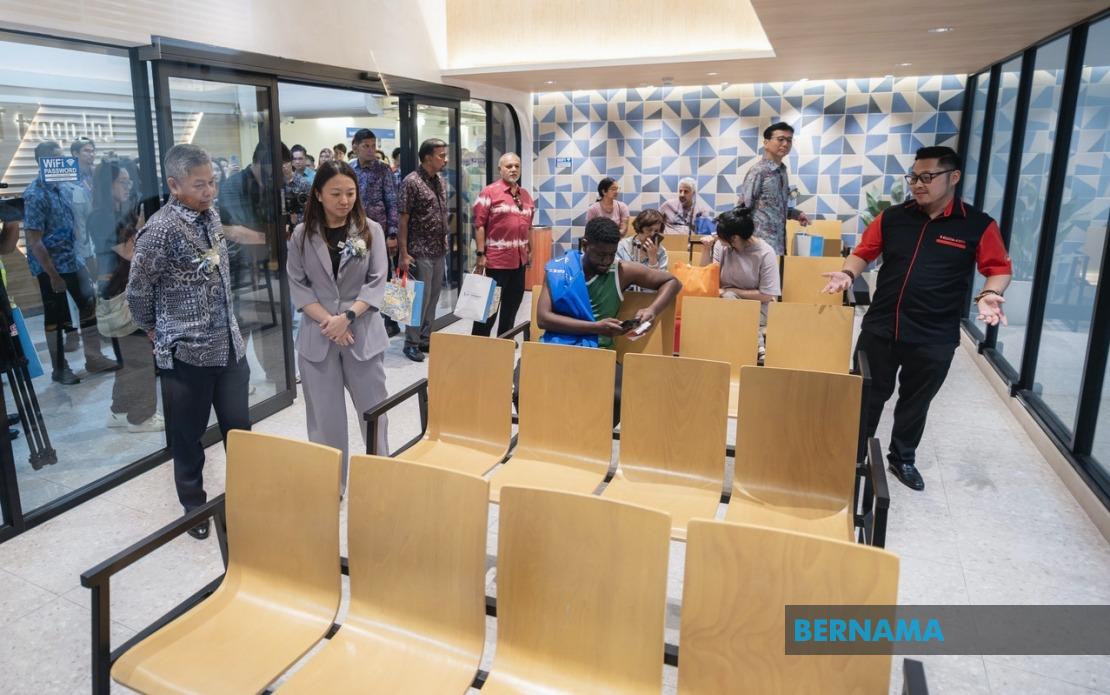
Kuala Lumpur's newest integrated transport terminal, the LaLaport Transportation Hub, opened its doors in the city centre this week, marking another significant step in the capital's ongoing urban mobility transformation. Positioned strategically beside the Hang Tuah LRT and Monorail interchange, the facility is designed to consolidate multiple transport modes into a single, unified point of access for commuters. Hannah Yeoh, Minister in the Prime Minister's Department (Federal Territories), unveiled the hub during its official launch, highlighting its role in addressing the enormous volume of movement within the metropolitan area.
The sheer scale of daily movement through Kuala Lumpur underscores why such infrastructure investments have become essential. The city witnesses approximately 1.2 million people entering and exiting daily, while the broader transport network records roughly 5.5 million journeys across all modes. These figures reflect the intense pressure on existing infrastructure and the challenges planners face in managing congestion and improving user experience. The new hub aspires to absorb a meaningful portion of this demand by offering convenient interchange opportunities at a centrally located site.
The facility itself represents a thoughtfully designed space for modern urban transit. Situated on the LG1 level of the East Atrium, the hub features a fully enclosed environment with 11 dedicated bus parking bays, climate-controlled waiting areas, staffed service counters, self-service ticketing kiosks, and a Passenger Information Display System that provides real-time scheduling updates. This combination of amenities reflects lessons learned from similar hubs across the region and addresses passenger comfort as a core design principle.
Connectivity forms the hub's central purpose. Beyond linking passengers to express buses, the facility integrates e-hailing platforms, traditional taxi stands, and shared mobility options through covered pedestrian walkways. This seamless integration eliminates the need for travellers to navigate between disparate terminals scattered across the city. The design proves particularly valuable for those transferring between the LRT and Monorail networks and long-distance coaches, reducing friction in multi-modal journeys and encouraging public transport adoption over private vehicles.
Cross-border mobility represents a key strategic dimension of the hub's operations. The facility has been configured to handle approximately 150 bus trips daily, including a dedicated 24-hour express service operating between Kuala Lumpur and Singapore. This positioning of the hub as a gateway for regional travel aligns with broader economic integration between Malaysia and Singapore and recognises the substantial passenger flows across the causeway. Aaron Chuah, chief executive officer of the hub's operator Asia Success Resource Sdn Bhd, indicated that approximately 30 bus operators are anticipated to utilise the facility as their primary city centre terminal, with particular emphasis on cross-border services.
Airport connectivity also features prominently in the hub's value proposition. Passengers can access dedicated shuttle van services to Kuala Lumpur International Airport Terminals 1 and 2, streamlining the journey from the city centre to the airport without requiring ground transport transfers. This service responds to feedback from business and leisure travellers seeking simpler airport access procedures. The Boleh-Boleh Ride on-demand van shuttle service additionally links the hub to several key commercial and institutional districts throughout the central business area.
Government policy shifts have facilitated the hub's development and operation. The Dewan Bandaraya Kuala Lumpur introduced three-year operating licences for transport terminals, replacing the previous annual renewal framework. This extended licensing period provides operators like Asia Success Resource Sdn Bhd with greater regulatory certainty and security to invest in service quality improvements. The change signals a maturation in how the city authority approaches terminal management and reflects international best practices in transport infrastructure governance.
Safety and accessibility enhancements complement the hub's opening. The DBKL has initiated a broader programme to install approximately 10,000 operational closed-circuit television cameras across the city, substantially upgrading surveillance coverage in transport nodes, public spaces, and key districts. This investment addresses legitimate passenger concerns about personal security in transit environments and supports law enforcement efforts to maintain orderly operations within the transport system.
International dimensions have informed the project's development. Japanese Ambassador to Malaysia Noriyuki Shikata attended the launch ceremony, characterising it as evidence of deepening bilateral cooperation in sustainable urban development. The ambassador connected the hub's opening to Prime Minister Datuk Seri Anwar Ibrahim's recent visit to Japan and noted that Malaysia and Japan will commemorate the 75th anniversary of diplomatic relations next year. The involvement of Japanese expertise and capital in the project reflects Japan's longstanding strength in integrated urban transport planning, evident in systems like Tokyo's seamlessly connected rail and bus networks.
The hub's significance extends beyond operational capacity metrics. It represents a conscious policy choice to invest in urban mobility infrastructure that prioritises passenger convenience and reduces reliance on private vehicles. By concentrating transport services in accessible central locations, the city authority aims to reverse patterns of sprawl-inducing infrastructure development. The facility demonstrates that modern urban transport planning can achieve functional integration without sacrificing passenger comfort or safety. For Malaysian observers and policymakers, the hub exemplifies how thoughtful terminal design, coordinated operator participation, and supportive regulatory frameworks can collectively improve city-wide mobility outcomes.
As Kuala Lumpur continues expanding its public transport network, facilities like LaLaport Transportation Hub occupy an increasingly important position in the transport hierarchy. These interchange points function as crucial nodes connecting different modes, geographies, and user types. Their success depends on sustained coordination between government agencies, private operators, and technology providers. The launch of this facility suggests that such collaboration is achievable and that Malaysia's capital is progressively developing the integrated transport ecosystem that residents and visitors require to navigate the city efficiently and safely.

