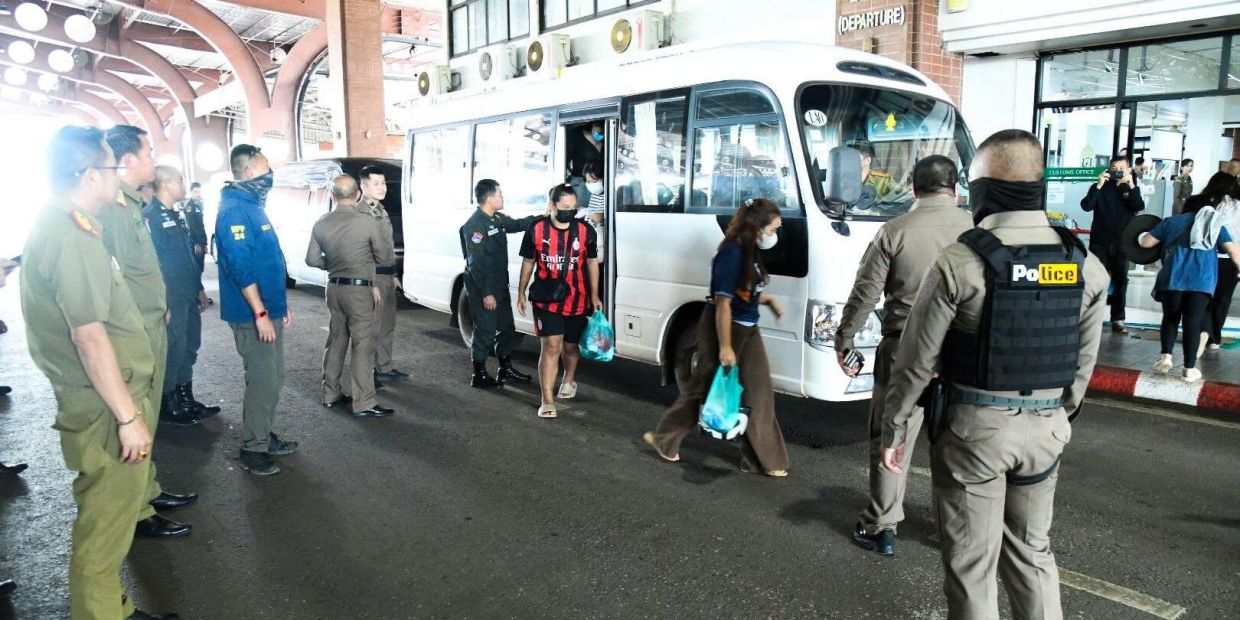
Laos has intensified its enforcement campaign against organised cybercrime by deporting 32 Thai nationals who were apprehended during a sweeping police operation targeting the ST Vegas complex in Vientiane Capital. The deportation, carried out on 6 August at the First Lao-Thai Friendship Bridge linking Vientiane with Thailand's Nong Khai province, represents a tangible outcome of regional cooperation efforts to dismantle criminal syndicates operating across porous borders in the Mekong region.
The ST Vegas operation itself, conducted on 18 July in Dongphosy village within Hatxayfong district, resulted in the detention of 589 individuals representing four distinct nationalities. Thai nationals comprised the largest cohort at 373 people, followed by 199 Lao citizens, 15 Vietnamese nationals, and two Cambodian detainees. The scale and multinational composition of those arrested underscore the sophistication and cross-border nature of scam operations that have flourished in Laos, leveraging the country's relatively lenient regulatory environment and geographical position as a transit hub for regional organised crime.
The ST Vegas raid functions as a critical component within a much broader offensive mounted by Lao authorities against the entrenched infrastructure of online fraud, illegal gambling facilities, and telecommunications-based scamming operations. Government forces have executed multiple coordinated strikes across the capital and surrounding districts in rapid succession, signalling a dramatic policy shift toward confronting criminal enterprises that have long operated with apparent impunity. This intensified enforcement posture reflects mounting international pressure on Vientiane to address the proliferation of scam centres, which have garnered significant attention from neighbouring countries and regional security forums concerned about transnational organised crime.
On 1 August, authorities conducted synchronised raids spanning Sikhottabong and Hadxayfong districts, resulting in 63 additional arrests. Those detained included individuals from China, Laos, Cambodia, and Thailand, suggesting that these criminal networks operate through complex, multinational supply chains. Police investigations revealed that the implicated organised group had systematically targeted victims across China through a combination of call-centre fraud operations and sophisticated online schemes, indicating that Lao-based scam infrastructure functions as a critical node within a larger regional ecosystem serving criminal clients internationally.
The campaign gains particular significance when viewed against the backdrop of official statements made by Prime Minister Sonexay Siphandone to the National Assembly in July. The premier reported that during the first half of 2026, authorities had apprehended more than 4,400 individuals across cases involving cybercrime, online fraud, and illegal gambling—a staggering figure that contextualises the ST Vegas operation within the scale of the problem confronting Lao law enforcement. Authorities subsequently reported additional detentions throughout July, with more than 1,000 people taken into custody during that month alone, although independent verification of these elevated figures remains unavailable.
For regional observers, particularly those in Malaysia and broader Southeast Asia, the Lao crackdown carries considerable implications. Southeast Asian nations have increasingly recognised that scam operations based in one jurisdiction directly endanger citizens across the region and beyond. The concentration of call-centre fraud infrastructure in Laos has meant that Malaysian citizens, along with those from Thailand, Indonesia, and other regional economies, have fallen victim to elaborate investment scams, romantic fraud schemes, and impersonation plots orchestrated from Vientiane and surrounding areas. The ST Vegas raid and subsequent deportations signal that the Lao government is attempting to address international criticism and pressure from trading partners and security allies.
The deportation mechanism itself demonstrates evolving bilateral cooperation frameworks between Laos and Thailand, its closest neighbour. The utilisation of the First Lao-Thai Friendship Bridge as a transit point for deportations underscores how physical infrastructure and formal bilateral protocols facilitate regional security responses. However, the sheer volume of criminals returning to Thailand also highlights the challenge facing the broader region: without comprehensive prosecution and rehabilitation frameworks in each nation, deported individuals may simply rejoin criminal networks operating from alternative jurisdictions or resume their activities upon return.
The diversity of nationalities involved in the ST Vegas operation—with substantial Thai participation alongside Lao, Vietnamese, and Cambodian elements—illustrates how these criminal enterprises function as truly transnational ventures. Many Thai nationals employed in Lao scam centres are themselves trafficking victims, lured by promises of legitimate employment before finding themselves trapped in debt bondage. This exploitation dimension complicates enforcement responses, as appropriate handling requires victim identification protocols alongside criminal prosecution procedures—capabilities that remain unevenly distributed across Southeast Asian law enforcement agencies.
International attention on Laos's scam infrastructure has intensified following diplomatic pressure from multiple directions. Thailand and Cambodia have articulated concerns about criminal recruitment from their territories, while China—as the primary target of many Lao-based fraud operations—has emphasised the need for stronger enforcement. This convergence of international pressure has evidently prompted the Lao government to undertake more aggressive operations than previously observed, signalling a potential inflection point in official policy toward organised cybercrime.
Looking forward, the sustainability of Lao enforcement efforts remains uncertain. Past crackdowns have often proved episodic, with reduced pressure subsequently allowing criminal networks to reconstitute themselves. The structural factors facilitating scam operations—economic desperation, limited government salaries in law enforcement, corrupting influence of criminal proceeds, and porous borders—persist regardless of temporary enforcement spikes. For Malaysia and regional partners, sustained engagement with Lao authorities through formal law enforcement channels and continued diplomatic pressure will likely prove necessary to consolidate these initial gains and prevent the wholesale relocation of scam infrastructure to alternative regional havens.

