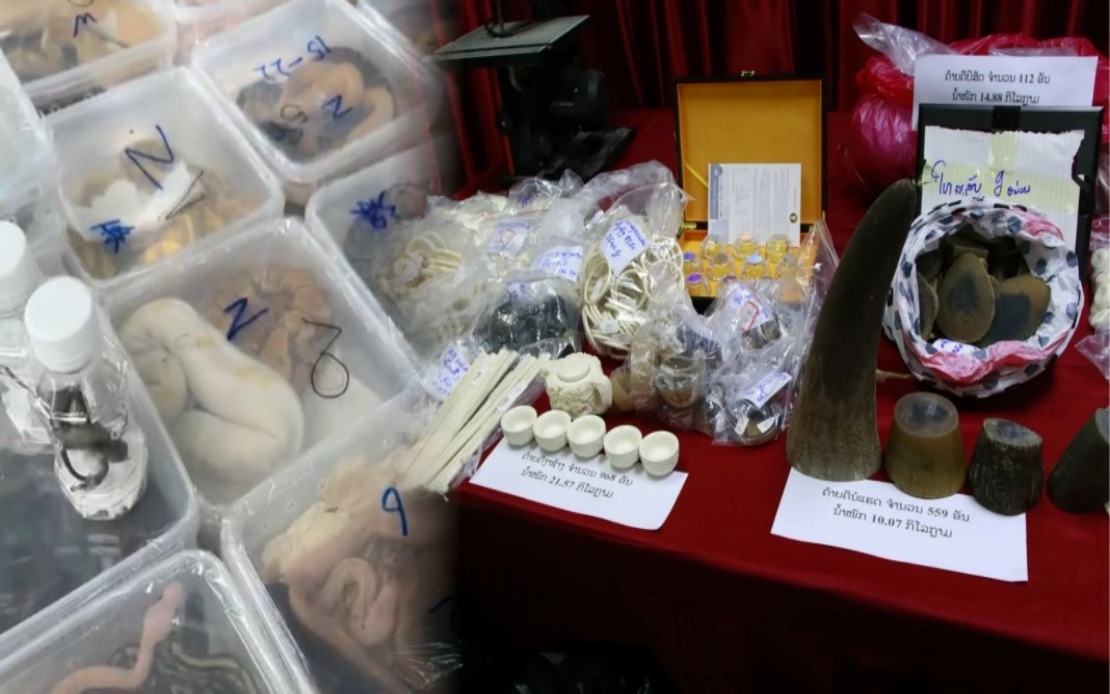
Laotian law enforcement agencies have dealt a significant blow to an international wildlife smuggling network, recovering nearly 300 live animals and substantial quantities of endangered species products during coordinated operations across the country's border regions. The enforcement actions, conducted in recent weeks across Luang Prabang and Champasak provinces, lay bare the sophisticated operation of traffickers exploiting the Mekong subregion's porous borders and weak enforcement infrastructure. The discoveries underscore how organised crime syndicates continue to profit from the region's rich but increasingly threatened biodiversity, with implications that extend far beyond Laos to threaten species survival across Southeast Asia and beyond.
The initial operation in Luang Prabang, the country's cultural heart and a major tourist hub, uncovered 60 kilogrammes of suspected contraband wildlife materials. Investigators from the Lao Wildlife Enforcement Network discovered an alarming assortment of illegal goods including items fashioned to resemble ivory, animal gallbladders extracted for traditional medicine purposes, pangolin scale materials, and what appeared to be rhino horn. Additional seizures at the location included boxes holding elephant skin powder, bear gallbladders, hornbill heads, and tubes of herbal remedies suspected of containing wildlife-derived ingredients. The diversity of products recovered points to a well-established supply chain catering to multiple markets, from traditional medicine practitioners to wildlife curio traders serving the tourist trade.
Four days later, the operation reached its apex when wildlife rangers deployed at the Vang Tao International Checkpoint in Champasak Province intercepted a haul of 294 living animals en route across the Thai border. The collection encompassed numerous species including various turtle types, python varieties, green snakes, gold-ringed cat snakes, and multiple lizard species. The animals were discovered aboard transportation apparently designed to move them inconspicuously across the border into Thailand, where demand for exotic pets and traditional medicine ingredients remains substantial. The species involved are not naturally occurring in Laos, confirming their origin lies in countries further afield, likely harvested from Cambodia, Myanmar, or other neighbours and routed through Laos as a transit point.
These enforcement successes reflect a broader campaign against the trafficking networks that exploit the Mekong region's geography and governance challenges. Earlier in May, Thai authorities apprehended a woman operating a traditional medicine and souvenir shop in Nakhon Phanom in Thailand's northeast, leading to the seizure of over 100 protected wildlife remains smuggled from Laos. Concurrently, authorities dismantled a smuggling operation attempting to move 130 kilogrammes of cut elephant ivory and processed animal remains along the same Thai-Lao border corridor. These coordinated takedowns suggest increasing international cooperation between Thailand and Laos, though experts warn that such successes represent merely the visible portion of a much larger illicit trade.
Laos occupies a particularly vulnerable position in the wildlife trafficking supply chain due to its strategic geography. The country shares land borders with five neighbours—Cambodia, China, Myanmar, Thailand, and Vietnam—making it an ideal transit hub for traffickers moving contraband between major source and destination countries. Lacking the institutional capacity of wealthier nations to patrol its extensive borders and enforce complex wildlife protection regulations, Laos has become a critical chokepoint in the supply chain. Traffickers exploit weak inter-agency coordination, corruption among officials, and the country's limited resources dedicated to enforcement, allowing shipments to pass through relatively unmolested.
The scale of the problem extends far beyond individual seizures. According to the United Nations Office on Drugs and Crime's World Wildlife Crime Report 2024, illegal wildlife trafficking persists at endemic levels across the globe despite two decades of sustained international and national interventions. The UNODC estimates the global illegal wildlife trade generates approximately US$10 billion annually, equivalent in scope and profitability to human trafficking, narcotics smuggling, and the arms trade. This financial scale creates powerful incentives for criminal organisations to continue operations regardless of enforcement efforts, as profits dwarf the risks of occasional seizures. The report identifies systemic corruption as the primary facilitator enabling wildlife smuggling networks to operate with relative impunity, with officials at border posts, transport hubs, and customs agencies compromised to allow shipments through.
The consequences of this trafficking extend beyond individual animals lost to captivity or processing. The systematic poaching and smuggling of endangered species from wild populations contributes directly to the extinction risks facing already threatened megafauna. Pangolins, extracted for their scales used in traditional Asian medicine, have become the world's most trafficked mammals. Elephant poaching for ivory supplies black market carvers and decorative goods manufacturers, while bear gallbladders command premium prices in traditional medicine markets despite readily available synthetic alternatives. The removal of these animals from wild populations disrupts ecosystem dynamics and accelerates population declines, with some species approaching irreversible collapse points.
For Malaysia and other Southeast Asian nations, the Laotian enforcement actions carry important implications. The region's wildlife trafficking networks operate across multiple jurisdictions, with contraband frequently transiting through Malaysia's ports and airports en route to international markets. Malaysian authorities have repeatedly seized shipments of pangolin scales, elephant ivory, and other protected materials destined for Asian and international markets. The Laotian operations demonstrate that successful interdiction requires sustained cooperation with neighbours and the commitment of resources to enforcement capacity-building. Malaysia, as a wealthier and more developed regional player, has responsibility both to strengthen its own enforcement mechanisms and to support capacity-building efforts in neighbouring countries facing more constrained circumstances.
The traditional medicine industry plays a critical role in perpetuating demand for trafficked wildlife products, with consumers in China, Vietnam, and across East and Southeast Asia purchasing bear gallbladders, pangolin scales, rhino horn, and animal-derived remedies despite their illegality and the existence of equally efficacious synthetic alternatives. Public awareness campaigns targeting consumers represent a critical missing element in most enforcement strategies. Without reducing demand among end-users, interdiction efforts alone cannot stem the tide of trafficking. Governments and civil society organisations must invest in messaging that demonstrates both the illegality and the ethical dimensions of purchasing wildlife products, particularly targeting affluent consumers in major cities where purchasing power remains highest.
The Laotian successes also highlight the importance of international cooperation frameworks and intelligence-sharing among enforcement agencies. The coordination visible in recent operations, with information flowing between Lao and Thai authorities, enabled authorities to identify patterns and intercept major shipments. Expanding and formalising such cooperation through mechanisms like the Association of Southeast Asian Nations Environmental Ministers forums and bilateral agreements could dramatically increase enforcement effectiveness. Training programmes that upgrade technical capacities of enforcement personnel and provide modern surveillance equipment remain chronically underfunded relative to the scale of the problem.
Looking forward, sustained progress requires addressing root causes alongside enforcement. Poverty in source communities drives participation in poaching and smuggling as alternative livelihoods when legal economic opportunities remain limited. Community-based conservation initiatives that provide economic benefits from wildlife protection represent a critical but underutilised approach. Coupled with enforcement targeting trafficking networks and demand reduction targeting end-consumers, such comprehensive strategies offer genuine prospects for reversing current trends. The Laotian operations represent important victories in an ongoing struggle, but without systemic changes addressing corruption, poverty, and consumer demand, the illicit trade will continue claiming species and ecosystems across the region.

