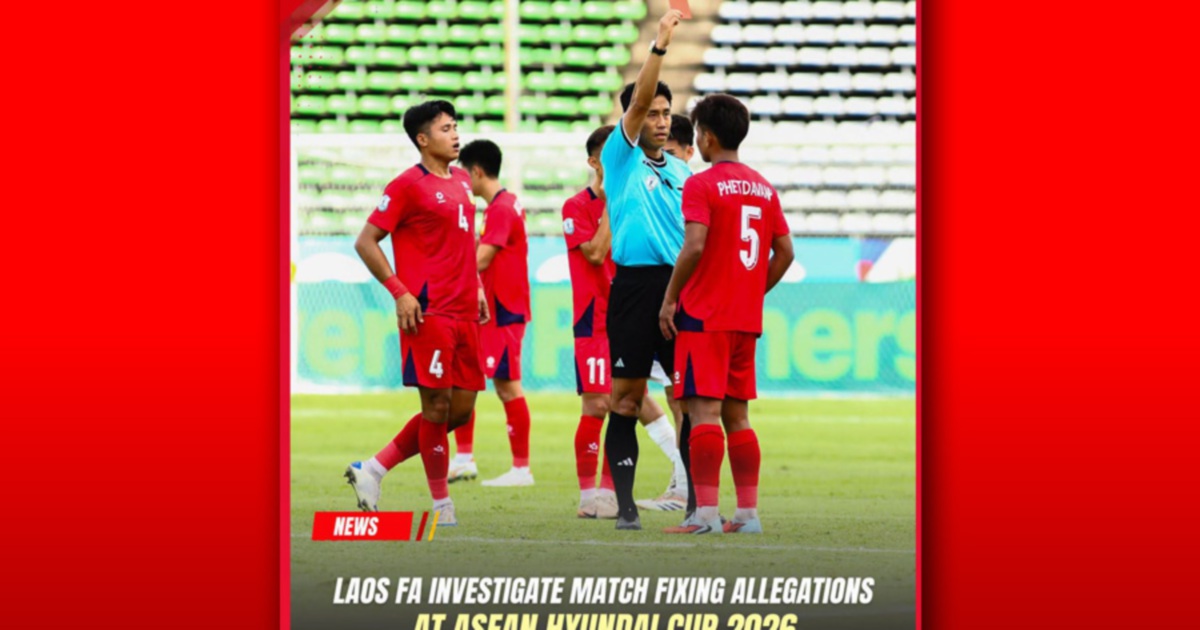
Southeast Asian football has been shaken by a significant corruption controversy following the Lao Football Federation's decision to initiate a comprehensive investigation into suspected match-fixing, bribery schemes, and unlicensed betting operations allegedly connected to members of Laos' national squad. The announcement represents a critical moment for the region's sporting governance and raises fresh questions about the integrity of competitive football across Asean amid preparations for major championship fixtures.
The timing of the investigation carries particular weight given Laos' participation in regional tournaments where the nation has been working to elevate its competitive standing. The federation's willingness to publicly acknowledge such serious allegations suggests that evidence of wrongdoing has reached a threshold demanding formal scrutiny. This transparency, while potentially damaging in the short term, may ultimately strengthen confidence in Southeast Asian football if the investigation leads to meaningful accountability and reform. The football authorities' decision to move decisively sends a signal that member nations are taking corruption allegations seriously rather than attempting to shield operations from external scrutiny.
Match-fixing remains a persistent threat to football credibility throughout Southeast Asia, where lower salaries for athletes compared to developed nations can create financial vulnerabilities. The involvement of illegal gambling networks compounds this risk, as underground betting markets often orchestrate match manipulation schemes to generate illicit profits. These operations typically exploit the relative opacity of domestic football leagues and the financial desperation of some players facing limited earning potential through legitimate means. The scale of such activities remains difficult to measure, but periodic arrests and investigations across the region indicate that organized betting syndicates maintain sophisticated networks targeting football outcomes.
For Malaysian football stakeholders, the Laotian situation carries direct relevance. Both nations compete within the same Asean Football Federation framework and participate in similar tournaments where their teams may face one another. If corruption has compromised the integrity of matches involving Laos, it raises uncomfortable questions about whether other national teams or clubs across the region face comparable vulnerabilities. The competitive balance of regional championships depends on all participants competing fairly, and widespread match-fixing in any member nation undermines the credibility of tournament outcomes across the entire confederation.
The bribery dimension of the allegations is particularly concerning because it suggests that officials or gatekeepers within football administration may have been complicit in concealing misconduct. Such involvement reaches beyond individual player wrongdoing and implicates the institutional structures meant to safeguard competition. When corruption penetrates administrative layers, rectifying the problem becomes more complex, requiring not only disciplinary action against players but also potential overhauls of governance procedures and oversight mechanisms. The Lao Football Federation's investigation will need to examine whether systemic weaknesses enabled the alleged misconduct.
Laos' football development has progressed notably in recent years, with the national team competing in regional championships and attempting to build a more competitive infrastructure. A corruption scandal threatens to undermine these developmental efforts by damaging the nation's sporting reputation internationally and potentially deterring investment in youth development programmes and professional league enhancement. Regional partners and international football bodies may adopt more stringent scrutiny of Laotian football administration going forward, complicating the federation's reform agenda.
The investigation's scope and methodology will likely determine its effectiveness and impact on regional football governance. Independent oversight, transparent processes, and cooperation with international anti-corruption bodies such as Interpol could strengthen the inquiry's legitimacy. Conversely, if the investigation appears compromised or produces limited consequences, it may reinforce perceptions that Southeast Asian football lacks the institutional capacity to police itself effectively. Other Asean nations will be watching closely to see whether accountability mechanisms function as intended.
For Malaysian readers, this scandal underscores the importance of robust domestic governance within the Football Association of Malaysia (FAM) and professional leagues. While no Malaysian involvement has been alleged in the Laotian matter, the incident provides cautionary evidence of how quickly corruption can undermine a nation's football reputation. Malaysia's own efforts to combat match-fixing through enhanced monitoring, player education, and cooperation with law enforcement agencies merit continued investment and public support.
The broader implications extend to Southeast Asian football's standing on the global stage. International federations and tournament organizers consider corruption risks when allocating hosting rights or determining competition formats. Repeated scandals across multiple nations could result in diminished investment, reduced media attention, and lower participation incentives for emerging players. Conversely, demonstrated commitment to rooting out corruption and implementing effective reforms strengthens the region's credibility with global partners and sponsors.
The Lao Football Federation's decision to pursue a transparent investigation represents a potential turning point, provided the process yields meaningful accountability and systemic improvements. Regional football associations must learn from this case and implement comparable anti-corruption frameworks within their own jurisdictions. Such measures might include enhanced financial transparency for national teams, mandatory betting education for players, stronger protocols for reporting suspicious match conduct, and periodic independent audits of competition integrity.
Soccer remains the region's dominant sport, commanding passionate followings and significant media coverage. Corruption scandals erode the emotional investment and trust that supporters place in their teams. Restoring that faith requires not only punishing individuals found culpable but also demonstrating institutional commitment to prevention through structural reforms. The months ahead will reveal whether Southeast Asian football can meet this challenge and emerge with strengthened integrity safeguards.

