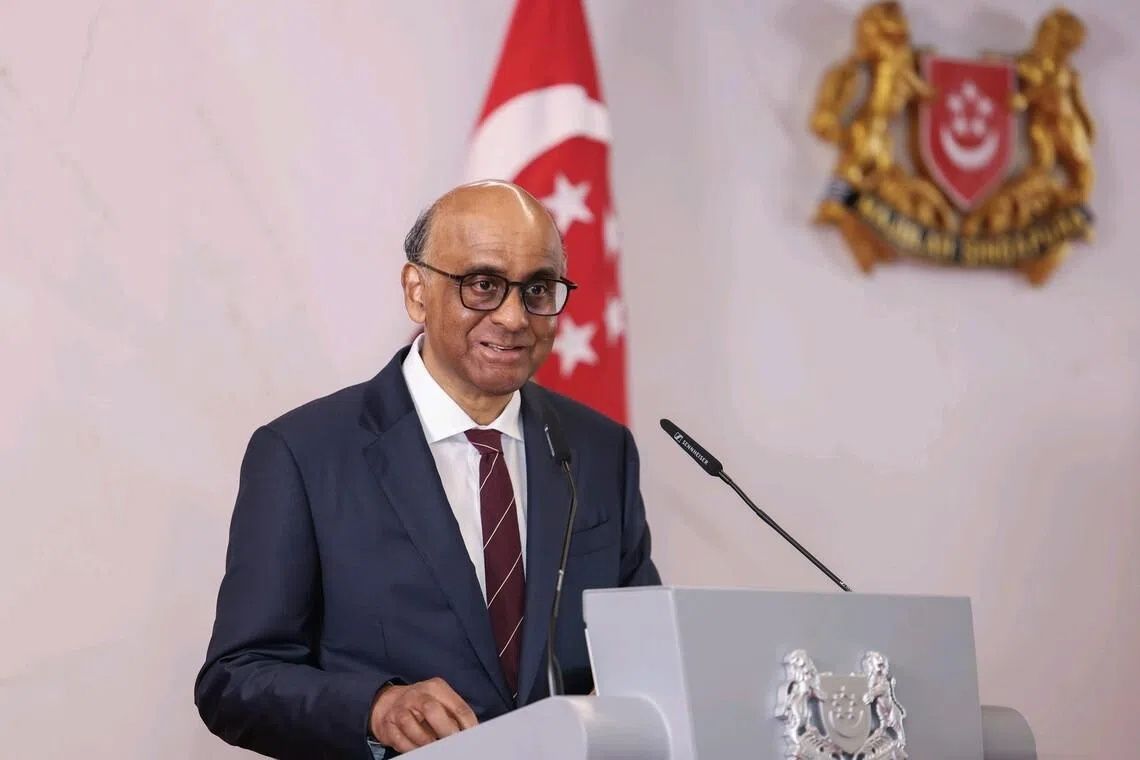
Singapore's President Tharman Shanmugaratnam has underscored the exceptional nature of his country's relationship with Malaysia, describing it as a unique bond forged across generations through shared history, kinship ties, and cultural intertwining. Speaking in advance of his state visit to Malaysia at the invitation of His Majesty Sultan Ibrahim, King of Malaysia, President Tharman stressed that the partnership transcends mere transactional arrangements, resting instead on a foundation of accumulated trust and mutual respect that has been carefully nurtured over six decades.
The relationship between Singapore and Malaysia extends far beyond diplomatic protocol. Both nations share deeply interwoven populations, with families and cultural traditions that span the Johor-Singapore Causeway—the world's busiest land border crossing—serving as a tangible symbol of their economic interdependence. President Tharman highlighted how this integration manifests in everyday life, with hundreds of thousands of Malaysians and Singaporeans crossing the land checkpoints daily for work and commerce. This human dimension of bilateral ties reflects an integration that has created genuine benefits for people on both sides of the border.
Cultural preservation and recognition form another significant pillar of the Singapore-Malaysia partnership. The two countries, alongside Brunei, Indonesia, and Thailand, successfully secured UNESCO inscription for the kebaya, a traditional garment that embodies the multicultural heritage of the region. Currently, both nations are collaborating to achieve UNESCO recognition for Chingay, the colourful street procession that visually represents the evolving multicultural landscape and brings communities together across borders. These cultural initiatives demonstrate how the bilateral relationship actively sustains traditions while passing them to younger generations, ensuring that heritage remains living and relevant rather than merely historical.
According to President Tharman, the capacity to manage disagreements constructively distinguishes the Singapore-Malaysia relationship from many international partnerships. The two countries have navigated complex and sensitive bilateral issues throughout their history, yet successive governments on both sides have deliberately chosen not to allow these disputes to undermine the broader relationship. This approach—addressing differences squarely through dialogue while anchored in mutual respect and international law—has become a model for regional stability. In an increasingly fractious geopolitical environment marked by great-power competition and regional conflicts, the ability to resolve disputes through principled negotiation rather than confrontation offers valuable lessons for ASEAN and the wider Asia-Pacific.
The Johor-Singapore Special Economic Zone and the Rapid Transit System Link represent contemporary manifestations of this partnership's economic dimension. The JS-SEZ exemplifies how neighbouring countries can pursue genuinely mutually beneficial cooperation by combining their respective comparative advantages. The RTS Link, meanwhile, addresses a practical necessity for the half-million-plus daily cross-border commuters, reducing travel time and friction for ordinary people navigating the shared border. These flagship projects demonstrate that bilateral cooperation generates tangible improvements in living standards and economic opportunity.
President Tharman identified several emerging areas of strategic cooperation that reflect both countries' shared geographic and developmental circumstances. As tropical nations confronting similar climate challenges, Singapore and Malaysia stand to benefit substantially from collaboration in renewable energy and carbon credit markets. Both countries have announced sustainability and energy transition targets, making joint initiatives in green technology not merely aspirational but economically necessary. This convergence of interests positions climate cooperation as a natural extension of the bilateral partnership.
The digital economy presents another frontier for deepening integration. ASEAN recently concluded the Digital Economy Framework Agreement, slated for signing at the November 2026 ASEAN Summit in Manila. Current projections estimate the region's digital economy could reach one trillion US dollars by 2030 under baseline conditions, yet a high-quality DEFA implementation could potentially double this figure to two trillion dollars. Singapore and Malaysia, as developed and developing economies respectively within ASEAN, can pioneer the practical implementation of such frameworks, demonstrating how regional integration generates prosperity.
Despite the importance of elite-level engagement and formal agreements, President Tharman emphasised that people-to-people connections require deliberate cultivation in contemporary circumstances. Earlier generations experienced natural interaction through geographic proximity and cultural familiarity, but deliberate institutional support—bilateral exchange programmes, joint internships, youth leadership forums, and collaborative community projects—now proves essential for sustaining these ties. The younger generation must actively develop the relationships and understanding that earlier generations took for granted, or risk atrophy in bilateral goodwill.
As founding members of ASEAN, Singapore and Malaysia share responsibility for preserving the organisation's centrality and relevance amid current global turbulence. Both nations recognise that regional stability depends not on the absence of disputes but on disciplined management of disagreements through dialogue, restraint, and respect for sovereignty within a rules-based framework. This commitment to ASEAN's core principles—particularly the Association's emphasis on non-interference and consensual decision-making—becomes increasingly critical as great-power competition intensifies and smaller nations face pressure to choose sides in geopolitical rivalries.
President Tharman's characterisation of the bilateral relationship as one requiring that "hearts shake hands" captures an essential truth often overlooked in transactional diplomacy: enduring partnerships depend on genuine emotional investment and cultural understanding alongside formal agreements and economic interest. The Singapore-Malaysia relationship demonstrates that close neighbours can maintain stability and build prosperity even when disagreeing on specific issues, provided they maintain mutual respect, transparent communication, and commitment to shared regional interests. This model gains added relevance for Southeast Asia as external powers compete for influence and internal stresses test regional cohesion, suggesting that deepening intra-ASEAN cooperation represents both a practical necessity and a philosophical commitment to an alternative ordering principle based on consensus rather than coercion.

