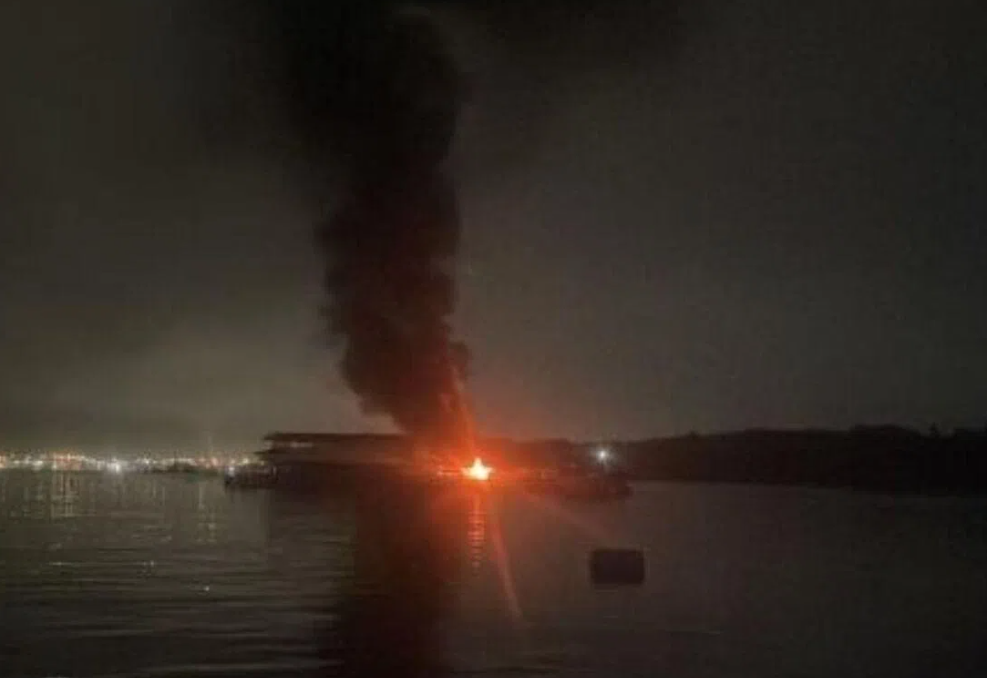
A major fire consumed at least two floating fish farms situated off the Lorong Halus jetty near Pasir Ris on June 24, with firefighting teams requiring several hours to fully suppress the blaze. The Singapore Civil Defence Force responded to emergency calls at approximately 8.10pm and subsequently deployed marine vessels alongside personnel from the Maritime and Port Authority of Singapore and Airport Emergency Service to combat the flames. Community support proved crucial, as operators from adjacent fish farms also mobilised to help contain the spreading conflagration. The incident resulted in no recorded injuries, though the economic toll proved substantial.
Investigators believe a lightning strike struck the facility's solar panel installation, triggering the initial combustion that subsequently propagated to neighbouring aquaculture operations. The solar panels themselves sustained severe damage, but the fire's reach extended to critical farming infrastructure and inventory. According to reports from Chinese daily Lianhe Zaobao, the electrical surge from the lightning appears to have overwhelmed the farm's protective systems, though authorities continue examining the precise sequence of events that led to the fire's rapid expansion across adjacent properties.
One farm operator quantified the financial devastation resulting from the incident, estimating total losses at approximately S$120,000. The destruction encompassed essential operational equipment including fish feed supplies, diesel generators, fishing vessels, multiple fish traps, and extensive sections of fishing nets. Beyond the hardware damage, the farm suffered biological losses when damaged containment structures allowed approximately half of the facility's fish stock to escape into surrounding waters. The operator highlighted the particular frustration of being unable to pursue insurance recovery for the incident, effectively leaving him responsible for absorbing the entire financial impact.
This particular calamity reflects a recurring vulnerability affecting Singapore's floating aquaculture sector. The farm operator noted that lightning strikes had previously damaged the solar panel arrays on multiple occasions, but prior incidents occurred when staff remained on-site. The immediate human presence in those earlier cases enabled rapid response protocols that successfully prevented minor electrical failures from escalating into widespread fires. The June 24 incident occurred during an unattended period, removing this crucial buffer and allowing the initial spark to develop into a major emergency before external firefighting resources could reach the location.
The affected facilities form part of Singapore's integrated aquaculture industry, which operates under specific geographic and infrastructural constraints. The farms' proximity to Pulau Ubin and Pulau Ketam, two small islands characterising the eastern approaches to Singapore, positions them within a region where weather patterns and electrical storm activity present persistent operational hazards. Floating farm operations offer advantages in terms of space efficiency and production capacity within Singapore's land-limited context, yet they simultaneously expose infrastructure and inventory to maritime environmental risks that land-based facilities largely avoid.
Singapore's aquaculture sector has undergone significant modernisation in recent years, with operators increasingly integrating renewable energy systems to reduce operational costs and environmental footprints. Solar installations have become nearly ubiquitous across floating farms, helping operators manage the substantial electricity demands of aeration systems, feed dispensers, and facility lighting. However, the integration of these electrical systems introduces new vulnerabilities. The concentrated presence of electrical equipment across relatively compact floating platforms, combined with exposure to tropical storm systems producing frequent lightning activity, creates a distinctive risk profile that requires enhanced protective infrastructure and operational protocols.
The expanding adoption of offshore farming methodologies within Southeast Asia reflects broader regional efforts to enhance food security and develop sustainable protein production systems. Singapore's floating aquaculture operations represent a model increasingly studied and replicated across the region, as neighbouring countries seek to optimise limited agricultural land through intensive water-based production. The June 24 incident thus carries implications extending beyond immediate commercial losses, highlighting operational vulnerabilities that may affect similar installations across Southeast Asian jurisdictions.
Operational protocols for floating farms have traditionally emphasised staffing schedules aligned with daylight hours and predictable weather conditions. The capacity to deploy personnel rapidly during emergencies has functioned as a critical failsafe mechanism, preventing minor incidents from cascading into major disasters. The shift toward unmanned or partially staffed operations during certain hours, driven by labour economics and operational efficiency considerations, potentially increases vulnerability to sudden environmental events. This structural tension between economic optimisation and risk management represents a central challenge facing aquaculture operators throughout the region.
The incident underscores the importance of robust emergency response coordination within Singapore's maritime zones. The rapid deployment of multiple agencies and community participation in firefighting efforts prevented what might otherwise have developed into an even more catastrophic event. However, the fundamental question of how floating farm infrastructure should be designed and maintained to withstand the region's climatic realities remains unresolved. Enhanced lightning protection systems, including more sophisticated grounding mechanisms and surge protection devices specifically engineered for floating platforms, may reduce future incident frequency.
Industry organisations including the Fish Farmers Association of Singapore and regulatory bodies such as the Singapore Food Agency face mounting pressure to develop comprehensive safety standards addressing the specific hazards of marine-based aquaculture operations. The current incident, while not resulting in injuries, demonstrates that existing protective frameworks may require enhancement. Singapore's dense concentration of aquaculture facilities in relatively confined marine spaces means that a single uncontrolled fire possesses potential to spread rapidly across multiple operators' installations, as evidenced by the fire's progression through at least two farms on June 24.
Looking forward, operators must weigh the economic advantages of renewable energy integration against the enhanced fire risk these systems introduce during electrical storms. Insurance coverage gaps, as evidenced by this operator's inability to claim compensation, may incentivise farmers to invest proactively in improved protective infrastructure rather than relying on post-incident recovery mechanisms. The incident also highlights the value of maintaining continuous on-site presence during high-risk weather periods, even though labour costs constitute a significant operational expense for floating farms competing in price-sensitive markets.

