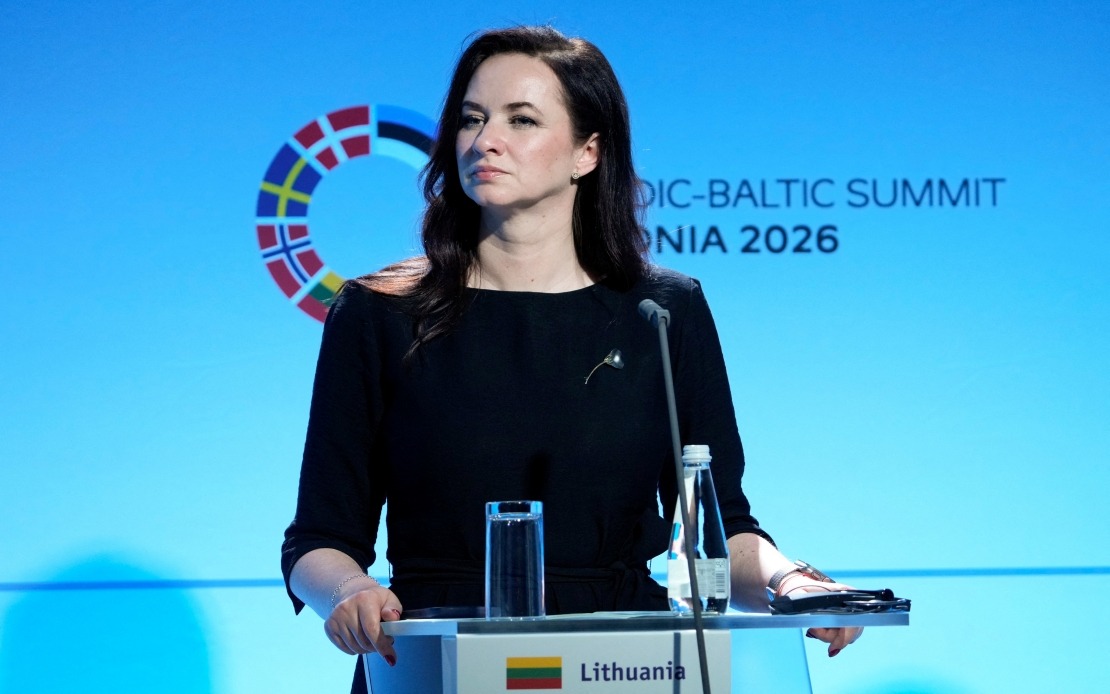
Lithuania's government collapsed on Tuesday when Prime Minister Inga Ruginiene formally notified the nation that her Cabinet would step down, initiating a complex political transition that will reshape the Baltic nation's leadership. The announcement came after mounting pressures within the ruling coalition, forcing a reconfiguration of power barely a year after the previous government assumed office. The departure marks a significant moment in Lithuanian politics, where coalition stability has proven elusive despite electoral mandates granted less than a year ago.
The mechanics of Lithuania's constitutional process now come into play, with President Gitanas Nauseda holding considerable influence over the succession. The president has been granted a 15-day window to identify and nominate a candidate for the premiership, a process that typically involves extensive consultations with parliamentary factions and coalition partners. This nomination will not automatically translate into appointment; the chosen candidate must still secure the confidence of the Seimas, Lithuania's 141-member parliament, through a formal vote that could prove contentious depending on the nominee's standing within various political camps.
Mindaugas Sinkevicius, who chairs the Lithuanian Social Democratic Party, has emerged as the frontrunner for the premiership according to multiple political observers and regional analysts. Should parliament confirm his nomination, Sinkevicius would inherit a government already in its third iteration following the 2024 election results. The succession process itself will consume approximately 45 days in total: the initial 15-day nomination period, followed by 15 days for Sinkevicius to assemble a functional Cabinet and draft a governing programme, with an additional 15 days allocated for submitting the complete ministerial lineup for parliamentary approval. This extended timeline reflects the careful institutional architecture designed to prevent hasty governmental restructuring while ensuring democratic accountability at each stage.
The Lithuanian Social Democratic Party's third coalition under these arrangements would represent an unusual level of governmental instability for a European Union and NATO member state. The party first formed a government following the late-2024 parliamentary elections, but that administration under Gintautas Paluckas collapsed within months, precipitating the installation of Ruginiene's government last August. The failure of successive coalitions to maintain cohesion points to deeper fractures within the broader governing alliance, suggesting that structural political tensions rather than mere personality conflicts are driving these successive collapses. For observers of Central European politics, the pattern raises questions about whether coalition mathematics alone can sustain functional governance when ideological or policy disagreements run deep.
The outgoing Cabinet conducted its final session on the day of resignation, with all ministers voting unanimously to formally withdraw from office. During these closing proceedings, Ruginiene reflected on her administration's tenure, acknowledging the government's accomplishments while recognizing the substantial obstacles it navigated throughout its brief period in authority. This acknowledgment underscores a diplomatic approach to the transition, avoiding the acrimony that sometimes accompanies involuntary governmental departures. By maintaining a constructive tone, Ruginiene has helped preserve institutional continuity and reduced potential friction as power transfers to her successor.
President Nauseda has accepted the resignation while simultaneously imposing continuity through a caretaker arrangement, instructing the existing Cabinet to maintain essential governmental functions until a new administration formally takes office. This constitutional mechanism prevents governance vacuums and ensures that vital state operations—from foreign policy to defence matters critical for a NATO member—continue uninterrupted during transition periods. For a nation bordering Russia and deeply integrated into Western security architecture, maintaining governmental continuity holds particular strategic importance, as any perception of institutional weakness could invite unwanted external pressure or opportunistic gestures from unfriendly actors.
The political dynamics within Lithuania merit consideration for Southeast Asian observers monitoring coalition stability across democracies worldwide. While Lithuania's context differs vastly from the region's authoritarian and semi-authoritarian landscape, the underlying challenge of maintaining coalition discipline transcends geography. The fragility of multi-party governments, the tension between individual party interests and collective governing objectives, and the pressure points that emerge when coalition members sense electoral disadvantage or policy betrayal represent universal challenges. The Lithuanian case illustrates how even established democracies with strong institutional traditions struggle to sustain functional coalition arrangements when political trust erodes.
The broader European context adds another dimension to understanding this transition. Lithuania has served as a reliable European Union and NATO partner, contributing to collective security arrangements and adopting EU policy frameworks with consistency. The governmental instability reflected in three consecutive coalition configurations within a single year does not fundamentally compromise Lithuania's international commitments or strategic alignment, though prolonged uncertainty could eventually undermine the policy continuity that such alliances require. For Western partners and neighbouring states alike, the expectation is that institutional resilience will ultimately prevail over temporary coalition flux.
Looking forward, the success of any new Sinkevicius-led government will depend substantially on whether the underlying coalition tensions can be adequately addressed through restructured power-sharing arrangements, clearer policy demarcation lines, or reciprocal confidence-building measures among coalition partners. The fact that the Social Democrats will form their third government in under a year suggests that merely reshuffling ministerial positions may prove insufficient without addressing root causes of coalition instability. Whether President Nauseda's nomination process and the subsequent Cabinet formation will succeed where previous attempts failed remains a critical question for Lithuanian political observers and international partners evaluating the nation's institutional resilience. The coming weeks will reveal whether this transition represents merely tactical repositioning within an unstable governing coalition or a more fundamental recalibration capable of sustaining functional, coherent administration through the remainder of the parliamentary term.

