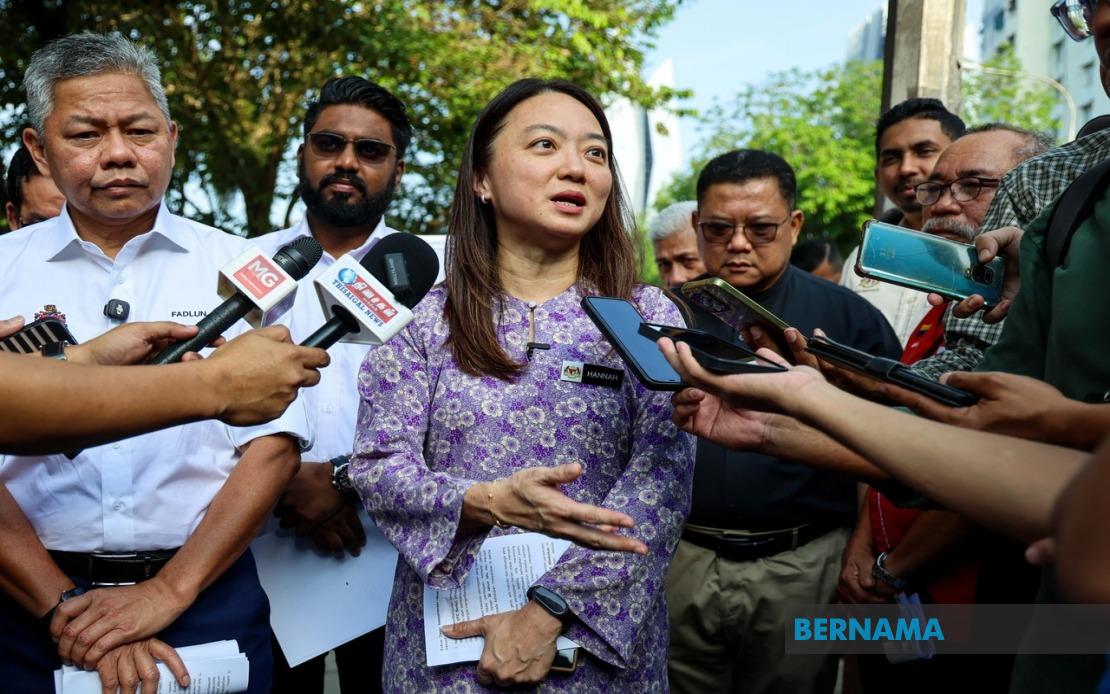
Minister in the Prime Minister's Department (Federal Territories) Hannah Yeoh has issued a pointed reminder to local authorities across Malaysia that maintaining public spaces cannot be delegated to social media as an accountability mechanism. Speaking after inspecting infrastructure works near the Urban Transformation Centre (UTC) Sentul in Kuala Lumpur on June 19, Yeoh stressed that municipalities and local councils must adopt continuous, preventative approaches to facility upkeep rather than waiting for complaints to accumulate and draw public attention online. The directive comes against a backdrop of recent complaints regarding damaged lifts and escalators in Putrajaya, Malaysia's federal administrative centre, which sparked online discussions about infrastructure standards in the capital.
Putrajaya's status as a premier tourism destination makes the issue particularly acute. The city attracts both domestic and international visitors who form impressions of Malaysian governance and development based on their experience of public facilities and amenities. When critical infrastructure deteriorates visibly, it not only inconveniences residents and tourists but also reflects poorly on the competence and effectiveness of government administration. Yeoh acknowledged that Putrajaya Corporation's leadership had mobilised repair efforts once issues surfaced, but she made clear this reactive posture falls short of acceptable standards going forward. The broader implication is that all local authorities nationwide must recognise their duty to prevent infrastructure failures rather than remediate them after damage becomes undeniable.
The distinction between major capital projects and routine maintenance represents a key aspect of Yeoh's message. She acknowledged that substantial facility upgrades may require additional budget allocations and extended planning periods. However, she emphasised that cleanliness and safety maintenance—categorised as basic housekeeping—operate under different constraints. These fundamental responsibilities should not be contingent upon securing supplementary funding or awaiting approval for expansion projects. Instead, they represent non-negotiable operational standards that every local authority possesses the capacity to deliver through disciplined execution of existing budgets and protocols. This framing resets expectations: insufficient funding cannot excuse poor maintenance of public facilities that citizens depend upon daily.
Yeoh advocated for more frequent site inspections by local authority leadership and management. Regular ground-level monitoring allows officials to identify maintenance issues at incipient stages before they escalate into safety hazards or visual deterioration that damages public perception. This proactive surveillance model represents a fundamental shift from waiting for resident complaints or social media amplification to trigger action. By embedding routine inspections into standard operational procedures, local authorities can maintain accountability internally rather than relying on external pressure. For Malaysian municipalities struggling with resource constraints, this approach offers a relatively low-cost mechanism for improving infrastructure standards—requiring commitment and attention rather than substantial capital expenditure.
The minister's comments regarding social media literacy and information integrity introduce a secondary dimension to the discourse. Yeoh cautioned that viral videos presenting alleged facility defects may capture only fragmentary aspects of complex situations. A video showing a damaged escalator, for instance, might not include information about ongoing repair schedules, underlying causes of malfunction, or contextual factors relevant to assessing the severity of the problem. She observed that contemporary digital communication enables any individual to function as a journalist, but the resulting information ecosystem often lacks the verification standards, contextual depth, and multi-perspectival analysis that professional reporting provides. This critique reflects growing concerns across Southeast Asia about misinformation and sensationalised content spreading through social platforms.
Yeoh's emphasis on media discernment carries implications beyond the immediate infrastructure discussion. As Malaysian society increasingly relies on social media for civic information and accountability, officials are grappling with balancing legitimate public scrutiny against distortion through selective presentation. The minister did not suggest that citizens should refrain from reporting genuine problems or that social media activism serves no valuable function. Rather, she advocated for more sophisticated consumption of online information, encouraging Malaysians to seek multiple perspectives and recognise that compressed videos seldom capture complete narratives. This position acknowledges social media's power while cautioning against treating sensational clips as reliable foundations for assessing institutional performance.
The ministry's engagement with Putrajaya Corporation management demonstrates the hierarchical mechanisms through which federal oversight operates in Malaysia's governance structure. Once issues gained visibility, the responsible minister escalated concerns directly to relevant management, and repair work commenced. This pattern suggests that institutional accountability functions most effectively when coupled with clear lines of responsibility and ministerial attention. However, the broader implication of Yeoh's remarks is that such interventions should become unnecessary if local authorities internalise standards of proactive maintenance. The goal is establishing autonomous institutional capacity and discipline at the municipal level rather than maintaining dependency on higher-level oversight to trigger basic facility upkeep.
For Malaysian residents and business owners operating in municipalities nationwide, these statements carry practical significance. Local authorities' responsiveness to infrastructure maintenance directly affects quality of life, commercial viability, and civic experience. When escalators in public buildings malfunction or lifts become unreliable, the consequences ripple across communities. Traders relying on foot traffic suffer when facilities deteriorate, elderly residents face accessibility challenges, and tourists form negative impressions of Malaysian infrastructure standards. By establishing clear expectations that proactive maintenance represents a non-negotiable responsibility, Yeoh creates benchmarks against which residents can evaluate their local authorities' performance and hold them accountable through both formal feedback mechanisms and electoral choices.
The timing of these remarks reflects Malaysia's broader development aspirations. As the nation positions itself as a regional economic and tourism leader, maintaining high standards of public infrastructure becomes essential to competitive positioning. Neighbouring countries similarly compete for tourist attention and international investment, making relative performance on infrastructure quality a tangible factor in regional competitiveness. When Putrajaya—symbolising Malaysian modernity and administrative sophistication—experiences visible maintenance lapses, it sends signals about governance priorities and institutional capacity. Conversely, consistently well-maintained public facilities signal administrative competence and responsiveness, strengthening Malaysia's reputation in global markets and tourist perception.
Yeoh's call for more rigorous internal inspection regimes aligns with evolving international best practices in municipal governance and public asset management. Many developed economies employ systematic facility management protocols that include preventative maintenance schedules, performance metrics, and regular audits. Implementing similar approaches within Malaysian local authorities could improve outcomes substantially while building institutional knowledge and professional capacity. Training programmes for municipal staff in asset management, establishing clear maintenance schedules, and creating transparent reporting mechanisms would support this transition. Such systemic improvements represent investments in governance infrastructure that compound over time, generating improved public services and enhanced municipal credibility.
Looking forward, the challenge for Malaysian local authorities involves translating ministerial directives into sustained operational change. Short-term compliance with newly articulated expectations may prove easier than maintaining discipline when attention shifts to other policy priorities. Building durable commitment to proactive maintenance requires embedding it within institutional cultures, establishing consequences for neglect, and creating incentive structures that reward consistent performance. Local authority leadership must communicate these expectations to staff, allocate appropriate resources and personnel, and monitor compliance through regular reporting. Only through such systematic institutionalisation can Malaysia transition from reactive, incident-driven maintenance approaches to genuinely proactive facility management that protects public health, enhances user experience, and strengthens citizen confidence in municipal institutions.

