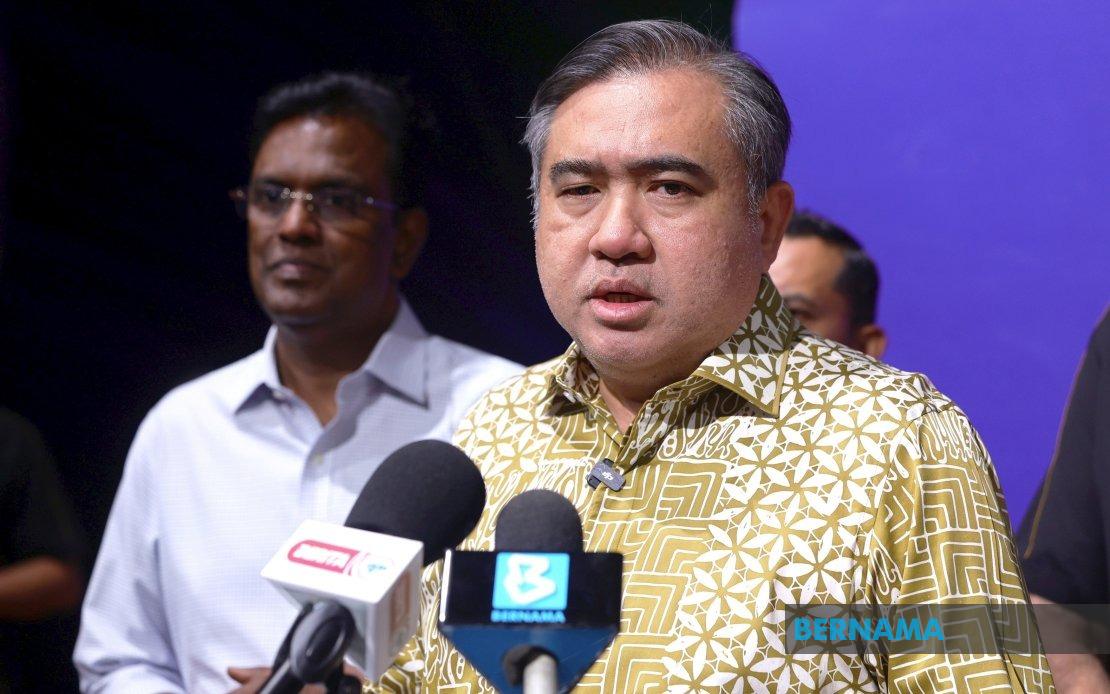
Anthony Loke, the sitting Chennah assemblyman and DAP secretary-general, has declared his willingness to face any contender vying for his state seat in the forthcoming 16th Negeri Sembilan state election. Speaking to journalists in Seremban on July 2 after launching the MyLesen B2 programme at state level, Loke adopted a notably relaxed stance toward potential challengers, framing electoral competition as an integral feature of Malaysia's democratic system. His comments came in response to media queries about businessman Albert Tei, who had reportedly indicated openness to contesting the Chennah seat following an approach from a political party.
Loke's measured response reflects the normative posture that Malaysian politicians adopt during election cycles, yet it carries particular significance given his standing within the Democratic Action Party hierarchy. As the party's secretary-general, his ability to project confidence and openness to democratic competition carries messaging weight beyond the Chennah constituency. By explicitly welcoming candidates to contest, Loke positioned his party as confident in its organisational strength and electoral machinery, a rhetorical strategy often deployed by incumbent parties seeking to demonstrate institutional security during competitive periods.
The Chennah assemblyman did, however, introduce a cautionary note regarding eligibility criteria, emphasizing that prospective candidates must satisfy prescribed legal requirements to stand for election. Among these prerequisites is the critical matter of updating one's registered residential address to align with the constituency in which they intend to contest. This seemingly technical point holds practical importance, as address verification remains a persistent flashpoint in Malaysian electoral administration, occasionally determining candidacy eligibility during nomination periods. Loke's articulation of these requirements suggests an implicit confidence that such administrative hurdles would present meaningful barriers to casual candidacy.
The substantive thrust of Loke's positioning, however, centred on redirecting political attention away from prospective opponents and toward his constituent service record. He underscored that his immediate priority lay in maintaining delivery of his responsibilities as the elected representative for Chennah, rather than fixating on potential electoral challenges. This rhetorical move—deprioritising competitive politics in favour of governance narratives—represents a conventional strategy for incumbents seeking to retain office, particularly when facing challenges from better-resourced or higher-profile alternatives. By emphasising continuity and service, Loke attempted to frame his incumbency as fundamentally about persistent engagement with voter needs rather than partisan political manoeuvring.
Loke's reference to the mandate voters had entrusted to him across three consecutive electoral cycles underscores the electoral geography of Chennah, where he has evidently maintained support sufficient to secure multiple terms. This longevity in office suggests either strong local rootedness or effective political organisation, or possibly both. For a DAP politician in Negeri Sembilan—a state where the party's electoral presence remains modest compared to its strongholds in Peninsular Malaysia's urban centres—sustained success across multiple cycles represents a meaningful achievement worthy of highlighting during a competitive election campaign.
The Election Commission's announcement of the electoral timeline adds temporal pressure to campaign activities across all constituencies. With nomination day set for July 18 and polling scheduled for August 1, the compressed campaign period spanning roughly two weeks provides limited time for candidates to establish voter recognition or mobilise campaign machinery. The early voting arrangement on July 28 introduces an additional variable into campaign planning, as parties must account for potential voter participation before the official polling day. This compressed timeline typically advantages incumbents with established campaign infrastructure and name recognition, potentially benefiting politicians like Loke who already possess institutional visibility.
The broader political context of Negeri Sembilan elections carries implications extending beyond individual state seats. As a relatively compact state with fewer parliamentary constituencies than larger Malaysian states, electoral outcomes in Negeri Sembilan frequently receive disproportionate attention from national party leadership, particularly when competitive dynamics at state level appear uncertain. The DAP's performance in Negeri Sembilan, while not nationally decisive, nonetheless factors into broader assessments of the party's electoral trajectory and coalition strength. Loke's confidence regarding his own contest, therefore, carries subtle messaging regarding the party's broader state-level positioning.
Albert Tei's reported consideration of contesting Chennah introduces a potential wild card into what might otherwise appear a straightforward incumbent retention scenario. Businessman candidates frequently bring resource advantages and external credibility dimensions that distinguish them from conventional political competitors. Tei's background suggests someone with organisational experience and likely financial capacity to mount a competitive campaign, characteristics that could theoretically prove problematic for incumbents relying primarily on party machinery and political networks. However, the businessman's status as a non-traditional political contestant could equally constitute a liability if voters prefer established political figures with demonstrable legislative experience.
The framing of Loke's response—emphasising democratic openness while maintaining confident focus on constituent service—reflects a matured political style that differs markedly from more combative or dismissive approaches some Malaysian politicians adopt toward electoral competitors. This calibrated positioning permits Loke to simultaneously demonstrate democratic commitment and political self-assurance without appearing defensive or threatened. Such rhetorical dexterity matters particularly in contemporary Malaysian politics, where media coverage of campaign statements frequently emphasises any perceived hesitation or vulnerability by incumbent office-holders.
Looking toward the August 1 polling date, Chennah will likely prove one of several closely watched Negeri Sembilan constituencies where opposition challenge intensity and incumbent resilience will jointly determine state-level seat distribution. Loke's performance in this particular contest carries implications for DAP's post-election coalition positioning and his own continued prominence within party leadership structures. The Chennah assemblyman's declared readiness to face competition, whether strategically calibrated or genuinely reflective of confidence, positions him as prepared for a potentially demanding electoral contest in the coming weeks.

