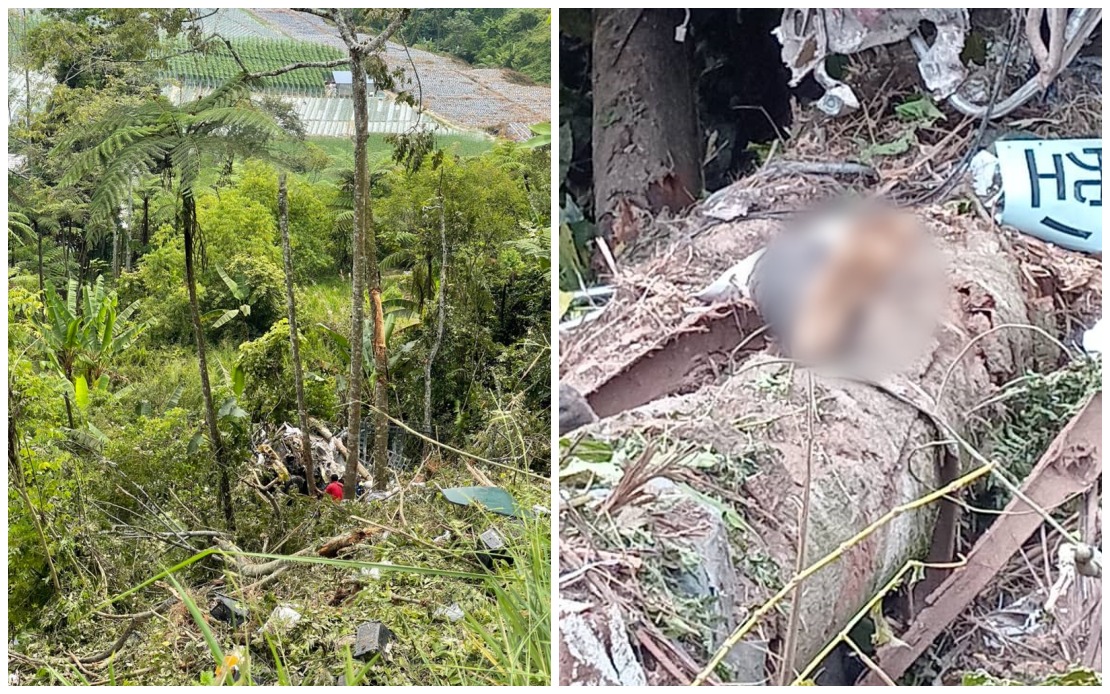
A fatal accident claimed the life of a lorry driver in Gua Musang on Thursday when his heavily laden 10-tonne vehicle careered off a mountain road and plunged into a ravine spanning approximately 150 feet near the Pos Blau-Lojing Bridge. The incident, which occurred in the early morning hours, marked a tragic loss in an area already grappling with challenging terrain and weather conditions that frequently complicate emergency response operations.
Emergency services received notification of the crash at 11.58 am, triggering a response from the Gua Musang Fire and Rescue Station. Given the remote location situated almost 98 kilometres from the station headquarters, the firefighting team required considerable time to mobilise and reach the accident scene, arriving at approximately 1.59 pm. The delay between the initial incident and arrival of professional rescuers underscores the logistical challenges faced by emergency personnel operating in the interior regions of Kelantan state, where mountainous terrain and limited road infrastructure complicate rapid response efforts.
Upon reaching the crash site near a local orchard, rescue personnel discovered the 10-tonne lorry completely submerged within the ravine, its trajectory suggesting the vehicle had left the roadway at high velocity. Initial police information indicated that the driver, described as a man in his 40s, had become trapped beneath fallen debris at the accident location. The severity of the impact and the depth of the ravine presented extraordinary difficulties for the rescue operation, demanding that firefighters employ specialised equipment and techniques to safely extract the victim.
According to Asst Senior Fire Supt Muhammad Azrul Izzham Zulkifli, the chief of Gua Musang Fire and Rescue Station, extracting the driver necessitated the removal of a substantial tree trunk that had collapsed across the victim during the vehicle's descent. The firefighting team worked methodically to clear the obstruction and access the trapped individual, a process requiring considerable physical effort and precision to avoid further complications. Despite these dedicated efforts by rescue personnel, the driver was pronounced deceased at the scene, indicating injuries sustained during the initial plunge were fatal.
Following standard protocols, emergency responders transferred the body to police custody to enable proper documentation and further investigative procedures. The deceased's identity and subsequent handling of remains became the responsibility of law enforcement agencies operating within the Gua Musang district. Supt Sik Choon Foo, the district police chief, confirmed receipt of the incident notification and acknowledged that investigations into the precise circumstances surrounding the crash were actively underway at the time of the initial report.
The cause of the accident remained under investigation as authorities sought to understand why the lorry departed from the roadway. Preliminary inquiries would likely examine factors such as vehicle mechanical condition, driver fatigue, adverse weather conditions, and road surface conditions at the time of the incident. The Pos Blau-Lojing Bridge area, situated in challenging mountainous terrain typical of inland Kelantan, presents inherent risks for heavy vehicle operators, particularly during periods of reduced visibility or compromised road traction.
This tragedy reflects ongoing safety concerns associated with transport operations in Malaysia's more remote regions, where infrastructure limitations and geographical challenges create elevated accident risks. The incident highlights the critical importance of vehicle maintenance standards, driver rest periods, and road safety protocols for commercial transport operators working on mountain routes. Heavy vehicles navigating such terrain require particular attention to braking systems, tyre conditions, and load distribution to maintain safe operation.
The emergency response demonstrates both the commitment of rescue services and the constraints under which they operate. The extended response time, while unavoidable given the geographical distance, underscores resource allocation challenges within Malaysia's emergency services framework. Many remote communities in Peninsular Malaysia face similar delays when requiring rapid emergency intervention, a factor that influences survival outcomes in serious traffic accidents.
For the road transport industry and safety authorities, such incidents provide sobering reminders of the hazards inherent in mountain driving. Enhanced safety measures, including improved road signage, regular vehicle inspections, and driver education programmes focusing on mountain terrain operations, remain essential components of comprehensive road safety strategies. The loss of life in such circumstances reverberates through family networks and the broader transport community, underscoring the human cost of traffic incidents that might have been prevented through rigorous safety compliance.

