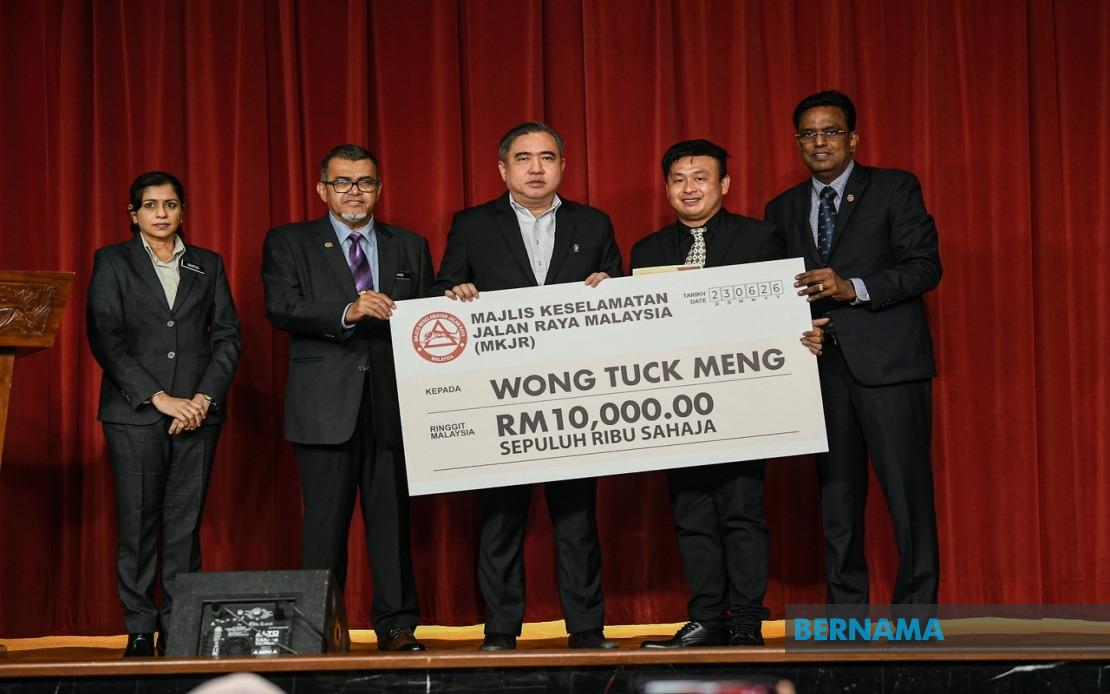
Wong Tak Ming, a lorry driver whose decisive intervention prevented a potentially catastrophic accident on a Perak highway, has been formally recognised by the government with a Special Certificate of Appreciation and RM10,000 in award money. The recognition, presented at Parliament on June 23, reflects the nation's gratitude for Wong's courageous actions during an incident near the Menora Tunnel that could easily have claimed multiple lives. Transport Minister Anthony Loke, who oversaw the presentation ceremony, emphasised the extraordinary nature of Wong's response when faced with an emergency situation that demanded split-second decision-making.
The incident unfolded on June 15 when an express bus travelling from Kedah to Kuala Lumpur encountered a mechanical failure while traversing a steep downhill section adjacent to the Menora Tunnel. As the bus lost control and careened toward a collision, Wong demonstrated the kind of presence of mind that separates ordinary motorists from those capable of preventing tragedy. Rather than attempting to evade the runaway vehicle, Wong made the calculated decision to use his lorry strategically, positioning it to absorb the bus's momentum and gradually bring both vehicles to a controlled stop. His manoeuvre, executed with precision and awareness, effectively transformed what would have been a high-speed crash into a manageable collision that allowed all 21 passengers aboard the bus to emerge unharmed.
Loke's public commendation highlighted the exceptional nature of Wong's decision-making process under extreme pressure. Speaking at the Parliament building ceremony, the Transport Minister characterised Wong's intervention as genuinely heroic, noting that the driver had prioritised the safety of strangers despite the considerable personal risk involved. The minister underscored how Wong's swift thinking had prevented what statistics and accident analysts would likely have classified as a fatal multi-vehicle incident on a dangerous stretch of highway. Such recognition from the government underscores the importance placed on individual acts of public service and the willingness to take personal risks to protect others.
The Malaysian Road Safety Council, which funded the award, recognised the broader significance of Wong's actions within the context of ongoing national road safety initiatives. By honouring such acts of heroism, the council aims to foster a culture of responsibility among motorists and demonstrate that individual actions, when informed by quick thinking and courage, can have profound life-saving consequences. This recognition also serves to highlight the unpredictable nature of road hazards and the importance of maintaining alertness while driving, particularly on stretches of highway known for challenging conditions and steep gradients.
Wong himself attributed his actions to instinctive concern for human life rather than any sense of heroism or desire for recognition. In remarks following the official presentation, the lorry driver explained that his primary motivation during those critical moments was straightforward: preventing loss of life and protecting other motorists who might have been further ahead on the road. Wong's reflective approach to his own actions is notable, as he characterised his decision-making as arising naturally from the circumstances rather than as a product of careful calculation. He explained that even as the crisis unfolded, he maintained sufficient situational awareness to sound his horn, alerting drivers ahead to the developing emergency and providing them precious seconds to move to safety.
The incident's documentation through video footage, which subsequently circulated widely on social media platforms, transformed what might have remained a relatively localised news story into a national conversation about road safety and individual responsibility. The viral nature of the footage exposed millions of Malaysians to Wong's calm, measured response to an extraordinary situation, and the overwhelmingly positive public reaction reflected widespread admiration for his character and quick thinking. This organic grassroots recognition preceded the formal government honour, suggesting that Wong had already captured the public imagination as a figure embodying the kind of values Malaysians respect in their fellow citizens.
The incident also prompted formal recognition from Parliament itself, with Deputy Speaker Datuk Dr Ramli Mohd Nor conveying the legislature's appreciation for Wong's actions during proceedings related to the Road Transport (Amendment) Bill 2025. The parliamentary acknowledgement elevated the matter beyond administrative or ceremonial recognition, positioning Wong's heroism within a broader national discourse about road safety and the legislative frameworks designed to protect motorists. The timing of Parliament's expression of gratitude, delivered during the second reading of the amendment bill, suggests that Wong's actions had resonated with policymakers and informed ongoing discussions about improving road safety standards and emergency response protocols.
From a Malaysian and Southeast Asian perspective, Wong's story offers several important lessons. First, it demonstrates that individual vigilance and quick thinking remain crucial factors in accident prevention, regardless of how sophisticated vehicle safety technologies become. Second, it underscores the importance of a driving culture that values awareness and responsibility over speed and aggression. Third, Wong's recognition sends a powerful signal that such acts of heroism, when they do occur, will be acknowledged and celebrated rather than overlooked. For regional road safety advocates, the case exemplifies how ordinary individuals, through courage and presence of mind, can prevent tragedies and save lives.
The RM10,000 award, while financially meaningful, represents more than mere monetary compensation for Wong's actions. It symbolises the government's commitment to recognising and rewarding the values of civic responsibility and personal sacrifice that society depends upon. For other motorists across Malaysia and the broader region, Wong's story serves as a powerful reminder that every driver shares responsibility for the safety of everyone on the road. His example suggests that maintaining alertness, staying calm under pressure, and prioritising human life above all other considerations form the foundation of truly safe road culture.
Looking forward, the case of Wong Tak Ming may well influence discussions about driver training, emergency response protocols, and the kinds of institutional support that should be provided to those who demonstrate exceptional bravery in crisis situations. As Malaysia continues to grapple with road safety challenges and works toward reducing the burden of traffic accidents, stories like Wong's become increasingly important as cultural touchstones. They remind citizens that tragedy is not inevitable and that individual choices, made quickly and courageously, can alter outcomes dramatically. Wong's recognition thus transcends personal honour, contributing to a broader narrative about the kind of society Malaysia aspires to be—one that values and celebrates those who place others' wellbeing above their own safety.

