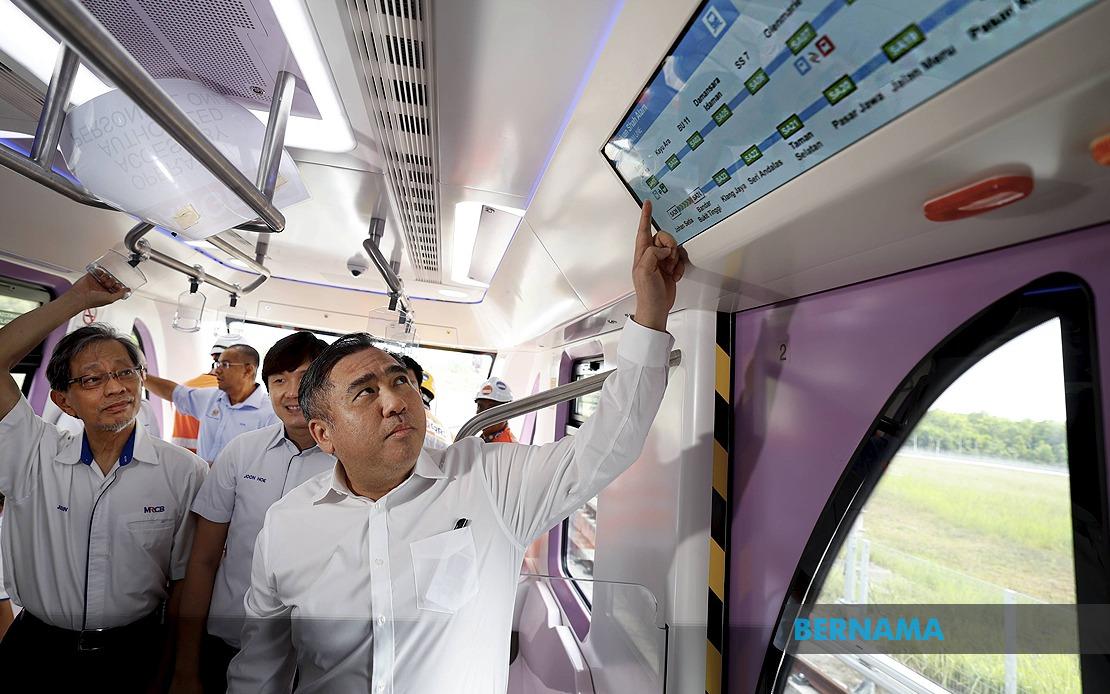
Malaysia's newest rail infrastructure project is set to transform commuting patterns across the western Klang Valley, with the Light Rail Transit 3 (LRT3) beginning commercial operations on Monday, June 29. Transport Minister Anthony Loke announced the milestone during a visit to the Road Transport Department's new Bandar Tasik Selatan branch, confirming that Prime Minister Datuk Seri Anwar Ibrahim will officiate the launch ceremony the day before.
The 37.8-kilometre line represents a significant expansion of the country's public transport network, extending from Bandar Utama in the north to Johan Setia in Selangor to the south. This strategic routing positions the LRT3 to serve as a crucial artery for the densely populated western corridor of the Klang Valley, potentially altering travel patterns for the estimated two million residents who will benefit from the infrastructure. The line's path through key residential, commercial and industrial zones suggests it will become essential for daily commutes and economic activity across the region.
The project addresses long-standing connectivity gaps in suburban areas that have experienced rapid urbanisation without proportionate public transport investment. By linking Shah Alam—Selangor's administrative capital—with surrounding municipalities, the LRT3 reduces reliance on personal vehicles and provides an alternative to increasingly congested road networks. The timing of the launch comes as Malaysia intensifies efforts to expand rail coverage in major metropolitan areas, aligning with broader national aspirations to modernise urban mobility infrastructure.
For Malaysian commuters, particularly those in the Klang Valley suburbs, the LRT3 promises tangible benefits beyond reduced travel times. Integration with existing rail networks potentially creates new cross-town routes previously unavailable through public transport, encouraging multimodal journeys and reducing overall transportation costs for regular users. The line's emphasis on connecting residential, commercial and industrial precincts suggests it was designed with economic activity as a primary consideration, potentially unlocking new development opportunities along its corridor.
The project's scale reflects Malaysia's growing commitment to rail-based mass transit as a response to urbanisation challenges. Unlike road-based solutions that consume valuable urban land and contribute to congestion, rail infrastructure provides capacity for sustained population growth. The LRT3's capacity to move large passenger volumes efficiently positions it as a template for future expansion in other Malaysian metropolitan regions facing similar connectivity and congestion pressures.
Politically, the launch represents a tangible achievement for the current administration, with the Prime Minister's involvement signalling government priority for infrastructure completion. Transport sector analysts have noted that rail projects often face delays and cost overruns, making on-time delivery noteworthy in the Malaysian context. The fact that LRT3 is proceeding to commercial operations as scheduled may influence public perception of government competence in major infrastructure delivery.
Regional implications extend beyond Selangor's borders. The LRT3's success—measured by ridership uptake and operational efficiency—will influence planning decisions in other Southeast Asian cities grappling with rapid urbanisation. Malaysia's approach to integrating new rail lines with existing transport networks may provide lessons for regional peers investing in similar infrastructure, particularly regarding funding models, operational standards, and community integration strategies.
The immediate challenge facing operators will be building commuter awareness and establishing sustainable ridership patterns. Public transport adoption depends not only on infrastructure availability but also on pricing, frequency, reliability and convenience relative to alternatives. Early performance metrics from the LRT3's first months of operation will be scrutinised both domestically and regionally as evidence of Malaysia's ability to deliver modern urban transport solutions.
The line's integration with the broader Klang Valley transport ecosystem will determine its long-term success. Connectivity to bus networks, feeder routes, park-and-ride facilities, and last-mile solutions will either facilitate or hinder adoption. Transport planners will need to ensure that the LRT3 functions as part of an integrated system rather than an isolated infrastructure asset, maximising its utility for the two million potential users across the service area.

