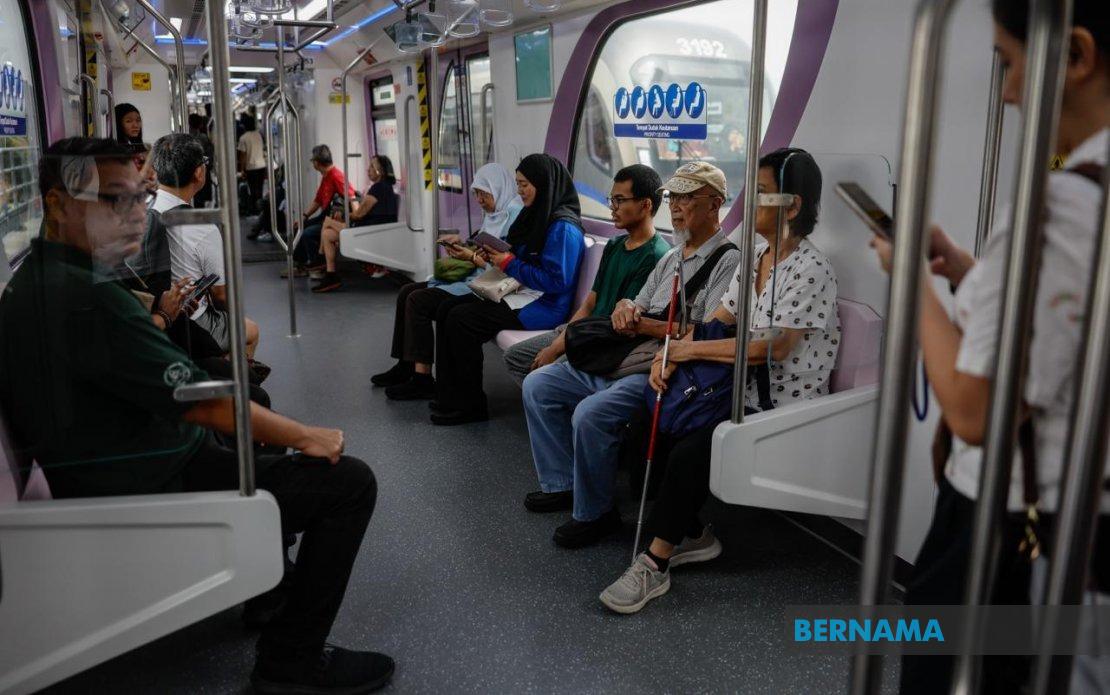
Shah Alam's newest rapid transit corridor, the Light Rail Transit 3 (LRT3) Shah Alam Line, began service on June 29 to broadly positive reception from its initial wave of passengers. Users across different demographics and accessibility needs have largely embraced the new transport option, highlighting how it streamlines commute routes and strengthens connectivity across the Klang Valley's growing urban landscape. Yet the feedback has not been uniformly celebratory—alongside appreciation for design elements and operational smoothness, commuters have identified specific areas warranting enhancement, particularly concerning facilities tailored to persons with disabilities (PwDs).
The RM16.63 billion infrastructure investment represents a significant government commitment to modernising Malaysia's public transport network during a period of rapid urban expansion. The route now directly connects key commercial and residential nodes including Kajang, Bandar Utama, and Glenmarie 2, eliminating the need for multiple transfers that previously characterised journeys across these areas. This geographical streamlining translates into tangible time savings for the working population and students who depend on reliable transit infrastructure. The project's scale underscores the strategic prioritisation of metropolitan mobility within the broader infrastructure development agenda, positioning enhanced public transport capacity as foundational to economic productivity and urban livability.
Razlan Ibrahim, a 40-year-old visually impaired commuter, articulated one of the most substantive assessment of the line's accessibility infrastructure during the opening day. His journey from Kajang to Glenmarie 2 station revealed both noteworthy accomplishments and remaining gaps in inclusive design implementation. The tactile pathways—physical guiding systems embedded into station floors—emerged as particularly effective, offering visually impaired users autonomous navigation capability without reliance on sighted assistance. This element of the design, especially prominent at Bandar Utama Station, demonstrates sophisticated understanding of universal accessibility principles and their practical application within high-volume transit environments.
However, Ibrahim's assessment identified a critical shortfall in information accessibility that warrants immediate remedial attention. Despite the success of tactile navigation systems, the absence of comprehensive Braille signage at essential facility locations—including PwD toilets, male and female prayer rooms (surau), and lift entrances—creates information barriers that compromise the independence of visually impaired users. Directional clarity and facility identification require linguistic accessibility components, not merely physical pathways. This gap between physical navigation and information access illustrates how accessibility remains incomplete when designed piecemeal; genuine inclusive infrastructure demands integrated approaches addressing multiple dimensions of user need simultaneously.
The implications of such accessibility gaps extend beyond individual inconvenience to reflect broader questions about inclusive urban development in Malaysia. As the country continues expanding its public transport network—with additional LRT lines, MRT phases, and monorail extensions planned—the patterns established during LRT3's launch will likely influence future project specifications and construction standards. When accessibility features are framed as add-ons rather than foundational design requirements, subsequent projects inherit and amplify these deficiencies. Ibrahim's feedback therefore carries systemic significance, suggesting that future transit developments should integrate accessibility considerations during initial planning phases rather than treating them as post-launch modifications.
Prime Minister Datuk Seri Anwar Ibrahim's announcement of complimentary travel through July 31—extending to both the LRT3 proper and feeder bus services operated by Prasarana Malaysia Berhad—represents a strategic initiative designed to encourage trial usage and gather extended operational data. This one-month promotional period functions simultaneously as a public confidence-building measure and a low-risk testing ground for estimating demand elasticity and identifying operational vulnerabilities. By removing financial barriers to initial experimentation, the subsidy democratises access to the new infrastructure and facilitates genuine testing across demographic segments that might otherwise defer adoption pending sustained fare structures.
Samantha Fong, a 26-year-old private sector employee, exemplified the practical benefits that commuters anticipate from the route's geometry. Direct connections between Bandar Utama and Glenmarie 2 without intermediate transfers represent qualitative improvements to journey experience, reducing cumulative travel time and exposure to weather-dependent surface waiting periods. Her positive assessment of operational smoothness and acceptable wait intervals during opening-day conditions suggests that the line's initial operational performance met or exceeded baseline expectations. Nevertheless, Fong's suggestion regarding women-only coaches introduces an important variable in passenger comfort considerations—a feature that several other Malaysian transit systems have implemented and that emerging research indicates correlates with increased female ridership adoption.
The women-only coach suggestion reflects broader patterns in Malaysian urban transport planning, where gender-specific safety and comfort concerns have assumed greater prominence in policy discussions. Several other regional transit systems, including those in Bangkok and Jakarta, operate gender-segregated vehicles during peak hours based on passenger demand data and user research indicating heightened ridership from female passengers when such provisions exist. Whether Malaysian transport authorities will incorporate this element into the LRT3 represents a policy question extending beyond mere amenities—it intersects with gender equity commitments and evidence-based transport design principles increasingly adopted internationally.
Rainchie Lee, another private sector worker utilising the opening-day service, characterised the experience as logistically smooth whilst emphasising the value of the extended trial period. Her observation that the complimentary fare provision creates conditions for diverse user cohorts—students, workers, and occasional commuters—to assess route suitability independently carries important methodological weight. This organic discovery process through unrestricted trial usage will generate more authentic behavioral data regarding adoption patterns and route preferences than traditional demand forecasting models. The subsequent transition to standard fares in August will constitute a critical inflection point, wherein elasticity responses will reveal the line's sustainable demand profile and inform pricing calibration.
The convergence of positive initial impressions with specific improvement recommendations reflects a maturing urban transport culture in Malaysia's metropolitan centres. Users no longer simply accept new infrastructure as delivered; they articulate expectations rooted in international best practices and personal lived experiences of accessibility needs. This shift in passenger agency—where feedback mechanisms genuinely influence service evolution—strengthens the feedback loop between infrastructure operators and user communities. For transport authorities, this translates into opportunities to refine systems during early operational phases before inefficiencies ossify into standard procedures. The LRT3's opening week feedback cycle demonstrates how strategic public engagement during infrastructure deployment can yield iterative improvements benefiting subsequent expansion phases.
Looking forward, the LRT3 Shah Alam Line's inaugural performance data will inevitably inform planning parameters for remaining proposed transit developments across the Klang Valley and beyond. The accessibility challenges identified by users like Razlan Ibrahim, combined with passenger preferences articulated by Fong and Lee, should catalyse systematic reviews of design standards across the transport portfolio. Whether these improvement suggestions translate into actionable modifications will significantly influence the line's long-term efficacy as an inclusive public amenity. The infrastructure's strategic significance extends beyond immediate mobility provision to broader societal implications regarding the government's commitment to equitable urban development and evidence-responsive policy refinement—commitments that must be demonstrated through concrete implementation of user feedback rather than mere acknowledgment.
The LRT3 Shah Alam Line ultimately represents both achievement and opportunity within Malaysia's transport evolution. Its successful operational launch validates years of planning and construction whilst simultaneously illuminating the gap between competent infrastructure deployment and truly universal accessibility. The next phase—whether the operating authority genuinely incorporates user feedback through substantive improvements or relegates suggestions to archived consideration—will reveal the maturity of Malaysia's approach to urban transport governance. Early positive reception provides momentum; converting that momentum into continuous improvement cycles through responsive authority-community engagement remains the unfinished agenda.

