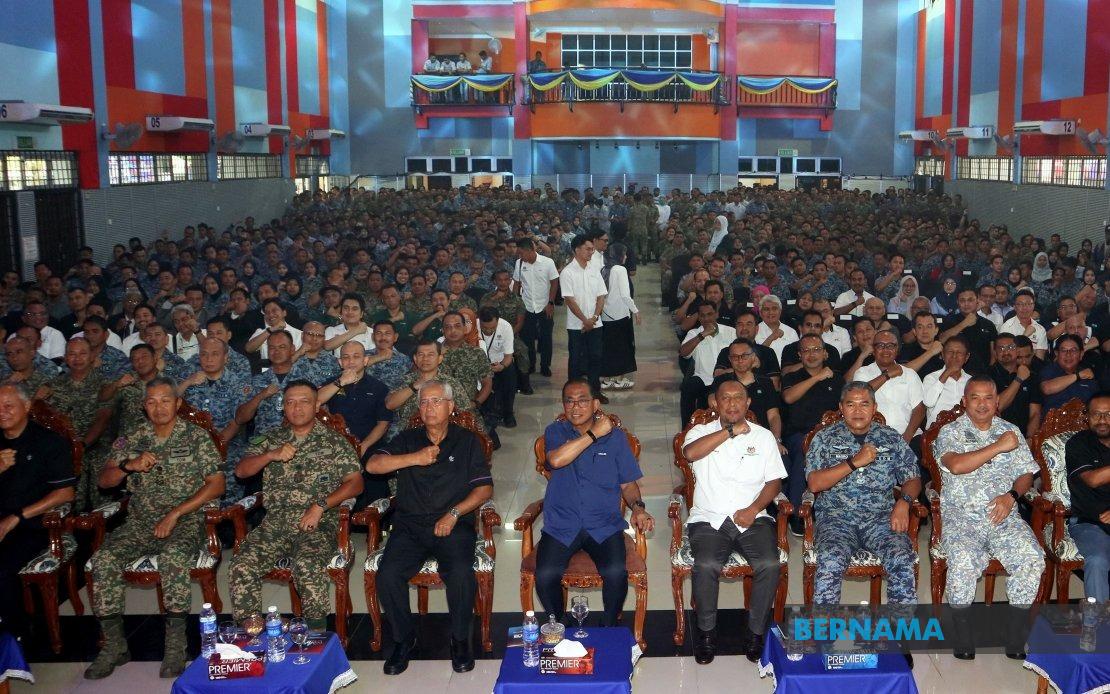
The Armed Forces Fund Board (LTAT) has successfully engaged with 28,500 personnel from the Malaysian Armed Forces across the East Coast through its Jelajah Wira initiative, marking a significant push to deepen institutional relationships with contributors and strengthen welfare support for the military community. The multipronged engagement campaign represents a deliberate strategy by LTAT to move beyond conventional headquarters-based operations and connect directly with servicemembers at their operational bases, fostering greater transparency and understanding of how the fund manages the mandatory 10 per cent salary deductions that form its financial backbone.
Mohammad Ashraf Md Radzi, Chief Executive of LTAT, articulated the broader vision underpinning the campaign when addressing attendees at an event in Kuantan. He emphasised that the staged nationwide rollout reflects an institutional commitment to bridge the gap between fund management and the rank-and-file contributors whose financial participation sustains LTAT's operations. By visiting military installations across different regions, LTAT leadership creates opportunities for transparent dialogue about fund performance, investment strategies, and individual account management—conversations that typically occur only during formal administrative interactions. This grassroots engagement approach acknowledges that many servicemembers have limited direct contact with senior fund officials and may harbour questions about their long-term financial prospects within the military system.
A centrepiece of the tour has been the formal launch of the LTAT-Affin Debit Card, presented as both a practical financial tool and a symbolic gesture of appreciation toward military personnel. The card initiative carries particular significance given the financial pressures facing many servicemembers and their families. By partnering with Affin Bank, LTAT has moved beyond conventional savings instruments to offer tangible everyday utility, enabling cardholders to access accumulated funds while potentially earning rewards or benefits tied to the card partnership. The launch reflects recognition that modern military welfare extends beyond pension systems alone; it encompasses integrated financial products that improve quality of life during and after active service.
For military contributors themselves, the perceived value of the LTAT scheme hinges substantially on dividend performance and long-term returns. Airman I Muhammad Syahmi Mohd Shobri, a 23-year-old servicemember, highlighted a key attraction: the scheme's annual dividends have consistently appreciated relative to competing savings vehicles available to military personnel. This competitive positioning matters considerably in the Malaysian context, where military salaries, though respectable, typically rank below private-sector compensation at equivalent experience levels. The ability to generate supplementary returns through mandatory deductions thus becomes a meaningful component of overall military compensation strategy, particularly for junior ranks with decades of service ahead.
The retirement implications of LTAT membership emerged as a primary concern among contributors interviewed at the tour. Airman I Muhammad Izzuddin Mohd Hanapi, 25, emphasised that the value proposition extends substantially beyond simple savings accumulation. The combination of accumulated principal, compounding annual dividends, and the structured withdrawal framework upon retirement creates a layered financial security mechanism. For military personnel, many of whom face relatively early mandatory retirement ages compared to civilian counterparts, the LTAT framework represents a critical mechanism for bridge financing during the transition to civilian employment or second careers. This dimension of the fund's utility resonates particularly strongly among younger servicemembers contemplating their post-military financial futures.
The geographical scope of the Jelajah Wira programme itself warrants examination. By deliberately targeting installations across the East Coast—including Kem Desa Pahlawan in Kelantan, Kuantan Air Force Base, Kem Seri Pantai housing the 16th Royal Malay Regiment in Terengganu, and facilities in Melaka and Johor—LTAT demonstrates commitment to reaching personnel stationed beyond major metropolitan centres. This approach acknowledges that military service distributes personnel across the entire national territory, not merely in proximity to Kuala Lumpur or other major cities. Regional bases often operate with less direct access to central administrative services, making on-site engagement particularly valuable for servicemembers who might otherwise require extended leave to conduct routine fund-related business.
Mohammad Ashraf's references to LTAT's holistic welfare approach extending to military families and communities situate the fund within a broader ecosystem perspective. This framing recognises that servicemember welfare cannot be understood in isolation; the financial security of personnel directly impacts family stability, community cohesion, and operational readiness. By positioning LTAT as a comprehensive welfare mechanism rather than simply a savings vehicle, leadership addresses the interconnected nature of military personnel management. Families with secure financial foundations experience reduced stress, children benefit from educational stability, and personnel themselves can maintain focus on operational duties without destabilising financial preoccupations.
The inclusion of promotional elements, notably an electrical motorcycle draw that rewarded Royal Malaysian Air Force Air Sergeant Haidil Jafar, 39, serves multiple functions within the engagement strategy. Beyond the obvious morale benefit of tangible prizes, such promotional mechanics generate memorable positive associations with the fund. For an institution dependent on mandatory contributions, cultivating goodwill and positive sentiment among contributors represents important institutional management. The draw generates informal word-of-mouth marketing within military communities, where peer-to-peer testimonials carry substantial weight in shaping perceptions of institutional trustworthiness and generosity.
The attendance of senior government officials, including Defence Ministry Secretary-General Datuk Lokman Hakim Ali, LTAT Chairman General Tan Sri Azizan Ariffin, and LTAT Investment Panel Chairman Datuk Khairol Anuar Mohamad Tawi, underscores the political significance accorded to military welfare initiatives. The visible commitment of these senior figures signals that defence and finance ministry leadership prioritise servicemember welfare as a governance priority. This institutional alignment between defence and finance sectors proves particularly important in Malaysian contexts, where military personnel management intersects with broader civil service and public sector compensation strategies.
Looking forward, the phased nationwide approach to Jelajah Wira suggests LTAT's intention to establish systematic engagement across all military installations. This represents a departure from historically reactive service delivery models toward proactive institutional engagement. The programme's success in connecting with 28,500 personnel in the East Coast alone indicates substantial scope for expansion westward and to Sabah and Sarawak installations. Sustained engagement throughout the military establishment could over time reshape how servicemembers perceive their relationship with the fund, potentially increasing voluntary participation in optional savings schemes and generating momentum for enhanced welfare programme advocacy.
For Malaysian readers monitoring military affairs and defence sector developments, the Jelajah Wira initiative illustrates broader institutional trends within the Armed Forces support ecosystem. Enhanced focus on servicemember financial welfare reflects recognition that military recruitment and retention increasingly depends on competitive total compensation packages, not merely salaries. As the Malaysian military competes with private sector employment to retain trained personnel, institutions like LTAT become strategic assets in the broader defence personnel management architecture. The tour's success in engaging tens of thousands of servicemembers suggests receptiveness to welfare-focused initiatives, potentially opening pathways for expanded programmes addressing healthcare, education, and family support dimensions of military employment.

