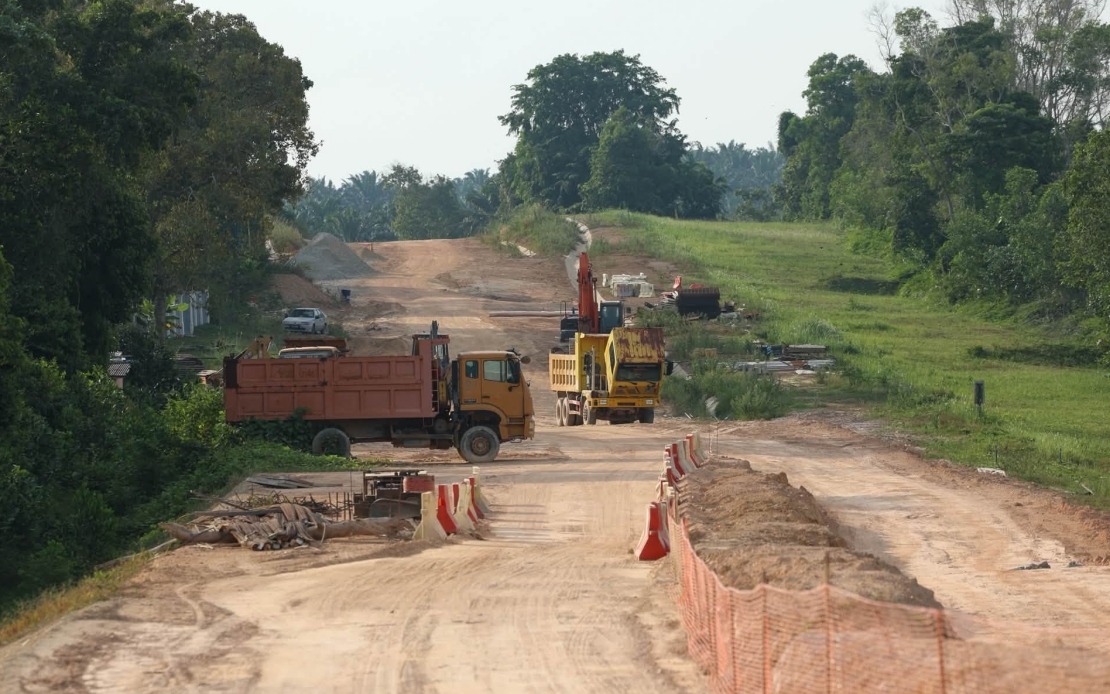
A major infrastructure undertaking spanning Port Dickson has demonstrated encouraging progress, with construction of the new Lukut-Kampung Sirusa connector achieving over 60 per cent completion as of mid-July. The project, valued at RM81.92 million and overseen by the Works Ministry, is outpacing its original delivery timeline by more than six weeks, signalling effective project management and construction coordination on this strategically important route through settlements including Kampung Paya and Kampung Bagan Pinang.
The 10-kilometre road initiative follows comprehensive Public Works Department specifications and encompasses far more than simple asphalt laying. The scope encompasses earthworks on slopes, sophisticated drainage infrastructure to manage seasonal rainfall patterns common to Selangor's coastal areas, sewerage systems designed to serve growing communities, structural elements, utility conduits and complementary supporting installations. This holistic approach reflects contemporary standards for road development that balances immediate connectivity needs with longer-term environmental and municipal service requirements.
Deputy Works Minister Datuk Seri Dr Ahmad Maslan's on-site inspection in Seremban underscored government commitment to ensuring adherence to contractual schedules, technical specifications and quality benchmarks. Such ministerial oversight during construction phases typically indicates priority status within federal development planning, particularly as the project falls under the Ministry of Rural and Regional Development's portfolio and draws funding directly from Federal Government development allocations. The State JKR serves as the implementing agency responsible for on-ground execution and compliance monitoring.
For Port Dickson residents, the implications extend significantly beyond improved travel routes. The development promises measurably shorter journey times and more fluid traffic conditions, addressing congestion challenges that frequently plague growing coastal districts. Critically, the road enhances accessibility to essential public services including educational institutions, healthcare facilities and recreational attractions that define Port Dickson's developing tourism profile. These improvements collectively contribute toward raising community quality of life metrics and addressing the infrastructure gaps that often constrain development in secondary urban centres.
The project's economic implications warrant careful attention from Malaysian policymakers and regional development observers. By strengthening connectivity between dispersed settlements and economic activity hubs, the road facilitates commerce, enables more efficient supply chains and reduces transaction costs for businesses operating across Port Dickson's various economic zones. Enhanced accessibility historically catalyses tourism sector expansion, generates employment through construction and ancillary service provision, and attracts private investment seeking well-serviced locations within the Selangor corridor.
Port Dickson's strategic positioning along the Selangor coast, combined with improving infrastructure, positions the district as an increasingly viable alternative to congested central corridors. The road project demonstrates how targeted transport investments can redistribute development opportunities across a state, reducing pressure on overloaded routes and unlocking economic potential in underutilised areas. For investors and entrepreneurs examining Southeast Asian regional opportunities, such improvements signal government commitment to balanced geographic development.
The project's ahead-of-schedule progress contrasts with challenges frequently encountered in Malaysian infrastructure delivery, where delays and cost overruns remain endemic issues affecting public confidence in development initiatives. This achievement suggests effective contract management, adequate resource allocation and responsive site supervision—factors that should inform future project procurement and implementation methodologies across the public works sector. The 43-day advancement provides valuable case study material for officials examining best practices in construction programme management.
Looking toward the scheduled August 2027 completion date, sustained momentum appears plausible given current trajectories. However, the final phases of road construction typically present heightened technical challenges, particularly in finishing works, utility integration and quality assurance procedures. Maintaining current performance levels through project conclusion will require continued vigilance, adequate funding flow and proactive resolution of emerging site complications that frequently arise as projects approach completion phases.
The broader development context suggests this Port Dickson initiative forms part of systematic infrastructure enhancement across Selangor's secondary centres. Similar transport projects addressing connectivity deficits, combined with coordinated development planning, contribute toward more spatially balanced economic growth and reduced dependence on central Klang Valley concentrations. For Malaysian policymakers, such dispersed infrastructure investment represents pragmatic strategy for managing urbanisation pressures while fostering opportunity distribution across provincial regions that historically receive proportionally fewer development resources.

