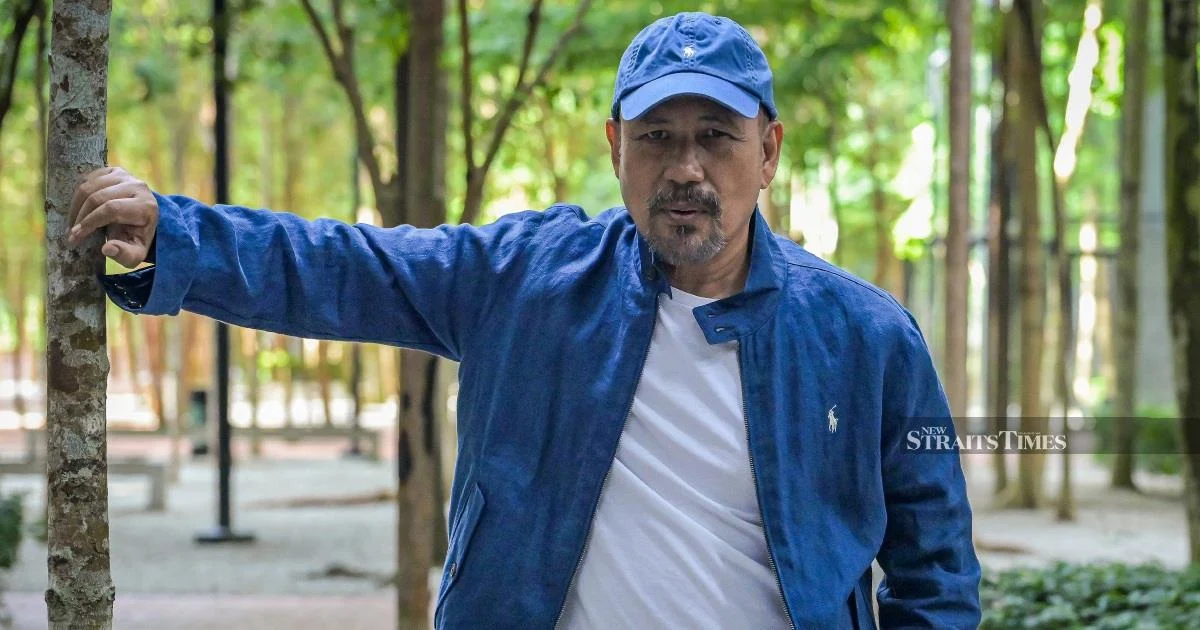
Petaling Jaya-based legendary music maestro Datuk M. Nasir is pursuing a RM5 million legal claim against MyTeksi Sdn Bhd, the Malaysian operator of Grab, stemming from what he characterises as an unauthorised appropriation of his identity for commercial beverage marketing purposes. The acclaimed singer has chosen to keep most details of the dispute under wraps, though he has pointedly underscored the fundamental principles at stake in his decision to take legal recourse.
The dispute centres on the company's alleged use of M. Nasir's name and reputation without his consent or involvement in promoting a branded drink product. Such incidents raise important questions about celebrity rights and the commercial exploitation of public figures' identities—a growing concern across Southeast Asia as digital platforms and ride-sharing services expand their business ventures into consumer goods and lifestyle branding. The scale of the claim at RM5 million signals the seriousness with which M. Nasir views the infringement and the potential damages to his personal brand and commercial interests.
M. Nasir's assertion that this constitutes a matter of moral right touches upon a significant dimension of intellectual property law that extends beyond mere financial compensation. In Malaysia's legal framework, moral rights protect creators and public figures against the unauthorised use of their names, likenesses, and reputations. These protections exist independently of copyright or trademark considerations and recognise that a person's identity and public image hold intrinsic value deserving legal safeguard. For someone of M. Nasir's stature—a figure whose name carries decades of cultural significance and musical legacy—unauthorised commercial association with products can fundamentally alter public perception and brand positioning.
The involvement of MyTeksi Sdn Bhd, the entity operating Grab's Malaysian operations, reflects how ride-sharing platforms have increasingly diversified beyond their core transportation services. Many regional transport companies now venture into food delivery, financial services, logistics, and consumer products to maintain growth trajectories and cross-selling opportunities with their existing user bases. However, such expansion strategies require strict adherence to licensing agreements, partnership arrangements, and intellectual property protocols—particularly when leveraging third-party names or identities for marketing purposes.
This case arrives amid a broader conversation about celebrity personality rights in Malaysia and across ASEAN markets. Unlike some jurisdictions with more established precedents, Malaysia's approach to protecting public figures from unauthorised commercial exploitation continues to evolve, particularly in the digital economy where brand partnerships and influencer marketing have become routine. The outcome of M. Nasir's lawsuit could provide useful clarification on how Malaysian courts assess damages in cases involving identity misappropriation and the weight afforded to moral rights arguments in commercial disputes.
The timing of such legal action is notable given M. Nasir's continued relevance in Malaysian popular culture. As both a recording artist and public personality, his decision to pursue formal legal remedies signals that celebrities and content creators should not assume major corporations will always respect boundaries around brand usage. The precedent potentially established through this case may encourage other Malaysian artists and personalities to scrutinise how their names appear in commercial contexts and to take protective action when appropriate.
From a business perspective, companies operating in Malaysia's digital economy must recognise that expansion into consumer products requires meticulous attention to brand partnerships and endorsement arrangements. The potential RM5 million liability underscores that cost-cutting measures or casual approaches to celebrity brand associations can prove extraordinarily expensive. For ride-sharing platforms attempting to build integrated lifestyle ecosystems, proper vetting of all commercial tie-ups becomes essential risk management.
The beverage sector in particular has seen intense competition and aggressive marketing strategies across Malaysia, with companies frequently seeking high-profile associations to differentiate products. However, such associations must always rest on explicit agreements with the individuals or artists involved. The absence of proper contractual frameworks—or the wilful disregard of them—exposes companies to precisely the kind of major lawsuit M. Nasir has initiated.
As the legal proceedings develop, attention will focus on how MyTeksi Sdn Bhd responds to allegations and what evidence emerges regarding the authorisation process. Whether the company can demonstrate prior consent or legitimate business justification for using M. Nasir's name will likely prove determinative. For Malaysian media and entertainment observers, the case serves as a reminder that even well-resourced technology companies must navigate intellectual property and personality rights with the same rigour demanded in other sectors.
M. Nasir's willingness to pursue this claim publicly, despite maintaining discretion about specific details, emphasises that respect for artists' identities and commercial rights remains non-negotiable. The music industry icon's stance reflects a broader global movement toward protecting creative professionals from exploitation—a movement that Malaysia's legal system increasingly acknowledges and supports through various statutory mechanisms and common law principles.

