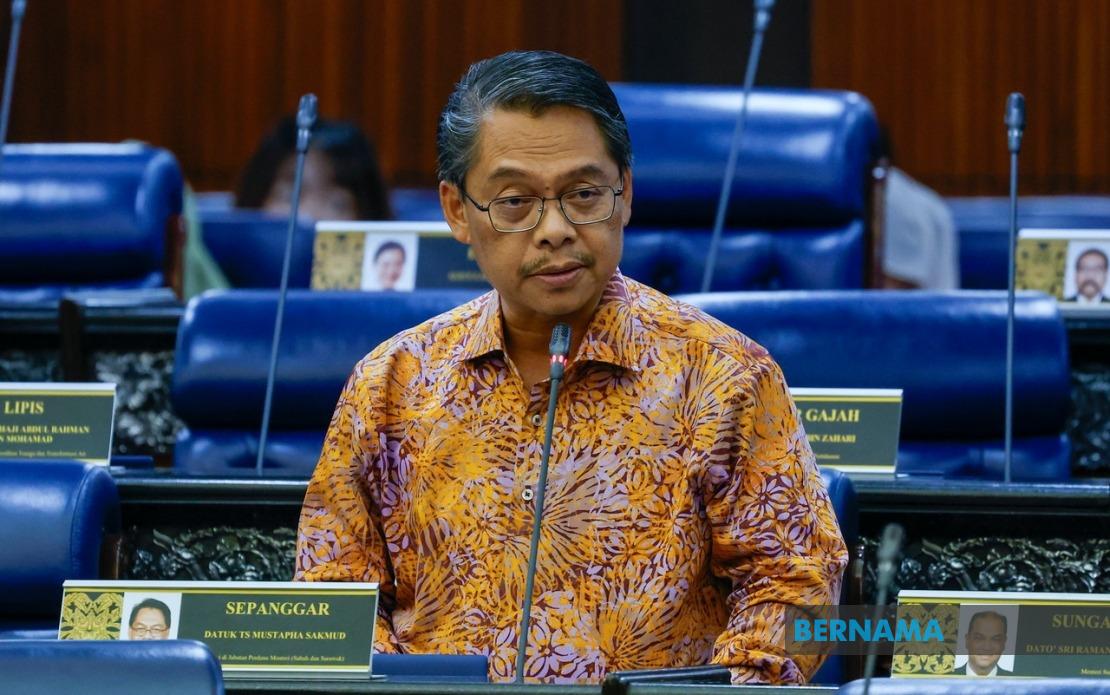
The federal government has achieved tangible progress on the Malaysia Agreement 1963, with 13 of the 29 negotiating items now fully resolved, according to Datuk Mustapha Sakmud, Minister in the Prime Minister's Department overseeing Sabah and Sarawak Affairs. Speaking in Parliament on June 25, Mustapha revealed that five additional matters have reached partial or interim resolution following decisions from the MA63 Technical Committee meeting held on March 2, signalling continued momentum in this critical constitutional undertaking that underpins the federal relationship with East Malaysia.
The negotiation framework has been structured around thorough discussions of longstanding issues affecting Sabah and Sarawak's constitutional standing and resource allocation within Malaysia's federation. Four of the five interim matters focus on expansion of state public service positions under Article 112 of the Federal Constitution, alongside parallel discussions on federal health and education policies that extend to the two states. These represent foundational areas where federal and state administrative structures intersect, requiring careful coordination to balance national standards with state autonomy—a persistent tension since 1963.
The Borneonisation agenda for federal public service appointments in Sabah and Sarawak comprises another significant interim matter. This initiative seeks to increase the representation and influence of East Malaysians within the federal bureaucracy, addressing long-held grievances that the federal civil service remains disproportionately staffed by Peninsular Malaysians. Implementation requires policy adjustments to recruitment, promotion, and posting procedures across federal agencies operating in the region, a complex undertaking involving multiple ministries and the Public Service Commission.
The remaining 11 unresolved matters remain under active monitoring by the Sabah and Sarawak Affairs Division, which functions as secretariat to the MA63 negotiation process. These outstanding issues encompass a range of constitutional and administrative matters that require either legislative amendment, inter-governmental agreement, or both. The involvement of all federal and state government stakeholders reflects the complexity of addressing grievances that have accumulated over six decades of federation, requiring consensus-building across multiple political and bureaucratic entities.
During parliamentary questioning by Isnaraissah Munirah Majilis from Warisan representing Kota Belud, the issue of parliamentary representation emerged as a particularly contentious matter within the MA63 framework. Demands persist from East Malaysian constituencies for increased parliamentary seats to achieve a 35 per cent collective representation, reflecting demographic and political arguments that Sabah and Sarawak lack proportional influence in the lower house given their constitutional status and geographical extent. This demand touches on fundamental questions of federalism and power distribution within Malaysia's political system.
However, the technical and constitutional barriers to expanding parliamentary representation remain formidable, according to Mustapha's explanation. Any redelineation of electoral boundaries falls exclusively within the jurisdiction of the Election Commission, which operates under the 13th Schedule and Article 113 of the Federal Constitution. The commission cannot undertake boundary revision exercises more frequently than every eight years, a safeguard against gerrymandering that simultaneously constrains efforts to reflect demographic changes or address representation imbalances.
Beyond Election Commission procedures, any material increase in parliamentary seats for Sabah and Sarawak would require constitutional amendment to Article 46, which defines the composition of the Dewan Rakyat. Such amendments demand a two-thirds supermajority in Parliament—a threshold that has historically proven difficult to achieve even for less contentious matters. The requirement for supermajority endorsement reflects constitutional design principles intended to protect fundamental features of the federation, though it simultaneously places structural limitations on reform efforts, particularly when political support fragments across competing interests.
The phased resolution of MA63 matters demonstrates the government's incremental approach to addressing East Malaysian concerns accumulated over decades. This strategy prioritises tractable administrative and policy matters that can be resolved through technical committees and inter-governmental coordination before tackling constitutionally entrenched issues requiring parliamentary supermajority votes. While this pragmatic sequencing allows demonstrable progress and builds momentum, it also means the most symbolically significant issues—particularly parliamentary representation—face lengthier timelines and higher political hurdles.
For Malaysian readers, the MA63 negotiations carry implications extending beyond administrative technicality. Sabah and Sarawak represent approximately one-third of Malaysia's geographical territory and house diverse indigenous populations with distinct political cultures and constitutional understandings established in 1963. Whether federal-state disputes are resolved satisfactorily affects not only East Malaysian constituencies but also national political stability and the federation's constitutional coherence. Regional tensions over perceived marginalisation or unequal treatment periodically emerge as electoral issues, particularly when East Malaysian parties perceive insufficient progress from federal negotiators.
The interim status of several matters suggests ongoing disagreement over specific implementations, though Mustapha's presentation frames this as normal procedural progress rather than substantive dispute. The complexity of issues involving public service expansion, health policy harmonisation, and Borneonisation illustrates how MA63 negotiations increasingly engage with operational governance questions rather than purely constitutional interpretation. Resolving these matters requires sustained bureaucratic engagement and technical expertise, not merely political agreement at ministerial level.
Looking forward, the continued engagement through the technical committee structure appears designed to sustain negotiation momentum while acknowledging that fundamental questions like parliamentary representation require either constitutional amendment or alternative mechanisms to address. Whether the remaining 11 outstanding matters can be substantially resolved in coming years likely depends on political priority assigned by federal leadership and the willingness of all stakeholders to seek creative solutions within constitutional constraints. For East Malaysians monitoring MA63 progress, the interim resolutions represent incremental gains but underscore the protracted nature of implementing a 61-year-old agreement.

