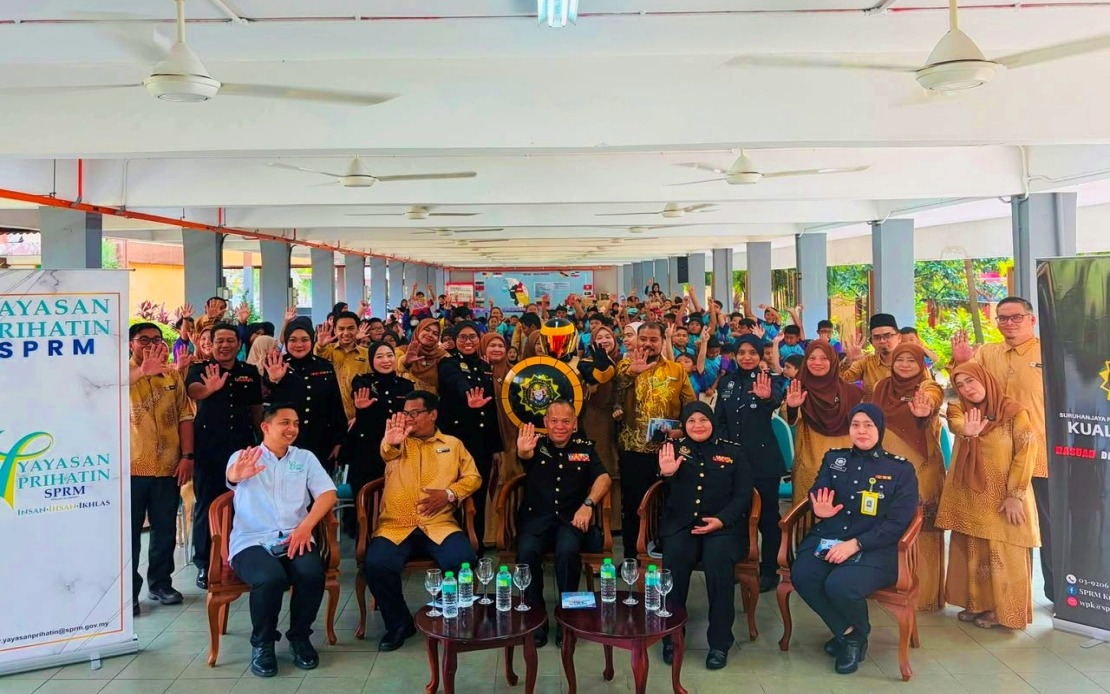
The Malaysian Anti-Corruption Commission has launched a targeted initiative to foster integrity among schoolchildren in Kuala Lumpur, recognising that the battle against corruption must begin in the classroom rather than waiting until adulthood. The Wira Antirasuah (WAR) programme, unveiled at Sekolah Kebangsaan Jalan Pasar 1, represents a strategic shift towards grassroots anti-corruption work that prioritises prevention through education rather than enforcement alone.
Modelled on the principle that ethical foundations laid during childhood shape adult behaviour, the programme represents a philosophical investment in long-term social change. Mohamad Zakkuan Talib, director of the Kuala Lumpur MACC office, frames the initiative not merely as an awareness campaign but as an essential component of nation-building. By equipping young Malaysians with the values and courage to resist misconduct, the commission seeks to create a generational cohort less susceptible to corrupt practices later in their careers.
The conceptual strength of the WAR programme lies in its deliberate repositioning of integrity away from grand gestures and towards everyday decisions. Rather than presenting honesty as something demonstrated only through dramatic moments, Mohamad Zakkuan emphasises that ethical conduct manifests in mundane choices: refusing to cheat on examinations, respecting others' possessions, honouring commitments, and maintaining the trust placed in us by our families and communities. This grounded approach acknowledges that corruption often begins with small transgressions that gradually erode moral standards, making early intervention particularly valuable.
The programme's interactive format reflects modern pedagogical approaches to values education. Rather than relying on lectures or abstract moral instruction, the WAR initiative incorporates hands-on activities and engagement with the MACC Community Education Branch, creating memorable learning experiences. The involvement of Kapten MACC, the commission's mascot, demonstrates an understanding that young children respond more effectively to character-driven messaging than to dry institutional pronouncements. This blending of education with entertainment enhances message retention and makes anti-corruption concepts accessible to pupils regardless of their academic aptitude.
Beyond classroom learning, the MACC has established the Anti-Corruption Corner at the school as a permanent resource centre. This physical space serves as a repository of information on integrity for both staff and students, providing ongoing reference material and reinforcing the institution's commitment to embedding anti-corruption values throughout the school environment. The corner's existence signals that integrity education is not a one-off event but an integrated aspect of the school's institutional identity.
The programme also demonstrates awareness of the socioeconomic dimensions of integrity. By providing school assistance to 29 pupils from asnaf (low-income) families, the MACC acknowledges that vulnerability to corruption often correlates with economic hardship and limited opportunity. Supporting these pupils' education indirectly builds resilience against future temptations towards financial misconduct while affirming that integrity is a value accessible to all Malaysians regardless of background. This welfare component prevents the anti-corruption message from appearing elitist or disconnected from real-world challenges.
The donation of a smart television to the school by Yayasan Prihatin SPRM illustrates how anti-corruption work increasingly partners with wider development goals. Enhanced educational technology improves teaching quality, which in turn strengthens students' academic engagement and aspirations—factors that research suggests correlate with higher ethical standards. The MACC's involvement in facility improvement blurs traditional boundaries between anti-corruption work and educational development.
The symbolic dimension of having special education pupils plant hibiscus flowers as part of the Keep Malaysia Clean campaign reveals a sophisticated understanding of inclusive messaging. By ensuring that students with diverse learning needs participate visibly in the programme, the MACC communicates that integrity and national pride are not exclusive to academically gifted students but are values every Malaysian can embody and contribute towards. The connection to National Month celebrations further anchors anti-corruption principles within broader patriotic sentiment.
For Malaysian readers, this initiative carries particular relevance amid ongoing debates about governance and institutional reform. The MACC's pivot towards preventive education suggests institutional recognition that enforcement alone cannot reverse entrenched corrupt practices. By targeting the youngest citizens before peer influence and cynicism set in, the commission is attempting to reshape the ethical foundations of Malaysian society from the ground up. This generational strategy acknowledges that systemic corruption cannot be solved merely through arresting and prosecuting individual offenders.
The programme also reflects international best practices in anti-corruption work. Comparable initiatives in jurisdictions from Hong Kong to Singapore have demonstrated that values education in schools produces measurable improvements in institutional integrity over decades. For Southeast Asia more broadly, where corruption indices remain stubbornly high across many nations, the Malaysian example offers a template for how anti-corruption agencies can expand their mandates beyond investigation and prosecution towards community engagement and preventive socialisation.
While the WAR programme's immediate reach—affecting pupils at a single school initially—is modest, its potential significance lies in establishing a replicable model. If successful outcomes can be documented and shared, the initiative could provide a blueprint for scaling integrity education across Malaysia's school system. This would represent a fundamental expansion of the MACC's remit from a primarily reactive institution into a proactive agent of social transformation.
However, the programme's long-term impact will depend on sustained implementation and reinforcement beyond the school setting. Without corresponding efforts to model integrity in government institutions themselves and to reduce perceived opportunities for corruption, young Malaysians trained in these values may experience demoralisation if they later encounter widespread institutional corruption. The WAR programme therefore must be understood as one component of a broader integrity strategy rather than a standalone solution. Nevertheless, by choosing to invest in the moral foundation of tomorrow's citizens, the MACC demonstrates institutional vision extending beyond quarterly performance metrics to the gradual reconstruction of Malaysia's ethical landscape.

