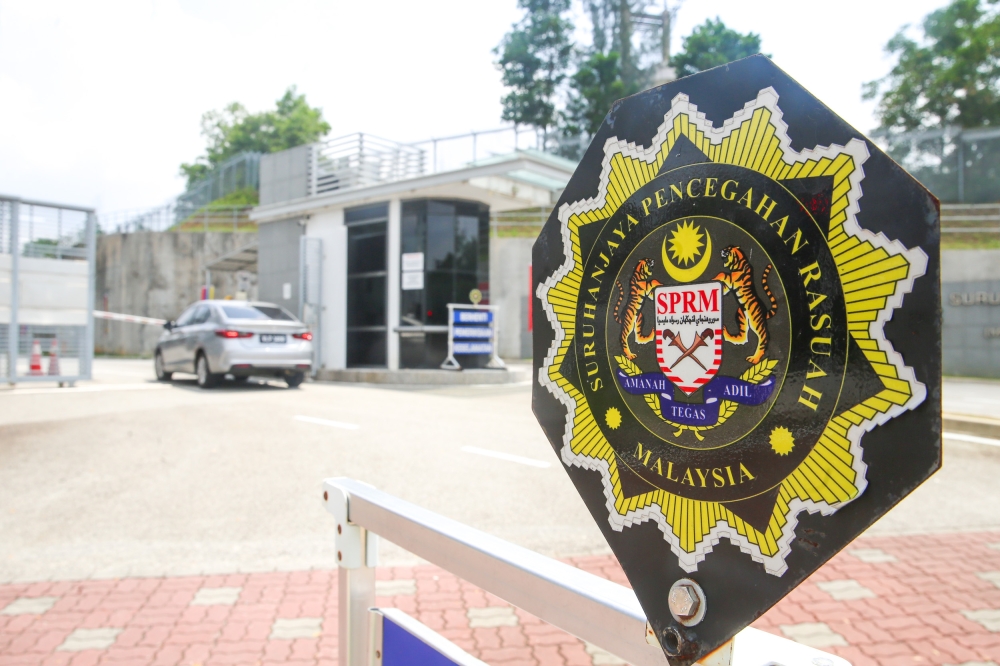
The Malaysian Anti-Corruption Commission has obtained a five-day remand order against three further individuals suspected of involvement in the misappropriation of RM450,000 in penalty payments, signalling an intensifying investigation into financial irregularities within government operations. The remand authorisation, granted in Putrajaya on August 5, enables investigators to conduct detailed questioning of the detainees as authorities work to establish the full scope of the alleged misconduct and trace the flow of diverted funds.
This latest round of arrests represents a significant escalation in the probe, which has been methodically unfolding over recent weeks. The decision to expand the investigation's dragnet suggests that anti-corruption officials have identified additional individuals they believe played roles in the scheme, whether as primary actors or accessories to the alleged offence. The three newly detained suspects join others already apprehended in connection with the same matter, indicating a coordinated operation targeting multiple points within the chain of custody for the contested funds.
Penalty payment systems within Malaysian government agencies have historically attracted scrutiny from anti-corruption bodies, as these mechanisms can present opportunities for mismanagement if oversight mechanisms prove inadequate. The alleged RM450,000 diversion underscores the vulnerability of certain financial processes to manipulation, particularly where multiple parties handle transferred sums and documentation trails become obscured. Understanding precisely how the funds were extracted from their intended purposes and redirected will be central to investigators' understanding of the case.
The remand period granted to MACC is typically utilised for intensive interrogation, forensic examination of documents, and cross-referencing statements from multiple suspects to identify inconsistencies or establish connections. During this five-day window, investigators will attempt to reconstruct the sequence of transactions, identify decision-makers and implementers involved in the scheme, and determine whether the misappropriation was executed by a small cabal or involved institutional complicity across broader departmental structures. The quality of evidence and admissions obtained during remand will substantially influence whether formal charges proceed and the severity of allegations pursued.
Government procurement and penalty payment systems remain priority enforcement areas for MACC, as these financial channels involve substantial sums and can facilitate corruption when controls deteriorate. Malaysian agencies have been incrementally strengthening internal audit protocols and segregating duties to prevent single individuals from wielding excessive control over fund transfers. However, sophisticated schemes sometimes circumvent established safeguards through collusion between officials at different hierarchical levels or exploitation of procedural gaps during system transitions.
For Malaysian public administration, corruption cases involving penalty payments carry particular significance because these funds often represent enforcement actions taken against commercial entities or individuals for regulatory breaches. When such penalties are misappropriated rather than returned to the Treasury, the government loses essential revenue while simultaneously undermining the credibility of enforcement mechanisms. This dual damage—financial loss coupled with institutional compromisation—elevates the seriousness with which such cases are typically prosecuted.
The investigation's expansion also suggests that MACC may be pursuing conspiracy charges, which typically require demonstration that multiple parties collaborated in executing the alleged scheme. Establishing conspiracy requires investigators to show agreement among suspects and overt actions in furtherance of the conspiracy, standards that demand comprehensive evidence gathering and careful reconstruction of communications and transactions. The remand period provides critical opportunity to secure statements that corroborate or contradict such allegations and to identify documentary evidence linking individual defendants to specific fraudulent acts.
Regional anti-corruption bodies and international observers often scrutinise Malaysian enforcement efforts against high-level financial crimes, as these investigations signal governmental commitment to accountability and rule of law principles. Cases involving government officials and substantial sums attract particular attention, as they can influence investor confidence, institutional reputation, and public perceptions regarding the integrity of Malaysia's administrative machinery. Transparent handling of such investigations and credible prosecution outcomes strengthen assertions that Malaysia maintains functioning anti-corruption mechanisms.
The coming days will prove critical in determining whether the five-day remand yields sufficient evidence to support extended custody or charges. MACC's success in securing multiple arrests and obtaining court-authorised detention periods demonstrates that investigation has advanced beyond preliminary stages into substantive interrogation and evidence gathering. Whether the probe ultimately results in criminal charges, convictions, or administrative action will depend substantially on the quality of evidence accumulated during remand periods and the willingness of suspects to provide incriminating statements or testimony against their associates.
For government agencies handling penalty payments and similar financial processes, the case serves as cautionary reminder regarding the importance of robust internal controls, regular independent audits, and clear segregation of responsibilities among officials managing funds. Institutions currently reviewing their financial management procedures in light of this investigation may face pressure to implement enhanced oversight mechanisms and whistleblower protections that encourage reporting of suspicious activities before misappropriation reaches substantial levels. The investigation's trajectory will likely influence government-wide policies governing how penalty payments and similar recovered funds are managed and monitored throughout their lifecycle.

