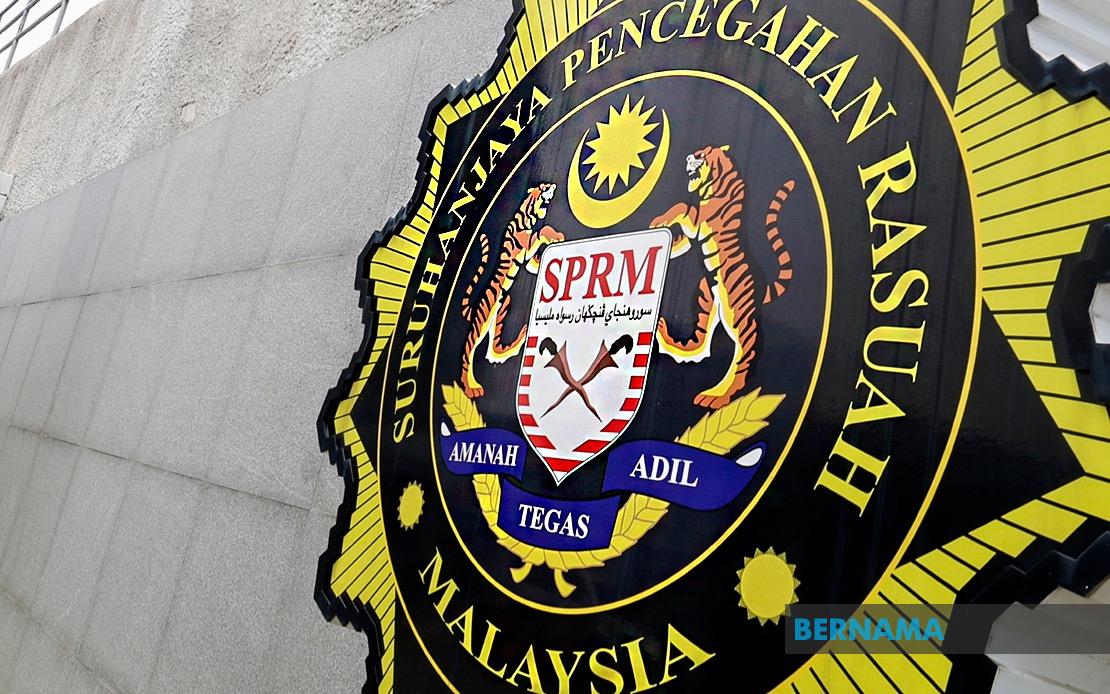
The Malaysian Anti-Corruption Commission has achieved a significant milestone in its anti-corruption mandate by earning finalist status across four categories at the ICA Compliance Awards APAC 2026, a major international programme organised by the International Compliance Association. This debut appearance at the awards represents a notable endorsement of MACC's institutional approach to fighting corruption and upholding governance standards in Malaysia, positioning the agency alongside leading compliance organisations across the Asia-Pacific region.
The commission's strong showing at the awards reflects the breadth of its operational excellence. Among the individual nominations, Mohd Shukri Mohd Said, head of Investigation Division Branch C, has been recognised as a finalist in the Compliance Leader of the Year category, while Mohammad Nazree Mansor secured a spot in the Rising Star Award category. These individual accolades highlight the calibre of personnel driving MACC's investigative and compliance functions at both senior and emerging talent levels. The dual recognition suggests a healthy institutional pipeline of anti-corruption expertise within the agency.
Beyond individual recognition, MACC has also advanced to the finalist stage in two organisational categories that speak directly to its operational structure and effectiveness. The commission earned nominations in both the Compliance Team of the Year category and the Small Compliance Team of the Year category, the latter specifically recognising smaller units with fewer than seven members. This dual organisational nomination indicates that MACC's effectiveness extends across teams of varying sizes, suggesting scalable compliance practices that could potentially serve as models for other government agencies wrestling with institutional reform.
Datak Mohd Hafaz Nazar, the Investigation Division's senior director, characterised these nominations as validation of MACC's sustained commitment to strengthening integrity standards and governance frameworks within Malaysia's public sector. In his statement, he positioned the achievement not merely as a trophy for the agency's mantelpiece but as fuel for continued institutional development. His emphasis on both national and international excellence suggests MACC views its participation in such programmes as integral to raising professional standards domestically while establishing credibility with international compliance networks.
The broader significance of MACC's nomination lies in how it reflects shifting international expectations around anti-corruption work in the region. The ICA Compliance Awards APAC programme recognises excellence, innovation and collaboration in addressing financial crime and governance challenges—precisely the domains where Southeast Asian agencies have faced intense scrutiny in recent years. By competing at this level, MACC is implicitly positioning Malaysia within a regional conversation about best practices in institutional integrity, a conversation that carries weight with foreign investors, international development partners and multilateral institutions.
Mohd Shukri framed the nominations as recognition of the commission's ongoing efforts to advance integrity and compliance standards. His comments underscored how MACC officers have invested in building professional capabilities while championing good governance principles. The nomination itself becomes evidence—at least symbolically—that the agency's personnel are meeting international standards in their individual competencies and professional conduct. For an organisation that has faced reputational challenges in the past, such external validation serves a meaningful institutional purpose.
For Mohammad Nazree, the Rising Star Award nomination represents validation of emerging talent within Malaysia's anti-corruption apparatus. His selection signals that MACC is successfully developing a new generation of compliance professionals equipped to handle increasingly complex governance challenges. The individual's stated motivation to enhance professional competencies and contribute more significantly to public sector integrity initiatives suggests the nomination has energised the institution's younger ranks, potentially creating momentum for knowledge transfer and mentorship within the organisation.
The competitive landscape of these awards is telling in itself. The ICA Compliance Awards APAC represents a rigorous vetting process across a region home to more than two billion people spanning diverse economic systems, regulatory frameworks and institutional capacities. MACC's advancement through preliminary rounds indicates the organisation's practices have withstood comparative assessment against competitors operating in far larger economies with substantially greater resources. This contextual point matters for Malaysian stakeholders evaluating the commission's institutional health and competitive positioning.
The International Compliance Association, which has operated since 2001 and trained over 160,000 compliance professionals worldwide, brings considerable credibility to its awards programme. The ICA's three-decade history of raising professional standards through internationally recognised qualifications and training suggests its assessment criteria reflect global best practices rather than regional or local preference. When MACC finalists are evaluated through such a lens, their advancement carries the weight of benchmarking against global compliance excellence.
Malaysia's institutional positioning in regional anti-corruption efforts has undergone significant evolution, particularly following the major political transitions and governance reforms of recent years. MACC's emergence as a finalist in multiple categories at a prestigious international awards programme provides documentary evidence of the commission's capacity building and professional development over recent years. For Malaysian readers and regional observers, this recognition offers concrete indicator of institutional progress that extends beyond domestic political narratives.
The virtual awards ceremony scheduled for July 21 will determine whether MACC's finalised nominations translate into outright victories. Regardless of the outcome, the commission's debut participation and strong multi-category showing has already achieved considerable visibility. Such recognition, even at the finalist stage, strengthens MACC's hand when recruiting talented professionals, advocating for resources with government decision-makers, and engaging with international compliance networks on matters affecting Malaysia's anti-corruption efforts.
The strategic importance of MACC's international engagement through programmes like the ICA awards extends to Malaysia's broader reputation as a venue for financial services and investment. Foreign institutions and regulatory bodies monitoring Southeast Asian governance often consider a country's anti-corruption apparatus when assessing institutional risk and operational environment. By improving its standing within respected international compliance communities, MACC indirectly strengthens Malaysia's competitive position in attracting quality foreign direct investment and maintaining confidence among international business partners.

