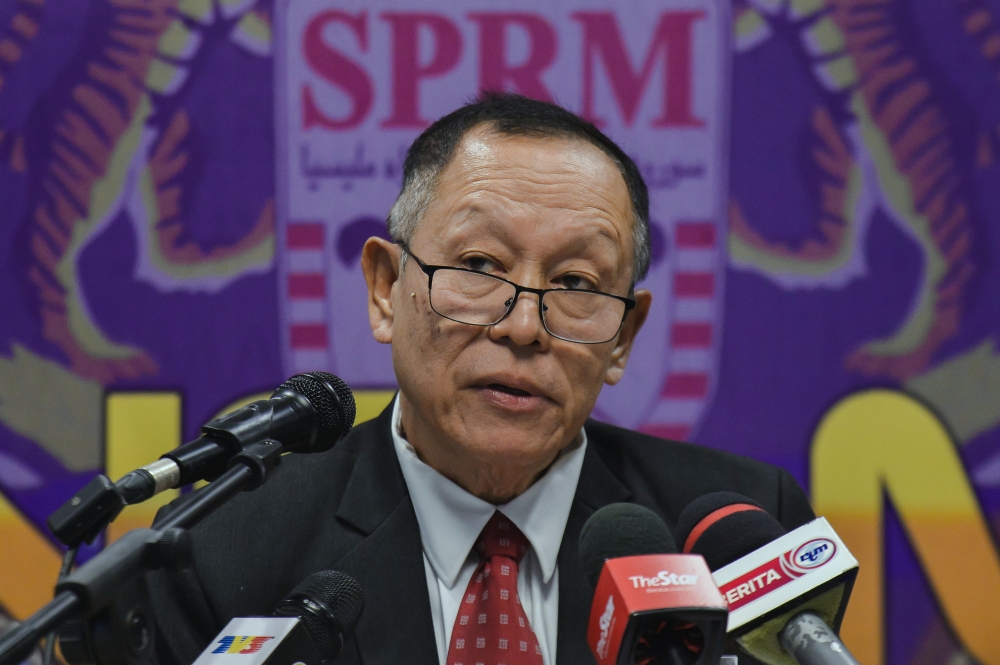
The Malaysian Anti-Corruption Commission is weighing the appointment of international forensic specialists to navigate the increasingly complex Tabung Haji investigation, marking a significant escalation in the agency's probe into one of Malaysia's most prominent Islamic financial institutions. The decision comes after exhaustive preliminary inquiries that have encompassed statements from 115 witnesses and led to the detention of seven suspects, signalling that domestic investigative resources may require supplementation by external expertise to resolve the intricate financial dimensions of the case.
Tabung Haji, formally known as the Pilgrimage Fund Board of Malaysia, stands as a critical institution in the Malaysian Islamic financial ecosystem, managing the savings and investments of millions of Muslims preparing for their hajj pilgrimage to Mecca. The investigation represents one of the most serious challenges to institutional integrity within Malaysia's Islamic banking sector, with implications extending beyond mere corporate malfeasance to questions about the safeguarding of religious and personal savings entrusted to government-linked entities. The scale of preliminary investigative effort already undertaken underscores the gravity with which authorities are treating the matter.
The consideration of foreign forensic assistance reflects the technical sophistication increasingly demanded in modern corruption investigations, particularly those involving financial institutions with complex asset portfolios, international transactions, and layered corporate structures. Malaysian investigators, while experienced in conventional corruption cases, may face limitations when confronted with cross-border financial flows, sophisticated accounting manipulations, or specialized financial instruments that have become commonplace in contemporary Islamic banking. International forensic accountants and financial crime specialists bring methodologies and technological capabilities that have been honed through investigations in multiple jurisdictions and regulatory environments.
The detention of seven individuals throughout the investigation suggests that suspicions extend across multiple levels of organizational hierarchy, rather than implicating isolated bad actors. This dispersed pattern of alleged involvement typically indicates systemic vulnerabilities in internal control mechanisms or governance oversight that require forensic analysis to fully map and understand. The breadth of witness interviews already conducted indicates that investigators are pursuing an expansive investigative strategy rather than focusing narrowly on individual transactions or actors.
For Malaysian readers and observers of institutional governance, the MACC's contemplation of external expertise raises important questions about the adequacy of domestic investigative capacity in an era of financial complexity. Southeast Asian financial institutions increasingly operate across borders and employ instruments that demand specialized technical knowledge to properly scrutinize. The readiness of Malaysian authorities to acknowledge potential limitations by considering foreign partnership demonstrates institutional maturity, though it also suggests that investigative capabilities may lag behind the sophistication of potential wrongdoing.
The Tabung Haji investigation carries profound implications for public trust in Malaysia's Islamic financial architecture. The fund occupies a unique position in Malaysian society, combining religious significance with financial stewardship responsibilities that affect millions of ordinary Muslims. Any perception of institutional failure or mismanagement could reverberate through Malaysia's broader Islamic banking sector, which has positioned itself as a cornerstone of Southeast Asia's Islamic finance ecosystem. International investors and financial institutions watch closely how Malaysia handles investigations into flagship Islamic financial entities.
The use of foreign forensic specialists would also signal Malaysia's commitment to rigorous, internationally-aligned investigative standards. In an era when cross-border financial crime detection increasingly relies on coordinated international efforts and shared expertise, demonstrating willingness to engage external specialists reinforces Malaysia's standing as a jurisdiction serious about combating financial corruption. This approach aligns with global best practices where complex investigations frequently benefit from multi-jurisdictional collaboration and specialized expertise brought from beyond national borders.
The investigative timeline remains consequential for institutional reputation management. Tabung Haji's ability to continue normal operations while under intensive scrutiny depends partly on how swiftly investigators can reach substantive conclusions. Prolonged investigations can erode confidence among account holders and investors, potentially affecting the fund's operational capacity and its ability to fulfill its core mission of facilitating hajj pilgrimages. The engagement of specialized foreign expertise, while potentially extending the investigation's duration, could ultimately accelerate resolution by providing definitive answers to complex financial questions more quickly than extended domestic inquiry alone.
The seven detained suspects remain central to investigative strategy, and foreign forensic analysis could prove instrumental in corroborating or refuting their potential involvement in alleged irregularities. Forensic experts can reconstruct financial transactions, identify unexplained fund movements, trace asset flows, and establish documentary evidence with technical precision that strengthens the evidentiary foundation necessary for potential prosecutions. In institutional corruption cases, such technical rigor proves essential for navigating the legal complexities that sophisticated defendants inevitably introduce.
MACC's consideration of international partnership also reflects the reality that corruption investigations in the 21st century frequently transcend national boundaries. If Tabung Haji's alleged irregularities involved offshore accounts, foreign financial institutions, or internationally-connected actors, domestic investigators would necessarily require assistance in securing evidence, understanding foreign regulatory frameworks, and coordinating with overseas authorities. The preliminary investigation's scope suggests that such international dimensions may already be emerging.
The appointment of foreign forensic specialists, should it proceed, would represent a pragmatic acknowledgment that institutional integrity investigations demand whatever resources and expertise prove most effective. For Malaysian governance observers, this willingness to look beyond domestic capabilities demonstrates appropriate deference to evidence and technical necessity rather than nationalist sentiment. As Southeast Asia's Islamic finance sector continues expanding and diversifying, the capacity to investigate institutional failures with international standards of rigor becomes increasingly essential to maintaining the sector's credibility and attracting sustained investment.

