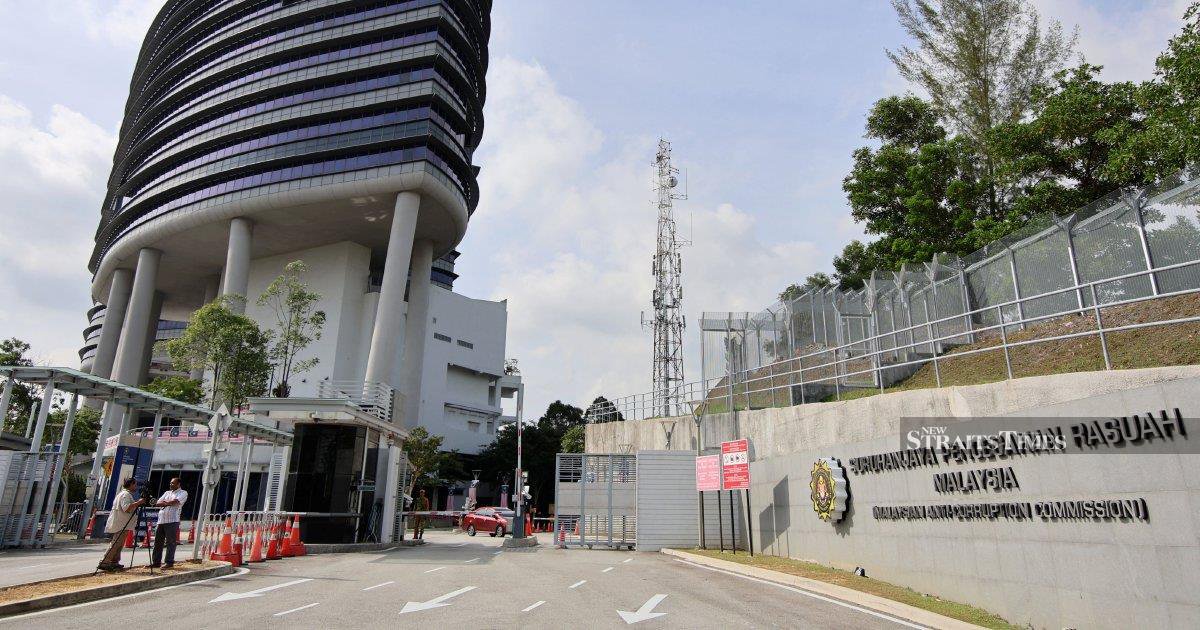
Malaysia's anti-corruption watchdog is making a strategic push for comprehensive whistleblower protections across federal agencies, signalling that institutional safeguards for those reporting misconduct have become central to the nation's anti-corruption agenda. The Malaysian Anti-Corruption Commission (MACC) has directed its message at the highest levels of the civil service, specifically ministry secretaries-general and department directors-general, emphasising that whistleblower security must become an operational priority rather than a peripheral concern.
The timing of this initiative reflects broader concerns about Malaysia's international standing on governance metrics. The Corruption Perceptions Index, released annually by Transparency International, ranks nations based on perceived levels of public-sector corruption. Malaysia's performance on this index has become increasingly significant as the country seeks to position itself as a regional leader in governance and investor confidence. By setting 2030 as a target year for measurable improvement, the MACC is effectively establishing a decade-long roadmap for systemic reform that acknowledges both the scope and complexity of embedding whistleblower protection across a large bureaucratic apparatus.
The connection between whistleblower protections and corruption-fighting effectiveness is increasingly recognised internationally. When public servants and contractors can report suspected misconduct without fear of retaliation, harassment, or career destruction, more cases come to light that might otherwise remain hidden. This transparency not only deters potential wrongdoing but also creates a cultural shift where integrity becomes an expected norm rather than an exception. By elevating this issue, the MACC appears to be signalling that Malaysia's anti-corruption efforts cannot succeed through enforcement alone; they require the active participation of insiders willing to expose wrongdoing.
For Malaysian readers, this development carries particular relevance given recent high-profile corruption investigations and the government's stated commitment to rebuilding public trust. The civil service remains a critical institution for service delivery, policy implementation, and public fund management. When corruption festers undetected within these structures, it undermines not only institutional credibility but also the effectiveness of public programmes, from healthcare to infrastructure projects. Strengthening mechanisms that encourage honest officials to report misconduct therefore has practical implications for programme delivery and budget efficiency.
The regional context matters as well. Southeast Asian nations compete for foreign direct investment, and governance ratings influence investor calculations. Singapore, for instance, consistently ranks far higher on the CPI than Malaysia, partly reflecting stronger institutional checks on corruption. As Malaysia seeks to attract capital-intensive industries and establish itself as a financial hub, any improvement in international governance perceptions translates into competitive advantage. The MACC's push for whistleblower protections can thus be understood as part of a broader economic competitiveness strategy, not merely a moral exercise.
Implementing robust whistleblower frameworks presents genuine challenges within Malaysia's civil service context. Public servants often work in hierarchical environments where challenging a superior or exposing a colleague carries significant social and professional risks. Cultural factors, including respect for hierarchy and concerns about loyalty within organisational units, may discourage reporting even when legal protections exist on paper. The MACC's directive to secretaries-general and directors-general thus represents an attempt to overcome these institutional resistance points by engaging those with the authority to reshape workplace culture and establish genuine confidentiality protocols.
The specificity of the MACC's appeal to the highest-ranking permanent officials is strategically significant. Secretaries-general and directors-general control organisational culture, resource allocation, and accountability mechanisms. If they genuinely commit to whistleblower protection, they can establish confidential reporting channels, ensure investigators operate independently, shield complainants from retaliation, and signal throughout their organisations that reporting misconduct is valorised rather than punished. Without such high-level commitment, whistleblower policies become mere documents rather than functional protections.
Legal frameworks for whistleblower protection already exist in Malaysia, including provisions within the Malaysian Anti-Corruption Commission Act 2009. However, the gap between law and practice remains significant. Whistleblowers have historically faced difficulties accessing genuine protection, and perceptions of vulnerability have deterred reporting. The MACC's current initiative suggests recognition that existing legal scaffolding requires reinforcement through administrative practice, organisational policy, and cultural messaging from leadership.
The 2030 timeline establishes clear accountability. Malaysia's position on the next Corruption Perceptions Index iteration will provide measurable feedback on whether government agencies have genuinely embraced whistleblower protections. This public benchmark creates pressure on officials who receive this directive; their peers and superiors will see whether their agencies demonstrate progress. Additionally, the focus on governance improvement by 2030 aligns with Malaysia's broader development agenda and international commitments, framing anti-corruption work as integral to national progress rather than episodic crisis management.
For ordinary Malaysians, stronger whistleblower protections mean that civil servants witnessing misappropriation of funds, inflated procurement contracts, or allocation irregularities have clearer pathways to report such breaches safely. This mechanism indirectly protects citizens by ensuring that government resources genuinely serve public purposes rather than enriching corrupt officials. When procurement processes are cleaner and budget implementation more honest, public services improve and taxpayer money delivers intended benefits more effectively.
The MACC's emphasis on whistleblower protection also reflects international best practices in anti-corruption strategy. Nations that have successfully reduced corruption typically feature strong protections for those reporting misconduct, complemented by competent investigative agencies and credible prosecution. By highlighting this element, the MACC is essentially advocating for Malaysia to adopt a comprehensive anti-corruption system rather than relying on sporadic enforcement actions against high-profile figures.
Looking forward, the effectiveness of this initiative will depend on whether the MACC's message translates into concrete policy changes across federal agencies. Ministries and departments must establish confidential reporting mechanisms, train investigators, clarify retaliation prohibitions, and communicate these systems to staff. Sustained leadership commitment will prove essential, as will ensuring that whistleblowers who do come forward experience genuine protection and see their reports produce meaningful consequences for wrongdoing. Malaysia's CPI ranking in 2030 will ultimately reflect not the eloquence of current appeals but the institutional reality of whistleblower security throughout the public service.

