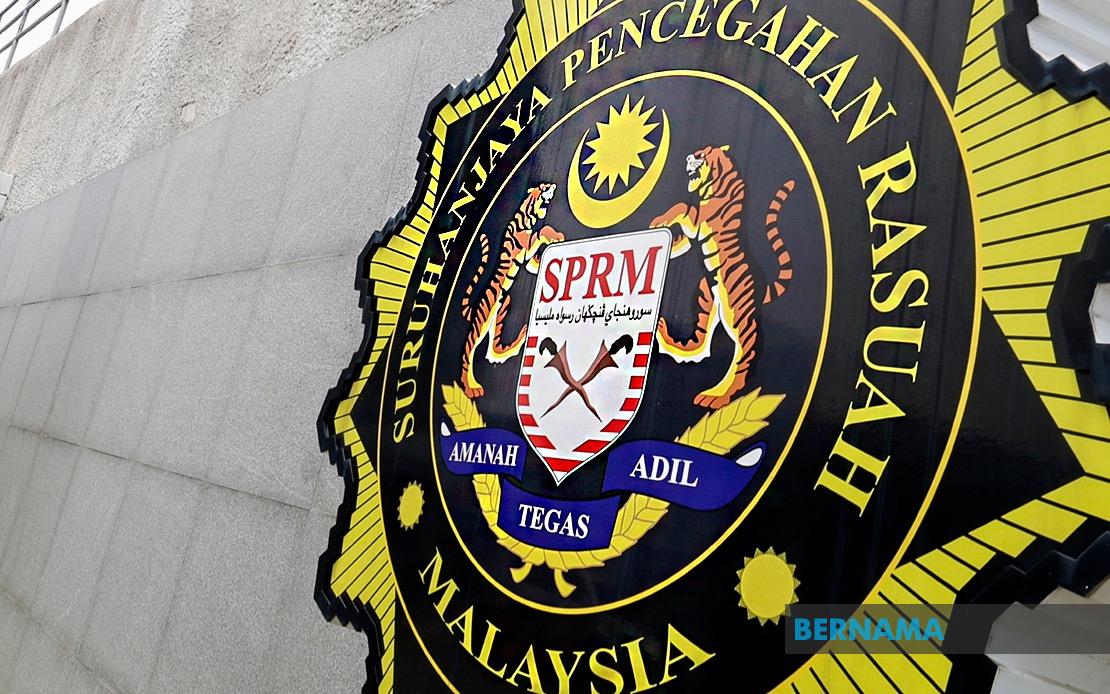
Malaysia's anti-graft watchdog has launched a public appeal to locate a 41-year-old man who has evaded attempts to serve him with legal documents related to an upcoming forfeiture hearing. The Malaysian Anti-Corruption Commission (MACC) announced on July 18 that it is unable to contact Mohamad Faizul Kamaruddin despite extensive efforts to reach him at his previously registered residential address. The forfeiture proceeding, scheduled for August 20 at the Kuala Lumpur Criminal Sessions Court, appears to be a significant part of an active investigation into potential asset seizure under corruption laws.
The MACC's action is being undertaken in accordance with Section 41 of the Malaysian Anti-Corruption Commission Act 2009, which grants the commission authority to pursue legal measures to ensure a person's attendance at court proceedings related to corruption investigations. This legislative provision enables the commission to locate and compel attendance when conventional methods of service have proved unsuccessful. The agency's reliance on this procedural mechanism underscores the apparent difficulty in establishing contact with the individual in question.
According to official records, Mohamad Faizul Kamaruddin's last known address was listed as Block B-2-6, Taman Tun Sardon Flats in Gelugor, Penang. The MACC has already conducted investigation efforts at this location without success, suggesting that the subject may have relocated or deliberately avoided contact. The extended geographical focus on a Penang address raises questions about whether the individual has moved interstate to evade service of legal documents, a concern that frequently arises in corruption-related cases where personal assets become subject to government proceedings.
The forfeiture mechanism represents a critical enforcement tool within Malaysia's anti-corruption framework, allowing authorities to recover proceeds or assets allegedly connected to corrupt activities without necessarily requiring a criminal conviction. Such proceedings operate independently of criminal trials, enabling swifter asset recovery under civil law standards of proof. The August 20 hearing therefore carries significant implications not only for potential asset seizure but also for establishing patterns of financial misconduct that may inform parallel criminal investigations.
Recognising the challenges posed by the individual's unavailability, the MACC has publicly requested assistance from the general public in locating Mohamad Faizul Kamaruddin. The commission has designated Ahmad Nasharuddin Ab Razak, serving as the investigating officer on this matter, as the primary contact point for information. Members of the public who possess relevant knowledge regarding the subject's current whereabouts may contact the officer through multiple channels: a mobile number (019-345 4565), the MACC Pahang office landline (09-571 6000), or an official email address ([email protected]).
This public appeal demonstrates the MACC's commitment to ensuring that individuals subject to investigation cannot simply disappear to circumvent legal proceedings. The transparency of the appeal also serves to pressure the subject to voluntarily present himself before court proceedings commence, avoiding potential additional complications arising from non-attendance. In Malaysia's anti-corruption landscape, such public calls for locating individuals represent a measured approach that balances the need for swift justice with respect for due process and the presumption that proper service of documents must occur.
The involvement of the Pahang office in coordinating the search, despite the registered address being in Penang, suggests that the investigation may have originated in or extended to Pahang, with cross-state coordination now becoming necessary. This geographical complexity is not uncommon in white-collar crime investigations, where financial networks and personal movements frequently traverse multiple states. The MACC's multi-level communication strategy acknowledges that individuals may be distributed across various regions and may have relocated from their last known addresses.
Forfeiture proceedings carry particular importance in Malaysia's broader anti-corruption enforcement architecture. Unlike criminal prosecutions that require proof beyond reasonable doubt, forfeiture actions typically operate on the balance of probabilities, making successful asset recovery more feasible. The August 20 hearing will determine whether the court accepts the MACC's evidence regarding the contested assets or property, potentially resulting in their transfer to the government. For observers of Malaysia's corruption control efforts, such proceedings underscore the expanding toolkit available to enforcement authorities beyond traditional criminal prosecution.
The case also illuminates persistent challenges within Malaysia's legal system regarding the service of documents and ensuring attendance at court hearings. While digital connectivity has expanded significantly in recent years, locating individuals determined to avoid legal process remains operationally demanding. The MACC's reliance on public assistance reflects a pragmatic acknowledgement that investigative resources, though substantial, can benefit from information provided by citizens who may encounter the subject in their daily activities.

