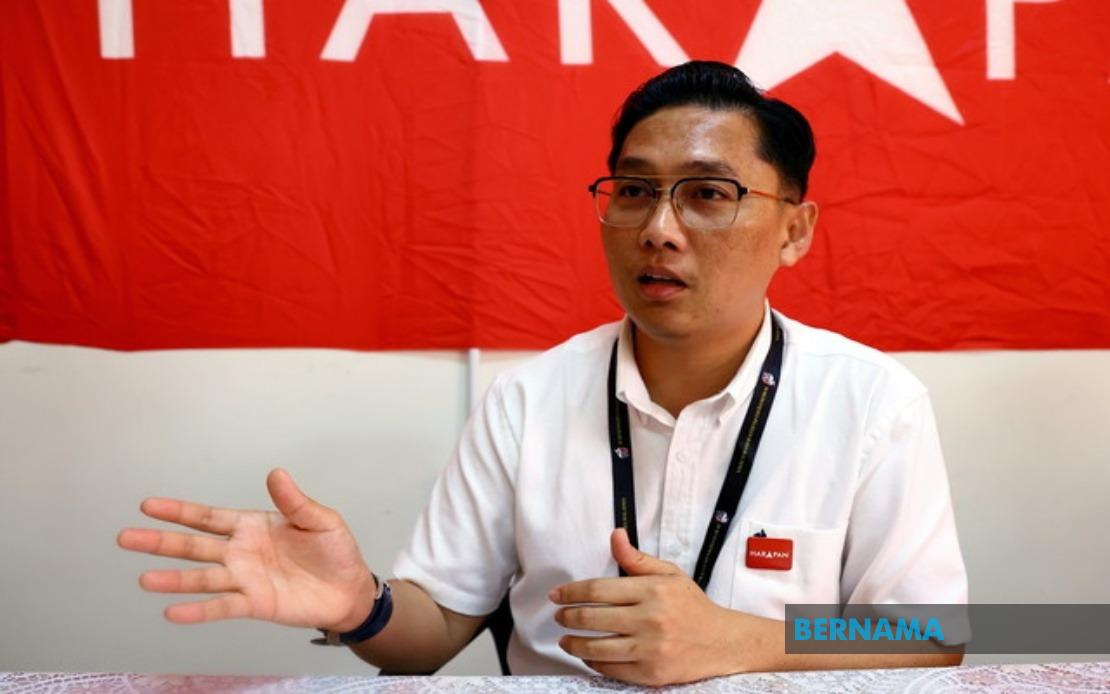
Nur Hafiz Roslan, the Pakatan Harapan candidate for the Machap state seat, has dismissed concerns about facing one of Johor's most powerful political figures in the upcoming state election. The constituency has long been considered secure territory for Barisan Nasional, with the current Menteri Besar Datuk Onn Hafiz Ghazi securing the seat in 2022 by a margin of 6,543 votes. Yet the opposition challenger remains undeterred, arguing that political boundaries are far more fluid than conventional wisdom suggests.
Nur Hafiz's confidence rests partly on his professional background as a legal practitioner spanning nearly two decades. This experience, he contends, has equipped him with the analytical skills and problem-solving capabilities necessary to articulate and address the substantive concerns facing residents of Machap. Rather than viewing his challenger's position as insurmountable, he frames the contest as an opportunity to present an alternative vision to voters who may be evaluating their options.
The candidate pointed to historical precedent to buttress his optimism. Johor's political landscape has shifted dramatically over the years, with several former Menteri Besars including Tan Sri Abdul Ghani Othman and Datuk Seri Khaled Nordin experiencing electoral defeat despite their prominence. These cases demonstrate that even heavily entrenched political figures can lose office when circumstances align. Nur Hafiz suggested that similar dynamics could favour an opposition challenger in Machap, particularly if his campaign resonates effectively with voters.
A critical element of Nur Hafiz's strategy involves distinguishing his approach from conventional partisan politics. He has explicitly committed to rejecting what he characterises as fear-based campaigning that exploits divisions along racial, religious, and monarchical lines—what is commonly referred to as 3R politics. He views such tactics as anachronistic and counterproductive to genuine development in the modern era, particularly for a state where economic challenges and quality-of-life issues demand pragmatic solutions rather than divisive rhetoric.
Instead, Nur Hafiz advocates for a more sophisticated political discourse centred on concrete policy proposals. His platform emphasises the necessity of moving beyond the zero-sum narratives that have historically dominated Malaysian electoral politics, where communities are positioned as competitors rather than participants in collective governance. This reframing appeals to an evolving segment of voters, particularly younger constituents and urbanised populations who prioritise competence and delivery over traditional communal allegiances.
The Machap candidate has expressed particular confidence in the organisational readiness of his coalition's machinery. According to Nur Hafiz, the PH election operations have demonstrated cohesion and stability throughout the nomination process, with minimal internal friction. This stands in contrast to occasional reports of discord within certain BN component parties at different levels. A well-coordinated campaign infrastructure can substantially influence voter mobilisation and turnout, particularly in constituencies where traditional voting patterns may be shifting.
Nur Hafiz also emphasises his aspiration to serve as a conduit between state and federal levels of government. Should he prevail, he suggests that direct representation from the opposition at state level could facilitate more effective advocacy for Machap's interests within federal policy-making. This messaging attempts to reframe an opposition victory not as a rejection of state government, but as a practical mechanism for securing greater attention to local constituency needs.
The Machap contest represents a two-way contest between Nur Hafiz and the incumbent Onn Hafiz, with no third candidate in the field. This binary dynamic simplifies the electoral choice and may work to either candidate's advantage depending on how effectively each mobilises his respective voter base. The BN candidate benefits from incumbent advantage, state machinery resources, and Johor's traditional alignment with the coalition, while the PH challenger can leverage anti-incumbency sentiments and appeals to younger voters seeking policy-driven governance.
The election is scheduled for July 11, with early voting occurring on July 7. This timeline provides both campaigns with several weeks to intensify grassroots efforts and media engagement. For Nur Hafiz, the challenge remains converting his intellectual critique of divisive politics into a compelling electoral narrative that persuades voters in a constituency where BN has traditionally dominated.
Nur Hafiz's candidacy reflects broader currents within Malaysian opposition politics, where emphasis on governance competence and policy substance is gaining prominence over purely identity-based appeals. Whether this approach gains sufficient traction in Machap—a state that has remained firmly in BN's orbit—will offer important insights into the durability and reach of such messaging across different demographic and geographic constituencies throughout Malaysia.

