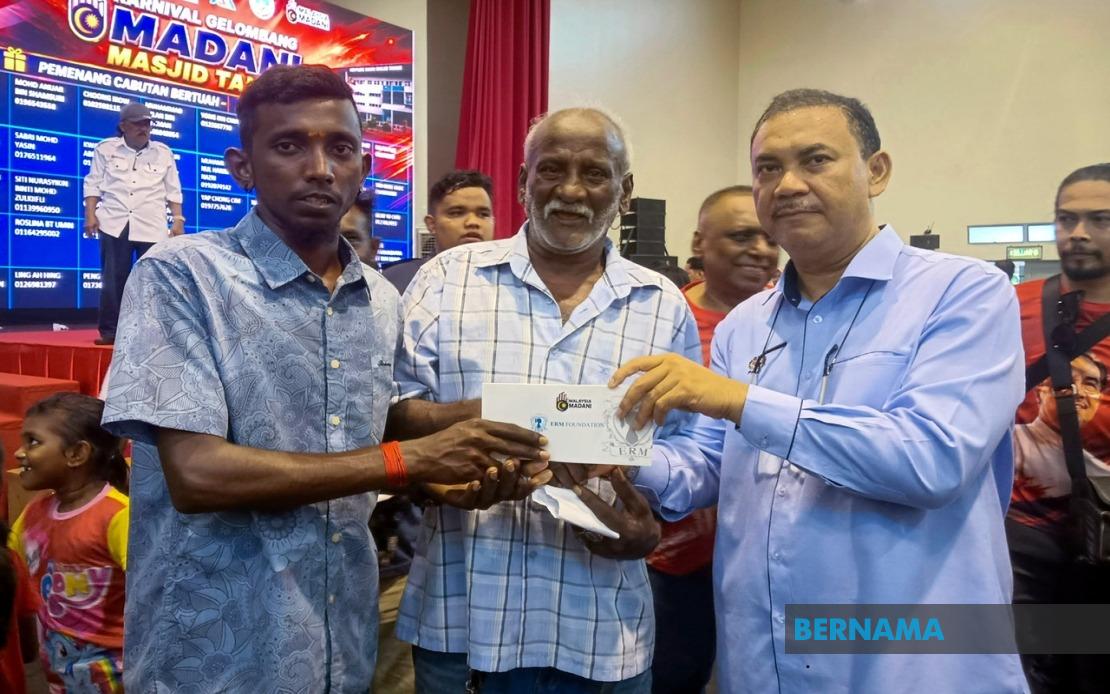
The Gelombang MADANI Carnival initiative brought relief to approximately 2,000 vulnerable residents across the Masjid Tanah parliamentary constituency on August 7, with each beneficiary receiving RM200 in direct financial assistance through the Sentuhan MADANI Donation programme. The distribution ceremony, held at the Masjid Tanah Sports Complex in Alor Gajah, represents part of the government's broader welfare outreach efforts targeting lower-income segments of society.
Datak Azman Abidin, the Prime Minister's political secretary, oversaw the donation presentation and emphasised the comprehensive scope of the assistance scheme. The initiative encompassed recipients from all five state constituencies that fall within the Masjid Tanah parliamentary boundaries—Kuala Linggi, Lendu, Tanjung Bidara, Ayer Limau, and Taboh Naning—ensuring equitable distribution across the wider administrative area.
The Sentuhan MADANI programme specifically targeted four demographic groups considered most in need of government support. These included members of the B40 income bracket—those earning in the bottom 40 per cent of the income distribution—alongside persons with disabilities, senior citizens, and other low-income earners. This multi-category approach reflects a policy recognition that vulnerability extends across different segments of the population, requiring targeted interventions tailored to specific circumstances.
For many recipients, the financial injection represents meaningful relief from immediate economic pressures. Ramlah Othman, a 63-year-old resident of Tanjung Bidara, highlighted how the contribution would ease her household's daily expenses, a sentiment echoed across the beneficiary population. The RM200 assistance, while modest in isolation, addresses tangible gaps in household budgets when focused on essential costs such as food, utilities, and transportation.
The programme carries particular significance for elderly residents and those managing chronic health conditions. Stroke patient N. Mariappan, 69 years old from Ladang Sungai Baru, viewed the initiative as evidence of governmental attention to the welfare needs of senior citizens and disabled persons. For individuals with limited earning capacity due to age or health constraints, such direct assistance programmes can substantially reduce financial strain on families responsible for their care and support.
The MADANI carnival framework demonstrates a shift toward localised, constituency-based welfare distribution rather than centralised national programmes alone. By anchoring assistance delivery to specific parliamentary constituencies and their subdivisions, the approach creates touchpoints between government officials and constituents while potentially improving targeting efficiency. The carnival format itself generates social visibility and community engagement around welfare initiatives, moving beyond anonymous administrative processing.
Malaysia's ongoing efforts to support the B40 population have become increasingly important given persistent income inequality and rising living costs. Programmes like Sentuhan MADANI complement existing welfare mechanisms including targeted subsidies, cash transfers, and social assistance schemes. The cash-based approach offers recipients flexibility to address their most pressing needs without government prescription about spending priorities, a feature that resonates with beneficiary autonomy and dignity.
The geographic focus on Masjid Tanah reflects parliamentary-level constituency engagement in welfare delivery. Such initiatives, coordinated through political secretariat offices, can serve both immediate humanitarian purposes and broader relationship-building with voter bases. The involvement of Prime Minister's office officials in ceremony attendance signals central government attention to implementation and reinforces the programme's political significance within the administration's welfare agenda.
Senior citizens represent a particularly vulnerable demographic in Malaysia's evolving economic landscape. With mandatory retirement ages limiting employment pathways and pension schemes frequently proving inadequate, supplementary assistance through focused initiatives like Sentuhan MADANI addresses real income shortfalls. The particular inclusion of disabled persons acknowledges employment barriers and additional care costs that contribute to disproportionate economic vulnerability within this population.
Beneficiary feedback emphasises gratitude and acknowledgment of government concern, framing the assistance within a broader social contract narrative. Such responses, while reflecting genuine appreciation, also indicate programme success in its immediate distribution objectives and in generating positive political messaging around welfare commitment. The visible presence of beneficiaries expressing appreciation, captured in media coverage, reinforces public awareness of government assistance efforts.
The MADANI carnival approach represents a contemporary evolution in Malaysian welfare administration, combining traditional direct assistance with event-based community engagement. By distributing aid through structured carnival events rather than administrative offices, authorities create more accessible engagement opportunities for vulnerable populations who might navigate bureaucratic processes less easily. This methodology also generates local media coverage and community awareness of available support schemes.
For the broader Southeast Asian context, Malaysia's targeted cash transfer programmes offer lessons in balancing fiscal constraints with welfare obligations to low-income populations. The specificity of targeting—focusing on particular constituencies, demographic categories, and income brackets—demonstrates efforts to direct limited public resources toward those facing greatest hardship while maintaining programme sustainability.
Moving forward, the sustainability and scope of such initiatives will depend on budgetary allocation priorities and economic conditions affecting government revenue. Whether Sentuhan MADANI expands to additional constituencies or increases assistance levels per beneficiary remains contingent upon political commitment and fiscal space. For residents of Masjid Tanah benefiting from August's distribution, the intervention provides immediate financial breathing room while reinforcing awareness of government welfare programmes available to vulnerable segments of Malaysian society.

