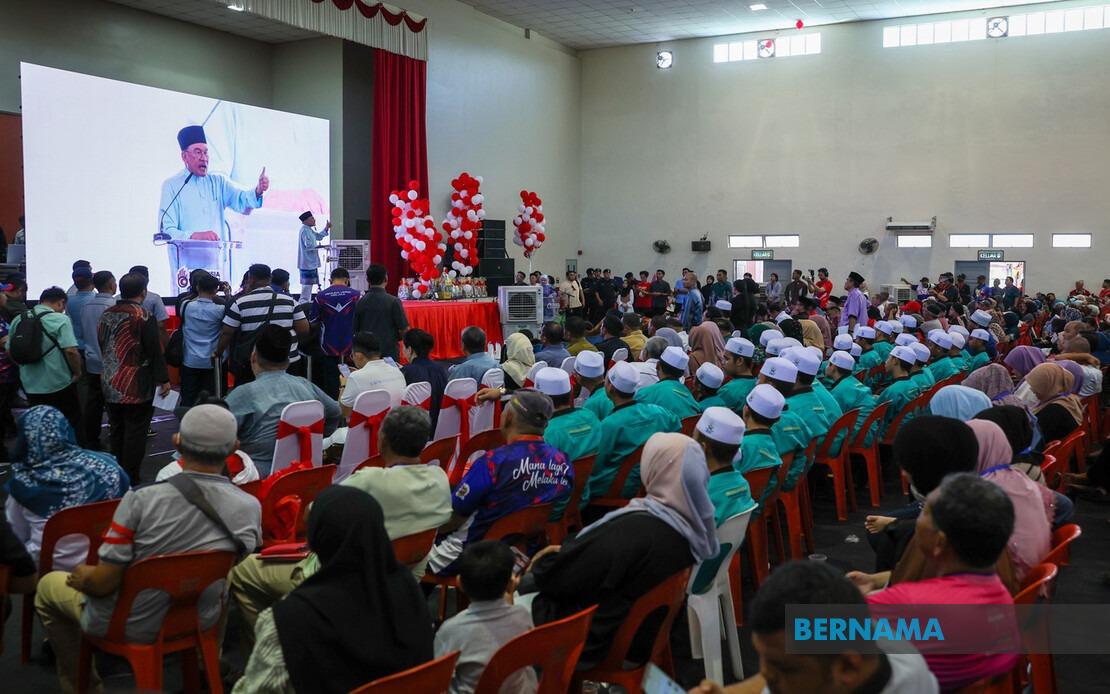
Prime Minister Datuk Seri Anwar Ibrahim has reassured Malaysians that the MADANI Government remains dedicated to providing equitable assistance across the country's diverse education landscape, ensuring that increased funding for Islamic schools does not translate into neglect of vernacular institutions. Speaking at the Gelombang MADANI Carnival in Alor Gajah, Melaka, on August 7, Anwar stressed the necessity of addressing the needs of all communities without marginalising any group, emphasising that support decisions reflect a deliberate policy to preserve national harmony and social cohesion in a multicultural nation.
The Prime Minister clarified that enhanced allocations directed towards pondok schools and tahfiz institutions, which had languished without government assistance for years, represented corrective action rather than preferential treatment. He indicated that corresponding funding packages for Chinese and Tamil schools, already finalised by the administration, would be formally unveiled in Kuala Lumpur within approximately two weeks, demonstrating parallel commitment to vernacular education systems that continue serving significant portions of Malaysia's student population.
Anwar's remarks address persistent concerns about resource distribution in Malaysia's plural education system, where historical disparities have occasionally fuelled community anxieties. By publicly linking increased Islamic school funding to restored parity for Chinese and Tamil institutions, the Prime Minister underscores the government's recognition that educational equity operates as both a practical governance concern and a symbolic barometer of national commitment to inclusivity. The timing of these announcements—clustering Islamic allocations in Melaka with pledges of imminent vernacular school packages—suggests deliberate sequencing designed to demonstrate comprehensive policymaking rather than reactive favouritism.
The philosophical foundation for this approach rests on what Anwar characterised as Malaysia's successful plural society model, where citizens of diverse ethnic and religious backgrounds coexist peacefully through mutual respect and institutional balance. He highlighted the remarkable nature of this achievement by contrasting Malaysia's relative stability with intercommunal tensions afflicting numerous other jurisdictions, attributing the difference to conscious commitment to inclusive governance and social reciprocity. This framing positions educational funding decisions within broader narratives about national identity and institutional resilience, elevating what might otherwise remain a technical budget discussion to questions of foundational social contract.
Anwar drew extensively on Islamic theological concepts to justify his government's educational philosophy, invoking the Quranic principle of 'ummatan wasatan' from Surah Al-Baqarah as articulating a balanced approach transcending sectarian boundaries. He interpreted this concept not merely as spiritual guidance but as practical instruction for governance, arguing that demonstrating integrity, environmental stewardship, and corruption-free administration constitutes authentic Islamic witness that transcends religious institutional strengthening alone. This theological grounding reflects efforts to reconcile religious commitment with pluralistic governance, suggesting that substantive support for Islamic education need not conflict with equivalent support for non-Islamic institutions when both operate within frameworks emphasising moral conduct and social responsibility.
The practical manifestation of these principles materialised in Anwar's announcement of RM1.29 million distributed among 13 Islamic educational institutions across Melaka, reflecting concrete resource commitment beyond rhetorical reassurance. Allocations ranged from RM250,000 for Madrasah Tahfiz Al-Quran Wal Qiraat Kota Melaka down to RM100,000 for Sekolah Agama Rakyat JAIM Taman Maju, addressing infrastructure modernisation requirements across institutions serving Melaka's Islamic educational ecosystem. These allocations underscore the government's stated intention to upgrade pondok schools with contemporary facilities including artificial intelligence and computer training capabilities, positioning Islamic institutions to compete educationally with better-resourced secular and vernacular alternatives.
Anwar positioned these enhancements as rectification of historical underfunding during previous administrations, noting that assistance channels had been terminated before the Unity Government's formation in 2022. He outlined a restoration trajectory beginning in 2023 and intensifying through 2024, framing current allocations as cumulative policy correction rather than sudden preferential diversion. This historical contextualisation attempts to delegitimise potential criticism by situating current Islamic school funding increases within narratives of rebalancing rather than innovation, acknowledging previous governments' inadequate attention while justifying accelerated remediation.
The inclusion of Deputy Higher Education Minister Adam Adli Abdul Halim and Melaka Chief Minister Datuk Seri Ab Rauf Yusoh alongside Anwar and his wife Datuk Seri Dr Wan Azizah Wan Ismail at the Gelombang MADANI Carnival signified institutional alignment across governance levels regarding educational equity priorities. This administrative coordination suggests that resource distribution commitments reflect deliberate governmental consensus rather than individual ministerial enthusiasm, enhancing credibility of funding pledges while demonstrating implementation capacity across federal and state bureaucratic structures.
For Malaysian educational stakeholders, these commitments hold substantial implications regarding resource predictability and institutional planning horizons. Chinese and Tamil school administrators awaiting formal allocations face decisions about infrastructure projects and programme expansion without confirmed funding timelines, though the government's public commitment to imminent announcements provides some planning framework. Islamic institution leaders, conversely, can advance development projects on the basis of confirmed allocations, though the adequacy of RM1.29 million across 13 Melaka institutions for comprehensive modernisation remains subject to assessment of individual institutional requirements and existing infrastructure deficiencies.
Regionally, Malaysia's demonstrated commitment to balancing educational support across religious and ethnic lines offers instructive lessons as Southeast Asian nations grapple with educational pluralism and resource distribution amid demographic diversity. The MADANI Government's articulation of equity principles and theological justifications for inclusive education policy distinguishes its approach from jurisdictions where educational funding becomes overtly politicised along communal lines, potentially positioning Malaysia as a model for navigating governance in plural societies where educational institutions serve foundational social cohesion functions.
Looking forward, the success of these equity commitments will depend substantially on consistent implementation of promised vernacular school allocations and transparent allocation methodologies demonstrating genuine parity rather than nominal gestures. Community trust in educational equity requires not merely rhetorical commitment but demonstrable follow-through, with allocation announcements matched by actual fund disbursement and measurable infrastructure improvements across institutions serving all education streams. The government's August timeline for vernacular school funding announcements will therefore constitute a critical credibility test, as delays or reduced allocations relative to current Islamic school investments could undermine official narratives about balanced development and reinforce historical suspicions about preferential treatment.

