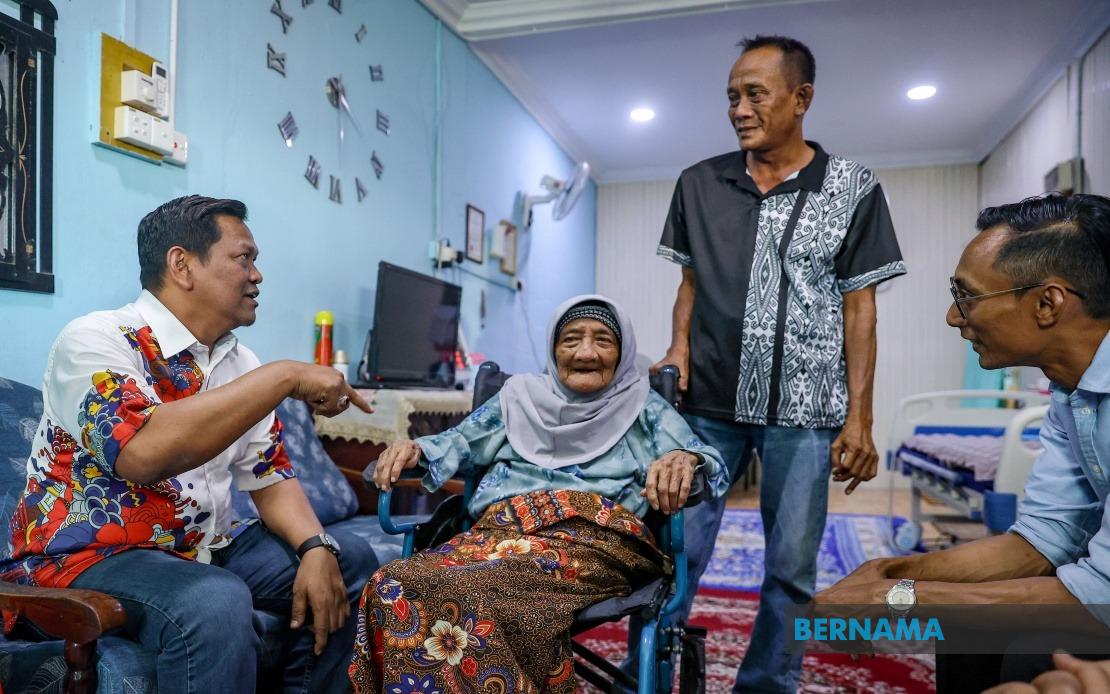
The MADANI Government is intensifying its reach-out efforts to Malaysia's most vulnerable populations through the Ziarah Kasih initiative, a direct assistance programme designed to provide material and healthcare support to those facing severe hardship. During an engagement programme in Mersing, political secretary to the Communications Minister Abdullah Izhar Mohamed Yusof confirmed that the administration will sustain this grassroots intervention as a cornerstone of its Malaysia MADANI vision, which places citizen welfare at the forefront of policy implementation.
The programme operates through a structured identification process involving the Department of Information and Komuniti MADANI, ensuring that assistance reaches genuinely needy households rather than being distributed indiscriminately. This targeted approach reflects a broader government strategy to make welfare interventions more efficient and responsive to community needs. By partnering with local information networks and community structures, the initiative aims to bridge gaps that conventional bureaucratic channels might otherwise miss, particularly in rural areas where vulnerable populations often remain isolated from government support systems.
At the Jiwa@Komuniti MADANI Sembang Santai World Cup Edition programme held in Endau, Abdullah Izhar personally delivered assistance packages and medical equipment to elderly residents, demonstrating hands-on ministerial engagement with beneficiaries. This direct interaction serves multiple purposes: it validates the real struggles faced by marginalised communities, allows government officials to understand implementation challenges firsthand, and provides psychological reassurance to recipients that their circumstances matter to decision-makers in Kuala Lumpur. The visibility of such engagements also signals to other vulnerable Malaysians that support mechanisms exist and are actively being deployed.
One beneficiary, Hamdan Abd Latif, a 71-year-old bedridden resident, exemplifies the profound challenges facing Malaysia's elderly poor. Hamdan's journey from productive employment to complete dependency illustrates how a single catastrophic health event can devastate household finances and quality of life. His fall while fishing for prawns in 2011, occurring just weeks before his planned retirement, triggered a cascade of medical crises including the discovery of a brain tumour requiring surgical intervention. Though initially declared tumour-free, the underlying trauma initiated a gradual physical deterioration that culminated in a stroke following a bathroom accident, rendering him entirely dependent on full-time care.
The burden of Hamdan's care has fallen entirely upon his wife, Meriam Abd Wahab, now 66 years old, who sacrificed her own income-generating activities to provide round-the-clock nursing. Previously, Meriam had supplemented the household income through sewing work, but this avenue closed once she became a full-time caregiver. The financial squeeze experienced by the couple illustrates a broader Malaysian demographic challenge: as the population ages and chronic diseases become more prevalent, many households face impossible choices between maintaining economic viability and providing necessary care for elderly family members. Government assistance programmes like Ziarah Kasih become critical lifelines in such circumstances, easing immediate financial pressure even if they cannot resolve systemic problems.
Another case showcases similar intergenerational struggles and the role of family resilience in mitigating poverty. Zainon Ibrahim, at 91 years old, depends entirely on her son Jamaluddin Ismail, a 64-year-old former supervisor who abandoned his own career approximately two years ago to become her primary caregiver. The decision to quit employment represents a profound sacrifice, one that Jamaluddin accepted despite the severe income implications. His siblings provide supplementary support, indicating that within this family, caregiving responsibilities are distributed, though the primary burden remains with one individual. Such arrangements are common across Malaysia, particularly among lower-income households where formal aged care facilities are unaffordable and extended family networks function as de facto social safety nets.
For Jamaluddin and his family, government assistance alleviates some urgency from daily financial pressures, enabling them to meet Zainon's immediate needs without constant anxiety about whether essential medications, food, or basic hygiene supplies can be purchased. His gratitude, expressed without cynicism, reflects realistic expectations: he does not anticipate that government programmes will transform his family's circumstances entirely, but recognises that periodic assistance meaningfully reduces hardship. This pragmatic appreciation is worth noting for policymakers, as it suggests that targeted interventions, even modest ones, generate genuine goodwill and reinforce public confidence in government responsiveness.
The Malaysia MADANI aspiration underlying Ziarah Kasih represents an attempt to reorient governance toward citizen-centric outcomes rather than abstract policy targets. By prioritising the well-being of ordinary Malaysians, particularly those with minimal political influence or economic resources, the framework acknowledges that development cannot be measured solely in GDP growth or infrastructure expansion. Instead, it must be evaluated partly through the lens of human dignity, health security, and the preservation of family stability during health crises and economic shocks. For Southeast Asian readers, this represents a significant statement about how contemporary governments balance market-oriented economic policies with direct welfare interventions.
Regularly implementing Ziarah Kasih also addresses a credibility gap that often undermines public sector legitimacy in developing democracies. When citizens, particularly in rural areas, observe visible government engagement with their communities and tangible improvements in the lives of neighbours, trust in institutions strengthens. Conversely, abstract promises of future development ring hollow to populations struggling with immediate survival concerns. The programme's emphasis on direct delivery and personal ministerial engagement thus serves not merely humanitarian functions but also institutional ones, reinforcing the perception that government exists to serve citizens rather than accumulate resources or pursue elite interests.
The cases of Hamdan and Zainon also highlight gender dimensions of elder care in Malaysia that policy frameworks must address more comprehensively. Meriam's sacrifice of income-generating capacity to provide care for her husband reflects deeply gendered expectations about caregiving roles, a pattern replicated across the region. While Jamaluddin's decision to become his mother's primary caregiver suggests some shifting of these norms, most caregiving burdens still fall upon women, whether as wives or daughters. Programmes like Ziarah Kasih, while essential, represent reactive rather than proactive policy responses. More comprehensive solutions might include subsidised aged care facilities, caregiver allowances that compensate foregone income, or tax incentives for employers who accommodate caregiving responsibilities.
For Malaysian policymakers, the challenge ahead involves scaling Ziarah Kasih while maintaining the personalised engagement that appears central to its effectiveness. Bureaucratic expansion risks transforming the programme into another distant government initiative, undermining the trust-building that direct ministerial contact facilitates. Simultaneously, resource constraints mean the government cannot assist every vulnerable household, necessitating continued rigour in beneficiary identification. Finding the balance between compassionate responsiveness and sustainable administration will determine whether Ziarah Kasih becomes a model for inclusive governance across Southeast Asia or remains a modest, periodic intervention.

